'Seinfeld' Nearly Made a Major Mistake Cutting One of Its Greatest Characters

Shawn Van Horn is a Senior Author for Collider. He's watched way too many slasher movies over the decades, which makes him an aficionado on all things Halloween and Friday the 13th. Don't ask him to choose between Michael Myers and Jason Voorhees because he can't do it. He grew up in the 90s, when Seinfeld, Everybody Loves Raymond, and TGIF were his life, and still watches them religiously to this day. Larry David is his spirit animal. His love for entertainment spreads to the written word as well. He has written two novels and is neck deep in the querying trenches. He is also a short story maker upper and poet with a dozen publishing credits to his name. He lives in small town Ohio, where he likes to watch professional wrestling and movies.
Sign in to your Collider account
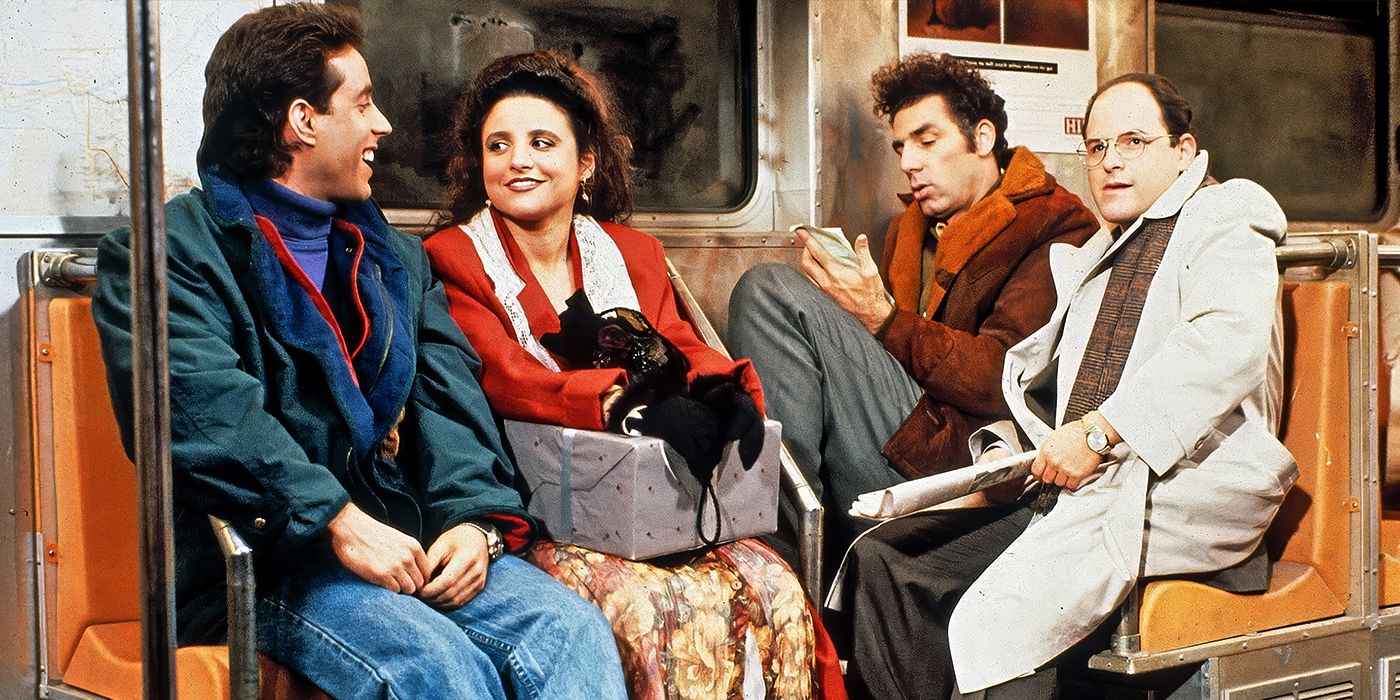
Today, Seinfeld is regarded as one of the greatest sitcoms of all time. Co-created by Larry David and Jerry Seinfeld, the NBC series dominated the 90s with the antics of Seinfeld, Jason Alexander's George Costanza, Michael Richards' Cosmo Kramer, and Julia Louis-Dreyfus' Elaine Benes. However, that last character nearly didn't happen, because in Seinfeld's 1989 pilot episode, called The Seinfeld Chronicles, Elaine wasn't even there. Instead, the woman of the group was a waitress at the diner named Claire, played by Lee Garlington. When a reshaped Seinfeld returned for its second episode, Garlington was gone, and Louis-Dreyfus was in, but why was the choice made to get rid of Claire and replace her with Elaine?
'The Seinfeld Chronicles' Was Different From the Show It Became
Successful TV shows seem to begin in one of two ways. They either start strong with a great premise, then try to hold on to that quality over the seasons, or, in the case of others, like Seinfeld, they start awkwardly, only to find their groove, getting better and better throughout the years. It took until Season 4 for Seinfeld to really hit its stride, which it would then never lose through its nine-year run, but if you've ever seen the 1989 pilot, even the biggest of Seinfeld fans would have to admit that it's not very good.
Collider Exclusive · Universe Personality Quiz Which Iconic Universe Do You Belong in the Most? Star Wars · Lord of the Rings · Harry Potter · Game of Thrones · Star Trek
Five legendary universes. Five completely different visions of what the world could be — or already was. One of them is the world your instincts, your values, and your particular way of existing were built for. Eight questions will tell you which one.
🚀Star Wars
💍Lord of the Rings
🧙Harry Potter
👑Game of Thrones
🖖Star Trek
01
What gives your life its deepest sense of meaning? Every universe is built around a different answer to this question.
02
Which kind of world do you most want to inhabit? The environment shapes who you become. Choose carefully.
03
How do you prefer your conflicts resolved? The shape of a world's conflicts tells you everything about its soul.
04
Who do you want beside you when things get difficult? Your ideal companions reveal the world you were made for.
05
What is your relationship with power? How you seek, wield, or resist power is the map of who you are.
06
How does your universe treat good and evil? A world's moral architecture tells you more about it than any map.
07
What role would you naturally fall into? Every universe has archetypes. Which one fits you without trying?
08
What do you ultimately believe about the future? The answer to this is the clearest window into which universe already lives inside you.
Your Universe Has Been Chosen You Belong In…
Your answers point to the iconic universe your values, your instincts, and your particular way of seeing the world were built for. This is where you would find your people — and your purpose.
Star Wars
You believe in the cause — in the idea that freedom is worth fighting for even when the odds are impossible and the empire is vast.
- You are drawn to the moral clarity of a universe where hope itself is a form of resistance.
- You'd find your people in the Rebellion — a ragtag coalition of true believers held together by conviction more than resources.
- Star Wars is fundamentally a story about ordinary people choosing to matter in an extraordinary conflict — and that is exactly your kind of story.
- The Force may or may not be with you. But the will to use it for something larger than yourself certainly is.
Lord of the Rings
You understand, in the deepest part of yourself, that the journey matters as much as the destination — and that the world's beauty is worth protecting even at great cost.
- Middle-earth is a world of ancient wonder, deep friendship, and a darkness that only retreats when enough small acts of courage accumulate.
- You would thrive here because you value the fellowship more than the glory — the road more than the arrival.
- Tolkien's universe rewards patience, loyalty, and the willingness to carry something heavy across a very long distance.
- Those are not burdens to you. They are simply how you move through the world.
Harry Potter
You believe that love, loyalty, and doing what's right are not naive sentiments — they are the most powerful forces in any world, magical or otherwise.
- The Wizarding World is a place of wonder hidden in plain sight, where learning is transformative and the bonds you form at school follow you into every battle.
- You would flourish here because you take both the magic and the friendships seriously — and you understand that one without the other is incomplete.
- Harry Potter's universe ultimately rewards those who choose to stand for something even when standing is terrifying.
- That choice — made quietly, without guarantee — is something you understand completely.
Game of Thrones
You see the world clearly — its power structures, its hypocrisies, its brutal arithmetic — and you are not paralysed by that clarity. You use it.
- Westeros is a world that rewards intelligence, adaptability, and the willingness to understand that every alliance is also a negotiation.
- You would survive here — possibly thrive here — because you don't confuse the world as it is with the world as you'd like it to be.
- Game of Thrones is a story about what happens when the idealists and the realists collide. You are sharp enough to know which one lasts longer.
- Winter always comes. You are already prepared.
Star Trek
You believe the future is worth building — that curiosity, cooperation, and the expansion of understanding are not just ideals but the most practical path forward for any civilisation.
- Star Trek is a universe where the questions matter as much as the answers, and where encountering something utterly alien is cause for wonder rather than fear.
- You would belong here because you are fundamentally optimistic about what intelligence and decency can achieve — while being honest about how hard that achievement is.
- The Federation is the universe's most ambitious thought experiment: what if we actually got better?
- You don't just hope that's possible. You think it's the only thing worth working toward.
There are many differences between that first episode and the classic show it became. For one, it wasn't even called Seinfeld but The Seinfeld Chronicles. Jerry and George are still there, but Jason Alexander goes full-on Woody Allen here, which is who he modeled the character after until he realized he was playing a version of Larry David. The biggest character change, however, goes to Kramer, who is called Kessler. He's as weird as he'll ever be, but in a way that's a little more creepy and less physical and funny.
Much of Seinfeld was either set at Jerry's apartment or at the diner, and both are here in the pilot, although they look a bit different, and Monk's Cafe is called Pete's Luncheonette. It's there, in the show's very first scene, that we're introduced to a waitress named Claire (Garlington), who was meant to be the woman of the group. She's there to interact with Jerry and George, giving the latter crap for whining about coffee, and offering her opinion on a woman he's interested in but little else. When Seinfeld was picked up and returned for its next episode a full ten months later in May 1990, Claire was no longer part of the cast.
Lee Garlington Was Let Go After Just One Episode
On Seinfeld - This Podcast is Making Me Thirsty, the hosts talked about how Garlington brought a smirky, dry, New York City attitude to Claire, but Garlington confessed that she has never seen the episode. She was given a series regular contract, but it wasn't picked up after the pilot was shot. She gave her opinion about why she was let go, saying, "I have heard that Julia and Larry were friends from Saturday Night Live, and when they initially shot it she wasn't available, she was doing something else. And then I think that thing didn't get picked up, and they went 'Oh', and then they got Julia Louis-Dreyfus to be a friend."
Years earlier, Jason Alexander told the story of why he heard Lee Garlington wasn't kept around when he was a guest on Kevin Pollack's Chat Show, telling the actor, "A very fine actress who made the critical error of suggesting to Larry [David] that she'd looked at the scenes overnight and made a few tweaks that she wanted to share with him." Alexander suggested that she did this is the spirit of collaboration, but David, who had written the episode, wasn't a fan of someone wanting to change his material, so Garlington was out when Seinfeld got picked up.
Whatever the reasoning was, with all due respect to Lee Garlington, getting rid of the Claire character was the wise choice. With her being a waitress, it limited what Seinfeld could do with her. She couldn't be out and about getting into the action with Jerry, George, and Kramer. Instead, she only existed if they went to the diner, and then it would be just to hear about their day and hit back with a snarky opinion. Maybe Claire could have been kept around as someone who showed up here and there for that kind of interaction, but it doesn't work for a series regular.
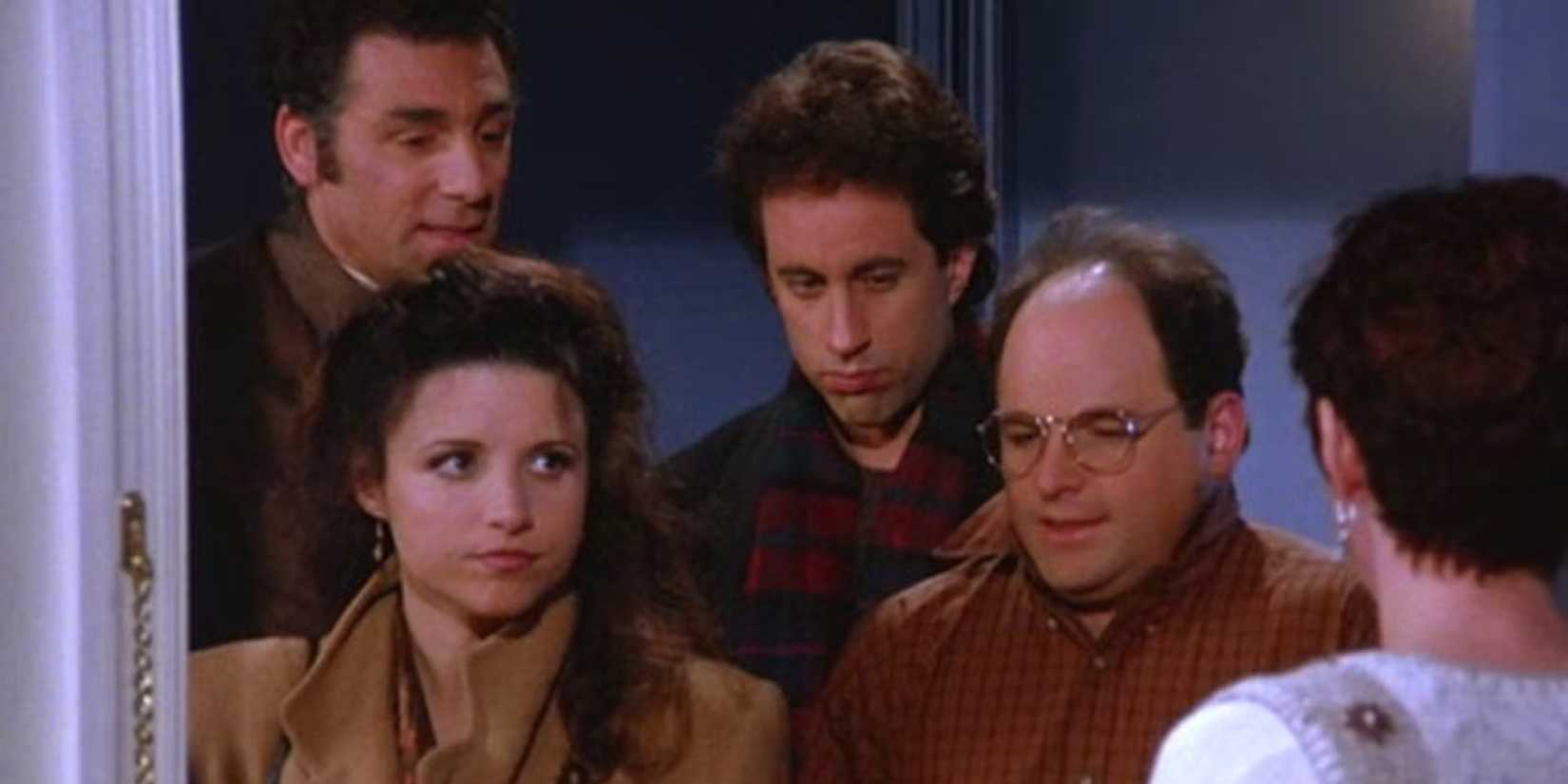
In a 2013 interview with the Archive of American Television, Louis-Dreyfus said she had just ended a two-season run on a sitcom called Day by Day. Not seeing any scripts for Warner Bros. Television that she liked, she decided to look for an acting job elsewhere, adding, "About 48 hours later, no kidding, I was approached by Larry [David] that he had written these four scripts for this show and would I read them and et cetera et cetera."
Seinfeld wouldn't have succeeded without Julia Louis-Dreyfus as Elaine Benes. A sitcom with all male friends had been done to death, but adding Elaine changed everything. Sure, she was attractive, but she wasn't there to exist as the bland, attractive female friend or romantic option. Jerry and Elaine may have dated in the past, but Seinfeld resisted the will-they-won't-they trope. Elaine is her own person who doesn't need a man to define her life, even if she does date and dump a lot of them. She's a feminist icon not only because she was this strong character, but because she's as big of an asshole as everyone else. She talks about abortion and birth control like the best progressive women of the 90s, and she's often irked by the men around her, but Elaine succeeds by also being a self-obsessed jerk. There are times when Jerry, Kramer, and especially George are scared of this woman who never backs down and never fails to tell you what she thinks.
If Claire had been kept around on Seinfeld, she could have provided some nice banter with the boys, but with Elaine, Seinfeld had a full-fledged character. She didn't support the guys, but was their equal, not only besting them, but getting her comeuppance for her behavior as they did. So often, women had to be portrayed in sitcoms as morally better than the idiot men around them. Elaine found sitcom immortality by finding the humor in being just like everyone else. If she hadn't come along, Seinfeld wouldn't have either.
You can watch all episodes of Seinfeld on Netflix in the U.S.
KioskNews shows a cleaned-up reading view extracted from the publisher’s page — the original always lives on their site, not ours.