Canadians Abroad: The wild life of Dennis Janik
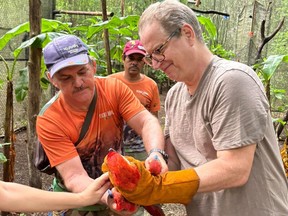
Dennis Janik rescued his first animal at age seven, saving a toad from vengeful neighbourhood kids convinced it was poisonous.
Sign In or Create an Account
“I wouldn’t let them kill it. I pushed it into a metal trash can and on the weekend, I begged my father to take me out to release it somewhere,” said Janik.
He vowed to rescue animals for the rest of his life.
“I was hooked,” recalled 66-year-old Janik, who grew up in East York, now part of Toronto. “My problem is I haven’t had a new idea in more than 50 years.”
At age 14, after seeing the ecological devastation among dead lakes while on a family vacation around Eastern Canada, he decided to move to Costa Rica, a country rich in biodiversity.
He joined Greenpeace as a teenager. It took a bit longer for him to land in Costa Rica. After travelling extensively around Latin America, Janik moved there permanently in 1990.
Not long after he arrived, he stumbled on a “horrible little roadside zoo” in Alajuela near the San José airport. “I made a deal with (the owner). I took it over, then we bought the property next to it and we’ve been under construction ever since,” said Janik.
The zoo became the 34-acre, non-profit Rescate Wildlife Rescue Center. Ticket sales, plus profits from the restaurant and gift shop, fund about 95 per cent of operation.
The centre has a veterinary hospital, rehabilitation and breeding areas and a staff of 80,including three full-time veterinarians. Animals that can be returned to the wild are released on more than 2,000 acres of private reforested land on the Nicoya Peninsula.
The 1,100 rescued animals that can’t survive outside the refuge live in the lifetime animal sanctuary. Species from birds and reptiles to jungle cats are on view along two kilometres of pathways in a botanical garden. Favourites include jaguar Guapo, who was rescued as a cub during hurricane Otto and puma Dota, whose mother was killed by a farmer.
As he reluctantly explored semi-retirement, Janik began splitting his time between Costa Rica and València, Spain earlier this year. Since his parents came to Canada from the former Czechoslovakia, he’s recovered his Czech citizenship, which allows him to live anywhere in Europe.
Janik said Spain is a lifestyle move. He was spending more time on administration and less time with the animals at the centre and he needed a change. Plus, the traffic in Costa Rica is “just horrible,” he said.
“I was on a treadmill for 35 years, didn’t take vacations, didn’t do much,” Janik added.
The wildlife refuge he established three decades ago is still his passion project. He’ll be there for about 12 weeks each year.
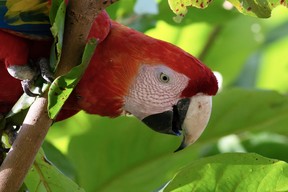
Wildlife tourism “is a very competitive business” in Costa Rica, said Janik, who refuses to cater to people who want to physically interact with the animals.
“We don’t do what everybody’s interested in, an animal interaction experience. Touch it, feed it, have it sit on them. It’s just, I’m Canadian and Canadians have ethics, you know,” he said.
“We don’t trade animals, we don’t sell animals, we don’t give animals away,” he added.
The centre gets about 3,000 rescued animals a year. Some are in accidents, others are confiscated from smugglers, like the five capybaras that arrived in May, 2025. The traffickers took off when they were stopped at a roadblock and left the animals behind in a plastic box. Since capybaras are not native to Costa Rica, they can’t be released, said Janik. They’re now permanent residents at the refuge.
Other animals in residence include those the Costa Rica government sent to wildlife refuges when it closed the last two state-run zoos in 2024.
Janik, who spent 25 years fighting for changes to wildlife laws in Costa Rica, was among the activists who worked to see them closed.
“We eliminated sport hunting here in Costa Rica. That’s kind of one of my personal biggest accomplishments,” he said.
Janik also spearheaded two Costa Rican awareness campaigns to end animal selfies, encouraging people to stop posing with captive wild animals for social media photos.
“My saying all these years has been you can take the boy out of Canada, but you can’t take the Canadian out of the boy. My life’s work and success have been based on my Canadian upbringing and education,” said Janik. “Be ethical, humble, sincere, worrying about others, take care of those that cannot take care of itself.”
Although he said he’s a proud Canadian who misses the wildlife and the people of his home country, he can’t see himself moving back. “But that’s only because of the weather,” he said.
While he’s still devoted to Costa Rican animal activism, Janik is exploring ways he can also help in Spain.
“I’m going to get involved with the anti-hunting animal welfare people in Spain. Spain still has bullfighting. Spain still has captive dolphins. So, there’s plenty to do, really.”
Join the Conversation
This website uses cookies to personalize your content (including ads), and allows us to analyze our traffic. Read more about cookies here. By continuing to use our site, you agree to our Terms of Use and Privacy Policy.
KioskNews shows a cleaned-up reading view extracted from the publisher’s page — the original always lives on their site, not ours.