Ashwini Bhide at Idea exchnage: ‘You cannot say that data centres should not be there. It creates jobs, but regulations will be put in place’
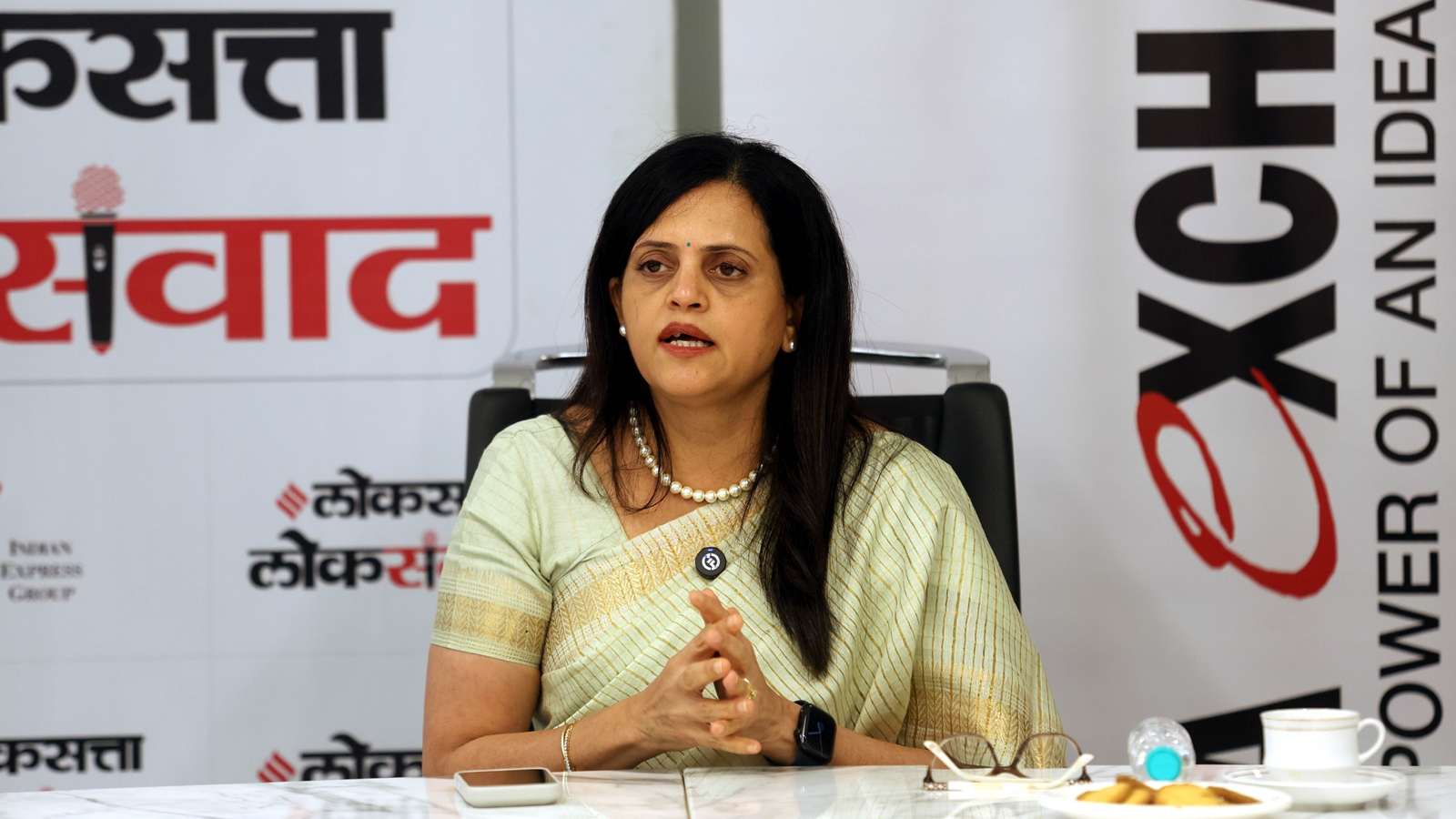
Ashwini Bhide, Brihanmumbai Municipal Corporation Commissioner, on managing floods and air pollution, addressing concerns about data centres and what other cities can learn from Mumbai. The session was moderated by Nayonika Bose, Senior Correspondent, and Pratip Acharya, Principal Correspondent, The Indian Express
Nayonika Bose: Mumbai’s road network is barely comparable with other cities in the country. Why do you think we have not been able to develop Mumbai’s roads?
It is not enough that we have just have a budget. Mumbai is a linear city. It is peninsular in nature and on three sides, there is the ocean, so we cannot expand. We have 448 sq km of suburb, with large chunks of the forest and the national park in it along the Coastal Regulation Zone (CRZ). So, the actual area available for development and road network is less. If you compare it to Delhi, which has a road network of more than 28,000 km, Mumbai has only 2,050 km. We have tried to bridge this by exploring underground corridors such as the Goregaon Mulund Link Road (GMLR) and the coastal ring road which will connect Marine Drive and Virar. As for the issue of road quality, we are concretising approximately 700 km. The road quality also gets affected due to frequent trenching. Unlike other cities, all utility corridors run beneath the road surface. We have roughly 27 to 30 utilities and they need to be constantly repaired or augmented for which trenching is critical. Currently, we are developing a trenching policy which will be designed to incentivise the use of dedicated ducts. The infrastructure deficit will have to be made up by public transport. For that, the entire metro network will need to be completed, which is expected in two-three years.
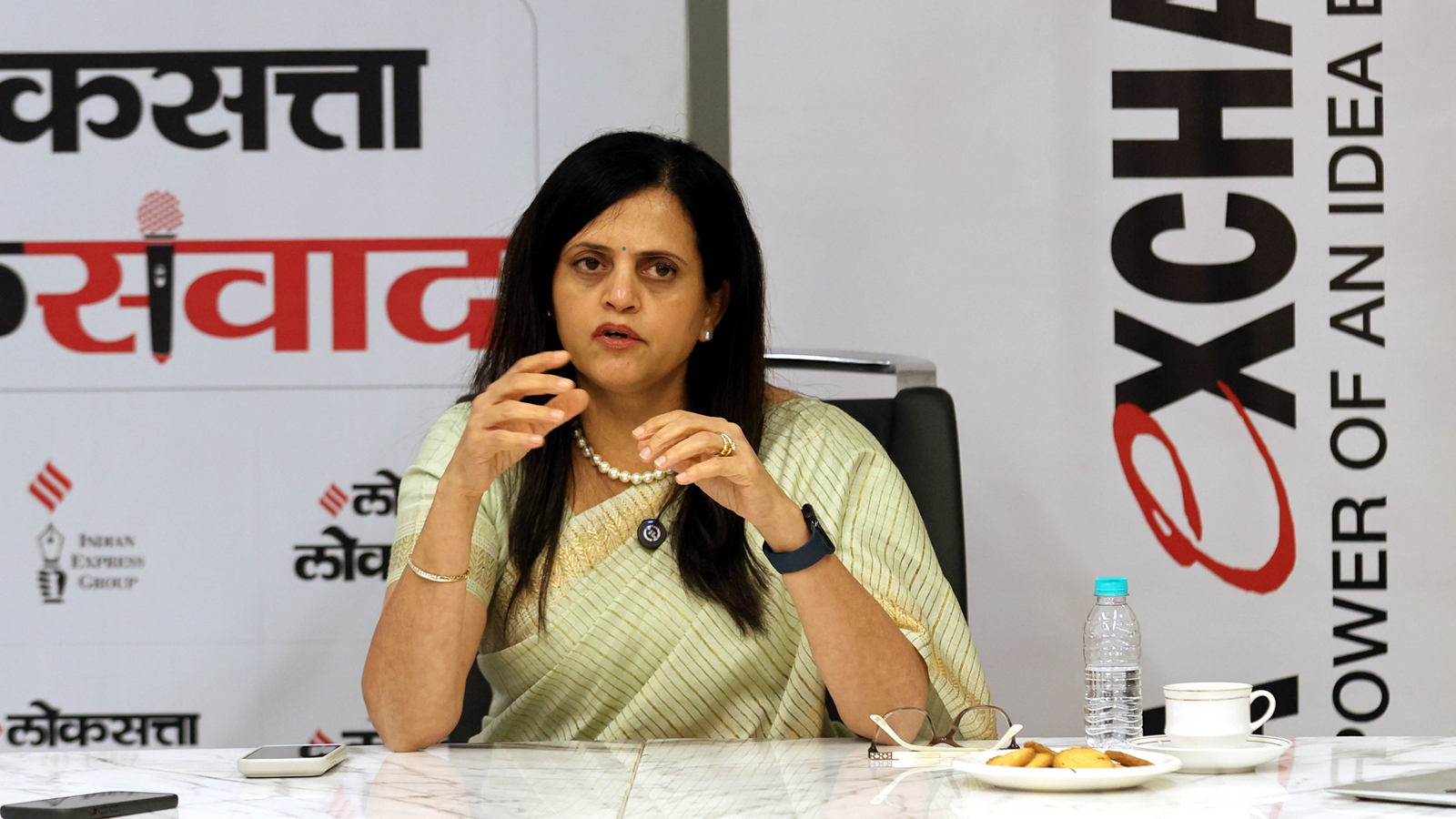 Ashwini Bhide, Brihanmumbai Municipal Corporation Commissioner, at the Mumbai office. (Express photo by Ganesh Shirsekar)
Pratip Acharya: The fleet of BEST buses is shrinking. Are we over investing in metros and do we need to focus more on other modes of transport for the last-mile connectivity?
We cannot say that there is an over investment in the metro as that is absolutely required. But I can say that there is an under investment in buses or other last-mile transport. However, the problem is the size of the fleet. In Mumbai, the bus fleet size is roughly 2,600-2,800 while the city needs 7,000 to 10,000 buses. For a city where maximum trips are made on foot, our pedestrian infrastructure remains extremely poor. We are addressing this with our pedestrian-first policy, where we are prioritising by clearing encroachments near stations. Last-mile connectivity is not a simple, linear thing but a mix of multiple things. Action needs to be taken by different authorities, even people have to change certain habits.
Pratip Acharya: Despite BMC’s mammoth budget, Mumbai always ranks low on the national Swachh Survekshan list. How is BMC working to improve cleanliness?
We collect 7,000 metric tonnes of solid waste and 8,000 metric tonnes of construction debris daily. The challenge lies in transporting it to the processing grounds and ensuring that nothing is left on the road or on open spaces. Our biggest challenge is that 40 per cent of our population is living in slums where waste collection is difficult. Since these are not organised households, they do not put their dustbins outside even if we go there daily at 7 am. We have identified garbage vulnerable points (GVPs). There are roughly 186 GVPs in the city alongside 200 garbage hotspots. We are attempting to eliminate them by deploying NGOs and using digital applications. But. as citizens, we also need some self-discipline and should not litter.
On state of Mumbai’s roads | The road quality gets affected due to frequent trenching. We have roughly 27 to 30 utilities that need constant repair. We are developing a trenching policy to incentivise the use of dedicated ducts
Story continues below this ad
Shubhangi Khapre: The 2005 floods in Mumbai highlighted the absence of adequate storm water drainage. How challenging are mitigation efforts given different climatic challenges?
We are far better equipped today than we were in 2005. However, the challenge of climate change, erratic and extreme weather events still looms. Currently, our drainage has the capacity to handle 55 mm rainfall in an hour, which is more than adequate in normal situations. However, when rainfall crosses more than 100 mm to 300 mm in low-lying areas within a short timespan, then this network may fall short. There are temporary storage solutions too, such as underground tanks, identification of areas with water-logging and restricting people’s movement there. Additionally, we have submitted an urban flood mitigation plan to the Central government which will be funded under the National Disaster Relief Fund. The central part is early warning for which we have been leveraging help from IIT Bombay which gives us three day’s localised predictions daily. Accordingly, we ensure that the pumps are working, traffic police are informed and rerouting is done.
Mohamed Thaver: There is also anxiety among people about the boom of data centres. Many are concerned about the water they use.
The state government has a Green Data Centre Policy, which mandates data centres to use recycled water. Since data centres are also major consumers of energy, the policy requires them to procure or generate green energy as well. Many of the new data centres coming up in Navi Mumbai and surrounding areas fall under CIDCO and the Navi Mumbai Municipal Corporation, which have water treatment plants. These plants treat sewage, and the treated water undergoes further processing through what is known as advanced tertiary treatment. The water can then meet very high quality standards, while data centres may carry out additional treatment as required for their operations. Therefore, data centres do not necessarily depend on potable water supplied by municipal corporations. In Mumbai, seven sewage treatment plants (STPs) are currently under construction. Mumbai requires around 4,100 MLD (million litres per day ) of water every day, of which approximately 2,400 MLD is converted into sewage. Of the 2,400 MLD, we have so far been treating it only through secondary treatment before releasing it into the sea. However, with the new STPs, this sewage will undergo primary, secondary and tertiary treatment. We expect to recover around 1,200 MLD of water that can be reused in the city for non-potable purposes. This water can be supplied to data centres and other organisations that require water for non-potable uses. It could also eventually be used in households, although that would require separate plumbing systems.
On data centres and water | The state government has a Green Data Centre Policy, which mandates data centres to use recycled water… So, in local areas where there are conflicts, there are ways of addressing them
Story continues below this ad
Zeeshan Shaikh: The other concern is the increase in ambient temperature and the noise the data centres generate. In places like Thane, data centres are coming up near residential areas. Do you think there is a need for a policy on where data centres should be located?
Mumbai attracts so many data centres due to undersea marine cables that are located near Mumbai and (also in) Chennai. You cannot say that data centres should not be there, we have to co-exist. We have to draw boundaries between the habitable areas and the industrial areas. So, in areas where there are conflicts, there are ways of addressing them. It is a business, it generates jobs, it creates an ecosystem for development. But regulations will be put in place.
Pratip Acharya: There’s more redevelopment in the suburbs. Why has south Mumbai not seen as much redevelopment?
Redevelopment will come to the city because ultimately it is an economic activity and the function of profitability also plays a part. In our existing scheme, we have guaranteed free housing for people. Even for cessed buildings (pre-1969 structures), there is free housing. Once you give a house free, then it needs to be compensated by somebody. Due to this, even though the city has redevelopment potential, developers weigh their options as to where it would be financially viable. In some areas, there are high restrictions, in some areas, land becomes an issue. In south Mumbai, cessed property, tenanted properties, especially those on BMC and state lease are getting redeveloped but private properties will weigh their options.
On creating open spaces | Where land is scarce, we have to be innovative. Currently, the coastal road gardens are being planned. With that, we will create almost 70 hectares, for sports, performances and open gardens where people can gather or just loiter
Story continues below this ad
Nayonika Bose: These projects also churn out large quantum of Construction and Demolition (C&D) waste. Is the city really equipped to handle it and how do we bridge the capacity?
We generate almost 8,000 metric tonnes of C&D waste every day and BMC themselves have set up plants up to 1200 MT. But, the generated C&D waste is often dumping illegally in old quarries or protected government land. That now needs to be streamlined. What we need is recycling because often C&D waste gets mixed with wood, PoP, stones and bricks. Therefore, we need facilities to segregate and reuse the materials, so that they can go back into other construction work. We have also prepared a portal on the lines of Delhi’s Malba Portal. We consulted developers, transporters, recycling experts and innovators. C&D waste needs to be dealt with scientifically and within the framework of rules.
Ashwini Bhide, Brihanmumbai Municipal Corporation Commissioner, at the Mumbai office. (Express photo by Ganesh Shirsekar)
Ritika Chopra: What do you think of FDA commissioner Tukaram Mundhe’s working style?
Every officer has his own style of functioning. This uniqueness of each officer makes bureaucracy also very versatile. Everybody knows the rule book. But at times, society also needs some shocks, because without that the issue at hand will not be discussed. Tukaram is a mature officer. He knows that this kind of initial noise is needed otherwise nobody would bother. I am very sure he will put systems in place, so even later on, this work continues.
Story continues below this ad
Zeeshan Shaikh: We have multiple city planning agencies and there is technical expertise in-house, but increasingly, these agencies hire external consultants. Is this a capacity gap?
I think dependence on consultants is not bad. Metro Line 3, the underground metro, for instance, was the first underground intervention in the city. We got people from the railways and other places. Our initial team was about 100 people who were accompanied by around 500 consultants. Once the job was over, they left. If I decide to do everything in-house, then we will have to have huge teams because there is too much work. And then how will our team gain experience? Consultants are important because they work on various projects. For the complex tunnelling for Metro Line 3, we did not have that kind of expertise in India. We got a tunnelling expert from the UK for a certain number of days. But your question is right, dependence on consultants is not bad, over-dependence is bad. For example, the Delhi Metro Rail Corporation (DMRC), in its first project, worked with consultants but later, it developed its own capacity to execute and plan projects. Now it itself is a consultant. I keep telling my BMC officers that there are certain areas where only BMC works, nobody else. So, we should be in a position to start our own consultancy at some point of time. Today, DMRC’s major revenue comes from their consultancy services because you can’t earn revenue only through tickets.
Nayonika Bose: The change in reservation of Neville D’Souza football ground has once again brought to fore the lack of open spaces in Mumbai. Despite being a coastal city, we have not even been able to develop our seafront to the best capacity. How is the BMC planning to bridge this gap?
In a city where land itself is a scarcity, we have to be innovative in creating spaces. Currently, the coastal road gardens are being planned and that is being beautifully designed. With that, we will create almost 70 hectares, for sports, performances and just as open gardens where people can gather or just loiter. These are the opportunities which we should utilise.
Story continues below this ad
Zeeshan Shaikh: Do you think we’re doing enough for green cover and parks for the residents in Mumbai?
Given the area we have, our per capita green space is more than enough. But yes, we can always do better. As city planners, we need to strike a balance with the reality of Mumbai. We have around 30 to 32 lakh trees in the city, when we include trees from Aarey forest. Out of that 2 lakh trees are along the road. This number is good, but equitable distribution is an issue.
Dharavi has less tree cover, which leads to heat generation, making the standard of living even poorer. But, we can do better. We are also mandated to have compensatory replantation when trees are required to be cut. There are times we are required to plant 200 trees for five trees cut. Unfortunately, for replantation there is no land available, and we plant in the peripheral areas like Panvel or Palghar. In BMC, we have now said that whenever large development happens, and certain amenity plots open up, they will be inventoried and put on GIS. Among those plots, some will not be put to any recreational use but will remain available as gardens. Small plots with trees will therefore be available across the city. With Miyawaki plantation, we can plant almost 1 lakh trees on these plots.
Sadaf Modak: There are avoidable deaths every monsoon due to landslides and building collapses. Is there any mechanism that needs to be put in place, like forceful evacuation or temporary accommodation?
Story continues below this ad
Yes, we will at some point look at forceful evacuation. But temporary accommodation is not available as an option in all cases. There is a system for that. From our side, we have now decided, along with the Collector, that after monsoon, we will find out some of the most vulnerable places, and we will try to demolish some of these structures in advance. We will request people to move from those areas, because there is no other alternative.
Ritika Chopra: If Mumbai were to become a blueprint for development for other megacities, what is the one lesson other cities could emulate and one lesson that they need to avoid?
I think the first thing is the metro master plan. It was prepared in 2004, and done in a very scientific way. MMRDA conducted a comprehensive transport study for the entire MMR region. They created various futuristic scenarios and picked the most realistic one. So what other cities should do is make a detailed plan for their infrastructure, see where exactly the city is going, what its strong points are, what its weak points are, and which areas need a boost.
Another strong point is that why we complain about the multiplicity of agencies, Mumbai has various agencies which have the nimbleness and action orientation to quickly gear up for taking on big projects. Maybe other cities can think of having specialised agencies or project implementation agencies. What is to be avoided is probably that you can’t — you should not — take up so many projects at one go. You should at least plan in such a way that some projects are completed within a short span of time, and then you take up further projects.
Story continues below this ad
Pratip Acharya: How is the BMC looking at addressing air pollution?
We cannot look at it in isolation. One of the biggest reasons for air pollution, which is not discussed enough, is the air movement in the whole MMR region and how the wind and dust from these areas circulate. What lies in our hands is how to control the pollution. First is construction activity and the BMC is now monitoring more than 3,000 construction sites where we have mandated full covers, AQI monitors. Our officials have a dashboard to monitor the compliance. Even the RMC plants and sites are now fully covered. Another key factor is vehicular pollution and therefore, the shift to public transport, electric vehicles is also very important. It will happen with time.
KioskNews shows a cleaned-up reading view extracted from the publisher’s page — the original always lives on their site, not ours.