10 Horror Books That I Knew Would Be Masterpieces From the First 10 Pages

Daniel is a 27-year-old List Writer for Collider living in the south suburbs of Chicago, Illinois. As an avid film buff, he watches and analyzes many films and TV shows, especially in the horror genre, and regularly attends movie screenings.
Sign in to your Collider account
Just like in movies, TV, or any other form of entertainment, a great start is what really sucks us into the story. It is essential to immediately state why a particular story matters right from the beginning, why it's worth putting the time and effort into allowing ourselves to get drawn in, and why it's even worth telling. Storytelling has evolved over the years, but hooking the audience in right from the start has been a golden rule throughout the ages. Books particularly have the daunting task of gripping our attention after the first few pages, and some have become legendary for having a pretty tremendous start.
It's not always the case that books can instantly attract readers to stay all the way to the final page; some are just excellent slow burners. But one genre in particular needs a good hook right off the bat, and that's horror, one of the most popular forms of entertainment that has thrived long before the age of cinema. Yet, some of the greatest horror novels of all time became widely hailed and timeless today because they immediately grabbed us, filled us with excitement or even dread, and never let go, forcing us to read on. From recent bestsellers to ageless literary classics, these are the iconic horror novels that I immediately knew were going to be masterpieces just from reading the first ten pages.
'Bird Box' (2014)

Starting off is Bird Box, the 2014 bestselling post-apocalyptic horror thriller novel by American author and musician Josh Malerman. A tense, dramatic tale of desperate survival and struggling with personal trauma, it swept the nation, took readers by storm and was eventually turned into a Netflix smash-hit film adaptation starring Sandra Bullock. It tells of a country ravaged by tragedy when a mysterious event caused much of the population to kill themselves after looking at it. Now, five years later, a mother strives to save her two young children by finding safety.
The first few pages perfectly set up the tone and severity of the terrible situation the protagonist, Malorie, and her children are faced with. It sees them fleeing their long-term shelter and making their way out into the dangerous wilderness to avoid certain death. This opening is all about setup, and it does it excellently. It immediately lets you know the stakes, the characters, and why they hope to survive. It doesn't even paint the full picture of what this mysterious event was, which encourages us to read further on until the end.
'The Troop' (2014)

Written by Canadian author Craig Davidson, using the pen name Nick Cutter, The Troop is a dark, gory 2014 coming-of-age horror story that instantly hooks you in with its unique body-horror premise. With a bloody and over-the-top plot with the cabin-in-the-woods horror feel of Cabin Fever but mixed with the teenage angst and drama like in Stephen King's Stand By Me, it follows a group of Boy Scouts as their weekend trip with their Scoutmaster to a remote island turns into a fight for survival against a mutated breed of tapeworms and a few unfriendly strangers.
The beginning is a typical set-up, featuring the key characters, the world, and even hinting at the terror that would be more prevalent later in the story. But it's a fascinating hook that starts ominously and doesn't give too much away about just how insane and gory this tale would truly become. The Troop stands out in the first ten pages alone for flawlessly introducing the story without ruining or instantly diving into what it's really all about.
'The Turn of the Screw' (1898)

A genre-defining masterpiece that changed gothic horror forever, author Henry James' novella The Turn of the Screw is widely regarded as one of the most influential horror tales ever told. This powerful blend of gothic fiction and psychological terror is endlessly praised today for its dark, ambiguous storytelling and for establishing mood and atmosphere as the perfect way to unsettle readers. It follows a troubled governess as she's sent to an isolated country home to tend to two orphans, but strange events and weird behavior from the children slowly chip at her sanity, and she questions whether something sinister is lurking in the house.
It first draws readers into this twisted, mind-bending tale by slowly building tension and suspense, following a group of Christmas Eve party guests as they sit to hear an enticing ghost story from one of their own about the story that unfolds throughout the rest of the book. The Turn of the Screw begins with a story within a story, setting a frame narrative that's made to feel intentionally ambiguous and off-putting. You don't know what is real throughout the rest of this book after these first few pages.
'The Hellbound Heart' (1986)

British filmmaker and writer Clive Barker created one of the goriest, most intense and spectacular film franchises with the Hellraiser series in the late 1980s through the 1990s. They kicked off a new age of horror that introduced fans to the Cenobites, a dark, demonic race that continues to be present in pop culture. But first, he brought these terrifying icons to life in his legendary 1986 novella The Hellbound Heart, which became the basis for the first Hellraiser a year later in 1987.
Much like that film's introduction, The Hellbound Heart starts strong, luring us into an eerie, hellish story full of pain, suffering, and hedonism. It begins with the despicable Frank Cotton as a dark quest for hedonistic pleasure leads him to come into possession of the LeMarchand Configuration, a puzzle box that opens a portal to a terrible dimension that rips away at his flesh. The story hits the ground running in these first ten pages, alluring readers first with a shocking opening demise and a sneak peek at the horrors that would be unfolding later in the story.
'Who Goes There?' (1938)

From legendary science fiction writer John W. Campbell comes the iconic tale that inspired two of the greatest sci-fi horror films of all time. Released in 1938, Who Goes There? is a sci-fi thriller novella set in the frozen Antarctic region where a group of American scientists unintentionally thaw out and battle a shapeshifting alien monster buried beneath the ice for thousands of years. This premise would go on to become the basis for Christian Nyby's 1951 black-and-white classic The Thing from Another World and John Carpenter's 1982 masterpiece The Thing, both considered legendary staples of the horror genre today.
Who Goes There? is a timeless and magnificent horror novella that gave tremendous inspiration. It's just as tense, suspenseful, and mysterious as the films it inspired, and it starts strong by gradually introducing readers to what the rest of the story is going to be about. The first ten pages brilliantly establish all the notable main characters, the bleakness and how inhospitable the cold setting is, and lean into introducing the monster by first establishing that the characters found something mysterious in the ice. It's a well-crafted, simple beginning to one of the most influential sci-fi horror novels ever published.
'The Shining' (1977)
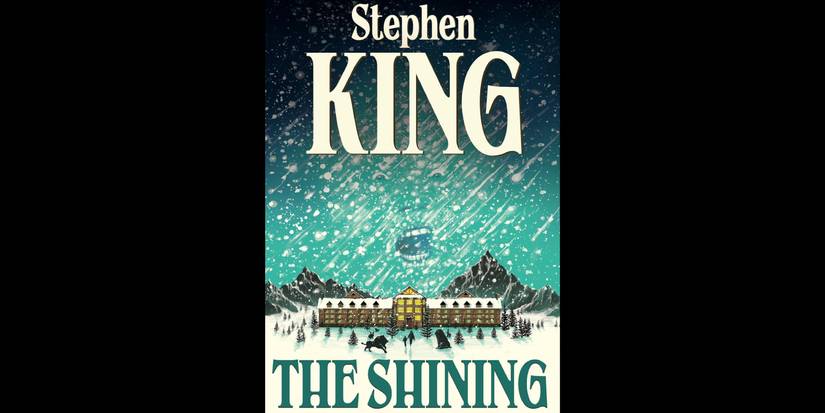
No great horror novel list is complete without mentioning Stephen King. Considered the most prolific horror author of all time, King helped secure the genre's dominance in cinema each decade over the last fifty years with his tremendous stories, most of them ranging from absolute classics to some of the most compelling works of fiction, period. But it is his 1977 supernatural masterpiece The Shining that not only secured his unshakable reputation but established him as the king of horror.
This legendary story about a struggling writer who brings his family to be caretakers of an isolated and haunted mountain hotel has become a staple of the horror genre and has been immortalized in cinema with a film adaptation that remains a highlight to this day. Its first ten pages are what really glue readers to this eerie tale, as it establishes the tone right off the bat, introducing us to the inner turmoil of our main character, and illustrates where we're going to be focusing for much of this story. The Shining's opening pages set up a masterful story that is endlessly praised today.
Collider Exclusive · Horror Survival Quiz Which Horror Villain Do You Have the Best Chance of Surviving? Jason Voorhees · Michael Myers · Freddy Krueger · Pennywise · Chucky
Five killers. Five completely different ways to die — if you're not smart enough, fast enough, or self-aware enough to avoid it. Only one of them is the villain your particular set of instincts gives you a fighting chance against. Eight questions will figure out which one.
🏕️Jason
🔪Michael
💤Freddy
🎈Pennywise
🪆Chucky
01
Something feels wrong. You can't explain it — you just know. What do you do? First instincts are the difference between the survivor and the first act casualty.
02
Where are you most likely to find yourself when things go wrong? Setting is everything in horror. Where you are determines which rules apply.
03
What is your most reliable survival asset? Every survivor has a quality the villain didn't account for. What's yours?
04
What kind of fear is hardest for you to fight through? Knowing your weakness is the first step to not dying because of it.
05
You're with a group when things start going wrong. What's your role? Horror movies are brutally clear about who survives group situations and who doesn't.
06
What's the horror movie mistake you're most likely to make? Honest self-assessment is a survival skill. Denial is not.
07
What's your best weapon against something that can't be stopped by conventional means? Every horror villain has a weakness. The survivors are always the ones who find it.
08
It's the final scene. You're the last one standing. How did you make it? The final survivor always has a reason. What's yours?
Your Survival Odds Have Been Calculated Your Best Chance Is Against…
Your instincts, your strengths, and your particular way of thinking under pressure point to one villain you actually have a fighting chance against. Everyone else — good luck.
Jason Voorhees
Jason is relentless, but he is also predictable — and that is the gap you would exploit.
- He moves in straight lines toward his target. He doesn't strategise, doesn't adapt, doesn't outsmart. He simply pursues.
- Your ability to keep moving, use the environment, and resist the panic that freezes most victims gives you a genuine edge.
- The Crystal Lake survivors were always the ones who stopped running in circles and started thinking about terrain, water, and distance.
- You think like that. Which means Jason, for all his indestructibility, would face someone who simply refused to be where he expected.
Michael Myers
Michael watches before he moves. He is patient, methodical, and almost impossible to detect — until it's too late for anyone who isn't paying close enough attention.
- But you are paying attention. You notice the shape in the window, the car parked slightly wrong, the silence where there should be sound.
- Michael's power lies in the invisibility of ordinary suburbia — the fact that nothing ever looks wrong until it already is.
- Your spatial awareness and instinct to map every room, every exit, and every shadow before you need them is precisely the quality Laurie Strode had.
- You are not a victim waiting to happen. You are someone who already suspects something is wrong — and acts on it.
Freddy Krueger
Freddy wins by getting inside your head — using your own fears, your own memories, your own subconscious as weapons against you. That strategy requires a target who can be destabilised.
- You are harder to destabilise than most. You've faced uncomfortable truths about yourself and you haven't looked away.
- The survivors on Elm Street were always the ones who understood what was happening and chose to face it rather than flee from it.
- Freddy's greatest weakness is that his power evaporates in the presence of someone who refuses to give him the fear he feeds on.
- Your psychological resilience — the ability to stay grounded when reality itself becomes unreliable — is exactly the quality that keeps you alive here.
Pennywise
Pennywise is ancient, shapeshifting, and feeds on terror — but it has one critical vulnerability: it cannot function against someone who genuinely stops being afraid of it.
- The Losers Club didn't survive because they were braver than everyone else. They survived because they faced their fears together, and faced them honestly.
- You ask the questions others avoid. You look directly at what frightens you rather than turning away.
- That directness — the refusal to let fear fester in the dark — is Pennywise's worst nightmare.
- It chose the wrong target when it chose you. You are exactly the kind of person whose fear tastes like nothing at all.
Chucky
Chucky's greatest advantage is that nobody takes him seriously until it's already too late. He exploits the gap between how something looks and what it actually is.
- You don't have that gap. You take threats seriously regardless of how they present — and you never make the mistake of underestimating something because of its size or appearance.
- Chucky relies on surprise, on the delay between recognition and response. You close that delay faster than almost anyone.
- Your instinct to treat every unfamiliar thing with appropriate scepticism — rather than dismissing it because it seems absurd — is the exact quality that keeps you breathing.
- Against Chucky, not laughing is already winning. You are very good at not laughing.
'The Haunting of Hill House' (1959)

One of the most iconic ghost stories ever written, Shirley Jackson's groundbreaking 1959 gothic horror novel The Haunting of Hill House has forever impacted the supernatural genre. A masterful blend of psychological suspense and supernatural dread, this timelessly creepy tale of a paranormal experiment gone wrong has been adapted to film and television for years, most notably in Robert Wise's 1963 classic The Haunting.
A key thing to get readers invested is that you need to hook audiences first into what the story is going to be about quickly and establish the tone even quicker. Thankfully, The Haunting of Hill House is a masterclass of rapid set-up. It lets you know the history of the mansion instantly, why the main character, Dr. John Montague, is so fascinated by it, and even sets up a feeling of dread that something bad will happen later. This setup can immediately keep you reading further all the way to the end, a perfect start to an even more perfect story.
'Dracula' (1897)

Horror in cinema wouldn't be the same today without one of its most influential stories. Published in 1897, Irish novelist Bram Stoker's gothic tale of Dracula became a landmark of storytelling that further pushed horror into the spotlight of entertainment. It became an endless and timeless source of influence that led to countless retellings and reinterpretations both in literature and on the big and small screens. We know the iconic tale of the centuries-old vampire Count Dracula as he leaves his castle in Transylvania to go on a rampage on the streets of England in search of a new bride.
The first ten pages are equally iconic and unforgettable, as they tell the story through the diary entry of solicitor Jonathan Harker as he writes down his travels leading up to the ominous castle and meets the sinister Count himself. It's an opening that's been featured heavily, albeit slightly altered, in several adaptations, in movies and other forms of media throughout the years. It's recognizable and instantly sets the tone and stage of this legendary tale. It's eerie and perfectly suspenseful, keeping you on edge as you continue to read further.
'Frankenstein' (1818)

Another widely praised Gothic tale that influenced our modern perception of horror was Frankenstein, Mary Shelley's 1818 masterpiece that has remained timeless. It's quite simply one of the greatest works of literature, a definite classic that influenced storytelling for more than 200 years. It, of course, tells a memorable tale that explores the meaning of life and the tragic themes of science going too far. It follows the brilliant Dr. Victor Frankenstein as he creates a new being from dead tissue, only to reject his creation and force the creature to go on a murderous path to get revenge on him.
Frankenstein broke new boundaries in storytelling and writing. There's a reason why it's been adapted to film and television for decades, and nearly every part of it has been studied and praised for being flawless, especially its first few pages. It opens with letters from a ship captain, Robert Walton, sent to his sister as he tells of ambitiously embarking on a voyage through the Arctic Circle. It tells nothing about Victor or his creation, but it plays into one of the story's themes of ambition and seeking danger. It's a perfect setup that slowly makes its way to the heart of the story.
'The Call of Cthulhu' (1926)

Taking the final spot goes to the opening of The Call of Cthulhu, author H. P. Lovecraft's seminal cosmic horror masterpiece that defined his writing career. It's simply one of the most darkly creative and eerie short horror stories ever written, a unique blast of terror that takes readers on a mind-bending journey full of strange, unusual horror and iconic monsters. What really makes it a step above is its first few pages, which are truly noteworthy.
It starts with the narrator, Francis Weyland Thurston, talking about the blind arrogance of humanity, stating that we are sheltered from a larger, more terrifying cosmos that's full of more danger than we think. It's a thought-provoking and unsettling opening few pages that perfectly set the mood of this unnatural and horrifying tale. It challenges our perception and place in the universe and allows us to be open-minded to some of the more strange and horrifying parts of this story. Honestly, after the first few pages, I knew this was a masterpiece unlike anything I ever read.
KioskNews shows a cleaned-up reading view extracted from the publisher’s page — the original always lives on their site, not ours.