Leaked papers, cancelled government exams, no new dates: MPSC protests grow in Maharashtra
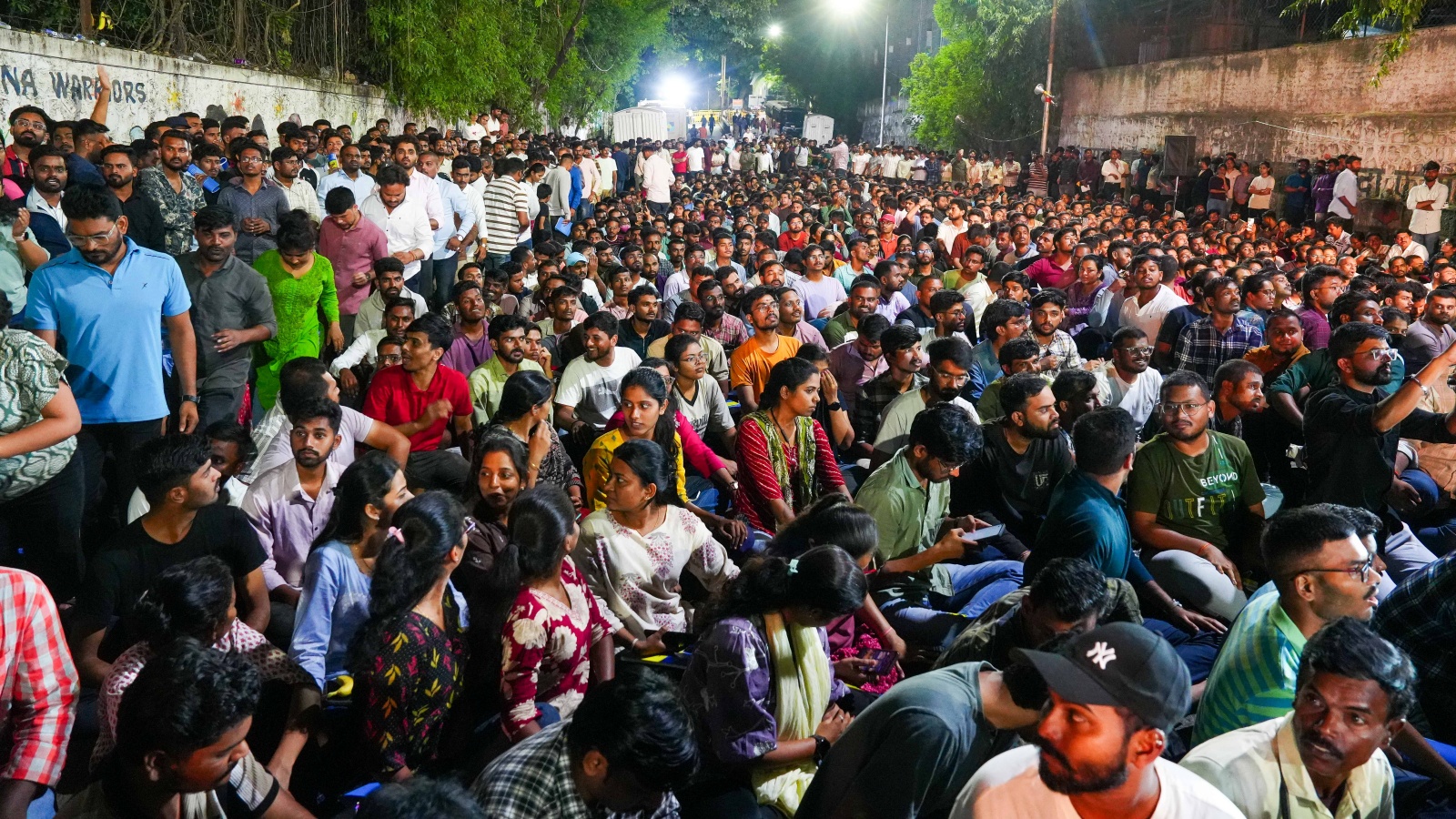
Rahul Mahale, 29, had a simple plan: give the State Services Main Exam this month, write the Group-B Main in December, exit the long preparation phase finally, and end the monetary drain it caused on his parents. Then, his hopes vanished.
Mahale is among the thousands of aspirants sitting for exams conducted by the Maharashtra Public Service Commission (MPSC), who have been protesting in Pune – an MPSC exam hub – since October 2.
The exam that Mahale was preparing for, having passed the Prelims for the State Civil Services, has been postponed with no new dates announced, since irregularities were found in tests conducted by the MPSC.
“My demand is that the wrongdoers be removed, and the commission adhere to strict exam schedules and transparent conduct,” Mahale says. Topping the demand for him and others is the resignation of MPSC Chairman Vivek Bhimanwar.
With the government on the backfoot since the NEET paper leak protests, the Opposition, including the Congress, NCP (SP), Maharashtra Navnirman Sena and the Cockroach Janta Party, has lent its weight to the MPSC protests. Maratha quota activist Manoj Jarange-Patil has also spoken up for the aspirants.
At least one leader of the ruling coalition, Shiv Sena MP Omraje Nimbalkar, has visited the protest site. He promised the aspirants that he would take up their demand to remove the MPSC chief “personally with the CM”.
On Monday, in one of its biggest concessions to the demands of the aspirants, the Fadnavis government sent a recommendation to Governor Jishnu Dev Varma proposing a committee to examine the conduct of former and incumbent MPSC chairpersons and members.
Story continues below this ad
The CM had earlier said Bhimanwar held a “constitutional” post and hence could not be removed arbitrarily. His recommendation to the Governor was made under Article 317 of the Constitution, which deals with the removal and suspension of chairpersons and members of public service commissions.
On Wednesday, hearing a petition by some Pune residents, the Bombay High Court said it was the government’s duty to ensure that public recruitment exams are conducted impartially, adding: “If they (students) lack opportunities and (believe) there has been hanky panky, they have the right to agitate. Because they have given hours of study… The protesters are students… not anti-social elements.”
A drug inspector exam
On June 12, results were declared for the drug inspector posts exam conducted by the MPSC in March, selecting 506 applicants for the interview round. A little over a month after the results came out, NCP (SP) MLA Rohit Pawar held a press conference claiming that the paper had been leaked.
It took another month before the MPSC admitted this had happened, and on August 25, it cancelled the recruitment process. By then, of the 506 who qualified for the interview stage, interviews had been conducted for 488 and a provisional general merit list of 485 had been declared.
Story continues below this ad
Soon after, the State Services Main Exam 2025 conducted by the MPSC in November last year for 139 vacancies, whose result shortlisting candidates for interviews was declared on August 25 this year, came under a cloud. Widespread protests alleged irregularities in the evaluation of questions requiring descriptive answers – a new format introduced only last year – and questioned the unusual variations in marks.
On September 10, Rohit Pawar held another press conference, where he claimed MPSC chief Bhimanwar was close to Fadnavis, and that his record was marked by several controversies.
Bhimanwar defended himself saying he took charge of the MPSC only in April this year, and that the alleged irregularities predated his tenure.
On September 11, in a further escalation, members of the Maratha outfit Sambhaji Brigade blackened the face of then MPSC secretary Mahendra Harpalkar at the commission’s head office in Navi Mumbai.
Story continues below this ad
On September 28, the MPSC announced postponement of the State Services Main Exam 2026, which was to begin on October 3, citing requests from aspirants, parents, student organisations and elected representatives. It also said it would re-evaluate the answer sheets for the 2025 exam, and deferred the Maharashtra Civil Engineering Main Examination 2026 and the Maharashtra Group-B (Non-Gazetted) Main Examination, without announcing revised schedules for any of the three.
Damage control
By mid-August, Chief Minister Devendra Fadnavis had already announced a complete review of the MPSC system. As part of this, a seven-member committee was asked to visit each Revenue Division, consult students, representatives of educational institutions and other stakeholders, and submit a report by the end of the year.
With tempers rising, on October 2, the government transferred Harpalkar.
While the government seems to have relented on its position regarding Bhimanwar now, the protesters are also divided over their main demands. If for one group, the main thing is the MPSC chief’s removal, another wants the descriptive pattern of exams scrapped, while yet another opposes any return to the objective format.
One of the members of the second group of protesters, Dhuldev Tele, 27, says the wide variation in the Mains marks showed that the MPSC lacked the mechanism and experts to evaluate descriptive papers fairly.
Story continues below this ad
But Amar Khose (21), who says he has spent “lakhs of rupees” preparing for the State Services Main Exam since 2023, is opposed to a change in format. Preparing for an optional subject alone cost him Rs 70,000, he says, and now the MPSC has decided it will not be a part of the 2027 exam. “If the Mains shift to the objective pattern too, it will be a major setback for lakhs like me who have studied hard for the descriptive format,” Khose says.
Madhuri Netake (29), an aspirant from Karjat, says the cancellations could not have come at a worse time. Most protesters belong to agrarian families from rural regions like Marathwada, Vidarbha and Western Maharashtra, which are already battling drought. “The financial burden is just getting heavier,” she says.
KioskNews shows a cleaned-up reading view extracted from the publisher’s page — the original always lives on their site, not ours.