Study: Scrapping Argentina's PASO primaries saved just US$9.5 million
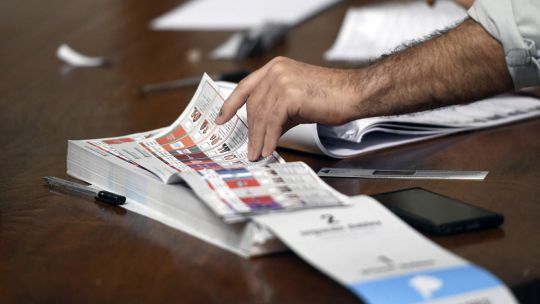
The suspension of the PASO primaries for last year’s midterm elections in Argentina saved barely US$9.5 million, far removed from the over US$200 million which the national government estimated that it would be saving by their elimination, says a new report.
Last April 22, when announcing the total elimination of the PASO (Primarias Abiertas, Simultáneas y Obligatorias) primaries, Interior Minister Diego Santilli claimed the decision would save “over US$200 million for the Argentines.”
The study, Políticas electorales en Argentina: informe ciudadano (“Electoral policies in Argentina: civic report”) by the Fundación Éforo think tank, determined that the state allocated 468.083 billion pesos to the political parties and electoral spending during last year’s midterms at constant prices.
That figure was barely three percent below the 482.561 billion pesos earmarked for the 2021 midterms when, unlike last year, the PASO primaries were held alongside the general elections.
The difference between these two electoral processes was 14.478 billion pesos, the equivalent of around US$9.6 million at the current exchange rate.
Despite only one electoral date last year instead of two, the spending was thus barely three percent in real terms. The study detected that one of the main factors neutralising the savings was a heavy increase in logistical costs.
Last April 22, when announcing the total elimination of the PASO (Primarias Abiertas, Simultáneas y Obligatorias) primaries, Interior Minister had claimed the decision would save “over US$200 million for the Argentines.”
The services rendered by Argentina's Post Office demanded 225.113 billion pesos during the 2025 midterms, the highest level in all the historic series analysed by the foundation and representing 48 percent of that year’s total electoral spending.
The cost even exceeded that registered in years with three electoral dates, i.e. those including presidential run-offs. In 2015 and 2023, for example, the logistical spending averaged 190.797 billion pesos, while the 2017 and 2021 midterms accompanied by PASO primaries averaged 183.687 billion pesos.
The elimination of the primaries did produce a reduction in other items. The transfers earmarked, among other things, for printing ballot papers, extraordinary campaign contributions and security operations fell 129.652 billion pesos as against 2023.
Nevertheless, those savings were largely compensated by the increase in logistical spending.
Éforo also compared the 2025 midterms with 2009, the last midterms held before the implementation of the PASO primaries.
At constant prices for 2025, those midterms demanded 296.967 billion pesos so that last year’s midterms, even without primaries turned out to be 58 percent costlier in real terms.
“That last year’s spending had not returned to the levels prior to the PASO primaries nor was halved as against 2021 suggests a strong resistance to going down,” pointed out the report.
Carla Pitiot, vice-president of the Fundación Éforo, stated the need for more information on the composition of electoral spending.
“Making the composition of that spending more transparent is a necessary condition for the citizenry to be able to evaluate both the efficiency of the electoral system and the equity of political competition,” she affirmed.
The report was elaborated on the basis of official budgetary information from the Economy Ministry with data from the Interior Ministry and INDEC national statistics bureau, reconstructing the evolution of public electoral spending between 2007 and 2026.
The results acquire relevance at a time when the government seeks to advance in Congress with the terminal elimination of the PASO primaries for the presidential elections of 2027, using the fiscal savings as one of the main arguments for pushing the reform.
KioskNews shows a cleaned-up reading view extracted from the publisher’s page — the original always lives on their site, not ours.