TRC Roulette : Khampepe probe — Selebi ordered TRC files sealed, says ‘master file’ keeper Louis Bester
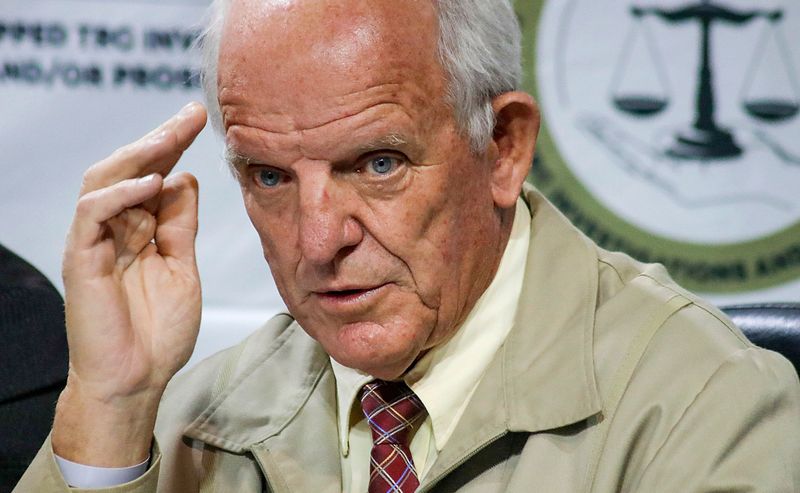
Retired South African police colonel Louis Bester, keeper under lock and key of the Truth and Reconciliation Commission (TRC) master file transferred to the South African Police Service (SAPS) by the National Prosecuting Authority (NPA) in 2004, has told the Khampepe Commission of Inquiry into delayed prosecutions that he sealed 10 boxes on instruction of the national commissioner at the time, Jackie Selebi.
Testifying under cross-examination on Wednesday, Bester maintained his role had been strictly limited to the safekeeping of official documents and securing expert forensic analysis regarding a disputed memorandum, penned by advocate Anton Ackermann, head of the NPA’s Priority Crimes Litigation Unit (PCLU) in 2003, and which had allegedly been tampered with later.
The memorandum, an internal office note originally drafted in 2003 to track the status of TRC dockets, is alleged to have been altered to reflect the date 2006 in order to support allegations that the PCLU was about to arrest the “ANC 37”, including then president Thabo Mbeki, the commission has heard.
Bester testified that on 27 August 2007 he was contacted by divisional commissioner Johan de Beer and summoned to National Commissioner Jackie Selebi’s office.
Upon arrival he had encountered De Beer, assistant commissioner Philippus Christoffel Jacobs, the head of SAPS legal services and the national commissioner. At the meeting they had discussed the disputed Ackermann memorandum.
This had been filed as “Letter 4” in the “master file” and was one of 73 original signed decision and recommendation memorandums in this master folder which was kept locked in Bester’s office safe.

Project Gnome
Ackermann previously testified that the alleged forgery was not a mere clerical error but a “calculated attempt to frame him as a rogue prosecutor”.
Bester, on Wednesday, refuted claims by advocate Chris Macadam, Ackermann’s deputy, that he had any personal agenda or involvement in prosecuting high-profile political figures.
Macadam previously testified at the commission that SAPS member Superintendent Suiker Brits and Bester had met with him, expressing a desire for the ANC 37 and President Mbeki to be prosecuted. He alleged that Bester had been unhappy with the NPA’s decision not to prosecute the ANC senior leaders.
Bester denied this, saying his involvement with TRC-related matters was strictly administrative – limited to the safekeeping of NPA documents, assisting with an audit report and assigning investigators to nine specific matters sent by Macadam in 2010.
He said he had never been tasked with investigating dockets concerning the ANC 37, nor been authorised to do so, and added that relevant case dockets were kept sealed in storage, pending further direction from the NPA.
Later, advocate Gerhard Nel (not to be confused with the famous Gerrie Nel), regional head of the Directorate of Special Operations (DSO) Gauteng, led an investigation titled “Project Gnome” into allegations of fraud, forgery and uttering relating to the Ackermann memorandum.
Meanwhile, the SAPS conducted an internal inquiry, commissioning an independent forensic expert to analyse the document. The SAPS maintained ultimately that its inquiry had revealed that no one could be criminally investigated.
Document merry-go-round
On 23 August 2007, the DSO, within the NPA, requested access to the document from assistant commissioner (Dr) Jacobs, the head of SAPS legal services.
After being informed that the original file was with Bester, advocate Nel dispatched a formal demand for the “immediate handover” of the original document as a “trial exhibit” and even threatened to issue a section 28 summons.
Jacobs informed the lawman he was neither the custodian of the document nor was he authorised to release it. Bester, in turn, referred Nel’s threatening letter to Johan de Beer who had sent a “firm written response”, refusing to hand over the original memorandum
De Beer’s argument had been that it would be “extremely risky” to hand over “a key and irreplaceable exhibit while legal actions were potentially emanating from the allegations”.
The forensic dig-down
In light of the controversy Bester contracted an outside company, Forensic Document Consultants, in August 2007 to determine whether the Ackermann memorandum had been tampered with.
One of the SAPS investigators tasked with “working through” the case dockets had, ironically, been Britz, the very officer who had been very keen to prosecute ANC leaders, according to Macadam.
The investigators’ job was to find prepared, initial memorandums, summarising the full facts alongside draft decisions, for Ackermann’s consideration.
Ackermann’s own office, luckily, retained its own set of copies with numerical reference numbers. Each returned document bore a unique reference number assigned by his office.
It was Britz who was responsible for logging the exact date that Ackermann received the returned, signed memorandums and dossiers and placing them onto his official register, the commission heard.
Finding provenance
In its directive to Bester, the commission requested five specific sets of records.
These were the complete docket/inquiry file regarding the investigation into the questioned memorandum; Bester’s formal request and the subsequent financial approval for appointing the independent consultants; the audited list and index prepared by a Ms Coetzee for the 10 boxes transferred from the NPA to the SAPS on 24 March 2004; translated copies of Britz’s affidavit; and a full, untruncated SAPS investigation diary.
Bester complied with this request and handed all relevant documents to the inquiry. DM
KioskNews shows a cleaned-up reading view extracted from the publisher’s page — the original always lives on their site, not ours.