‘This petrol station is my home now’: Malawi’s fuel crisis forces desperate drivers to queue for days
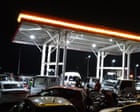
From the driver’s seat of his rusted minibus, Sido Sombeja stares out at a stationary sea of rear lights stretching for almost a mile down the road. It is 3am in Zomba, the old capital of Malawi, and cold night air comes through the cracked windscreen. For eight consecutive days and nights, the 40-year-old father of four has lived out of this vehicle, waiting for a fuel tanker that may never arrive.
Sombeja chews on a cold piece of fried mandazi – a doughy snack that has been the only food available. The Meru petrol station is no longer just a place of transit; it has transformed into a makeshift village of drivers in parked vehicles. In these queues, strangers form uneasy alliances. Motorists group together to guard one another’s vehicles during rare bathroom breaks, and coordinate to aggressively block any queue-jumpers. Men sleep under the bellies of trucks. They wash their faces with bottled water on the kerbside and gather around charcoal braziers (mbaula) at night.
“This is not a petrol station any more,” Sombeja says, gesturing at the hundreds of dark chassis surrounding him. “It is my home now. It is like I have two families – the one back home waiting for me to bring back money, and this second family of strangers on the road where I must buy snacks just to survive the night.”
Malawi has experienced intermittent shortages since late 2022 but in the past four weeks the problem has escalated into a national emergency. Urban hubs are adjusting to a new reality: a queue economy where the boundaries of labour, community and patience are pushed to their limits.
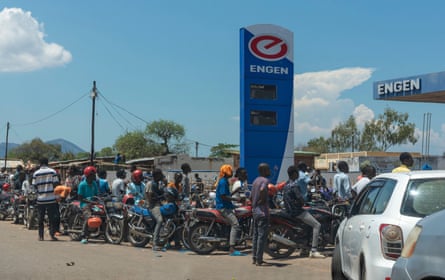
The roots of this societal paralysis lie in an economic bottleneck. The National Oil Company of Malawi attributes the persistent shortages directly to the country’s lack of hard currency. In briefings before the parliamentary committee on budget on 2 October, oil officials revealed that a surge in domestic vehicle usage meant Malawi now burned through 2m litres of fuel daily, requiring $49m (£37.5m) every month in foreign exchange.
It is a financial burden that the impoverished nation cannot sustain as agricultural exports have collapsed. According to Joan Thaundi, a spokesperson for Malawi’s energy ministry, the petroleum sector must compete with other goods for limited US dollars. As a result, international banks repeatedly leave local letters of credit unhonoured, halting fuel tankers at regional African ports before they can even cross into Malawi.
To manage the escalating panic, the state is taking extraordinary measures. Fitina Khonje, a public relations manager at the Malawi Energy Regulatory Authority, says that while fuel procurement is heavily prioritised by the government, the national cash deficit remains an obstacle. The government has liquidated millions in gold reserves to secure short-term credit from international lenders, while withdrawing non-essential state vehicles from the roads to preserve what little fuel remains for core operations.
At the petrol stations, such explanations do little to soothe a frustrated public. The crisis is turning patience into hostility.
At the Petroda petrol station in the capital, Lilongwe, WillKens Chimwaza, a 26-year-old attendant, says that the station’s normal daily operating capacity of 30,000 litres has dropped to 5,000. When that runs dry, usually within an hour of a tanker’s arrival, the mood among waiting drivers turns ugly.
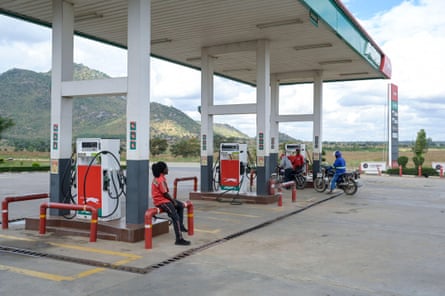
Chimwaza describes being routinely surrounded and threatened by angry motorists, facing a barrage of verbal abuse for a national shortage he has no power to fix. To keep the peace, attendants are told to ration the amount each customer can buy. “It is terrifying,” Chimwaza says. “People are desperate, and they look at us as the gatekeepers who are actively denying them their livelihoods.”
after newsletter promotion
Gift Ngala, a 34-year-old taxi driver operating out of the business district of Mzuzu city, says the scarcity has hit him hard. Ngala has to buy illicit fuel from roadside dealers at inflated prices to keep his vehicle on the road. “The shortages are hitting us hard, and our customers are paying far more than the normal fare because we are forced to source fuel from the black market just to remain in business,” he says. For low-income commuters, fare increases drain household budgets meant for food and basic necessities.
Back in Zomba, the psychological toll of the prolonged crisis weighs on drivers such as Sombeja. His daily minibus routes used to provide a modest but steady income for his family. Now, his earning capacity is frozen.
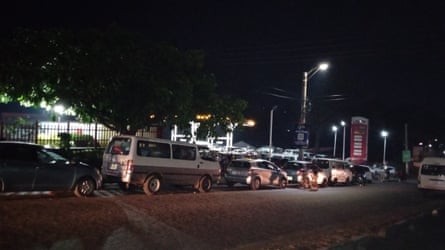
He urges the authorities to stop politicising the distribution of resources and to stabilise the supply chain. “We are struggling to meet our basic needs,” he says. “They must ensure the fuel is stabilised so we can go back to work.”
As the sun rises over Meru petrol station, it casts an unforgiving light on the exhausted faces of hundreds of drivers stepping out of their vehicles to stretch. No tanker has arrived. Sombeja turns his key, checking his empty dashboard gauge one more time, before settling back into the driver’s seat to begin his ninth day of queueing.
KioskNews shows a cleaned-up reading view extracted from the publisher’s page — the original always lives on their site, not ours.