Goods exports rise to record high in October
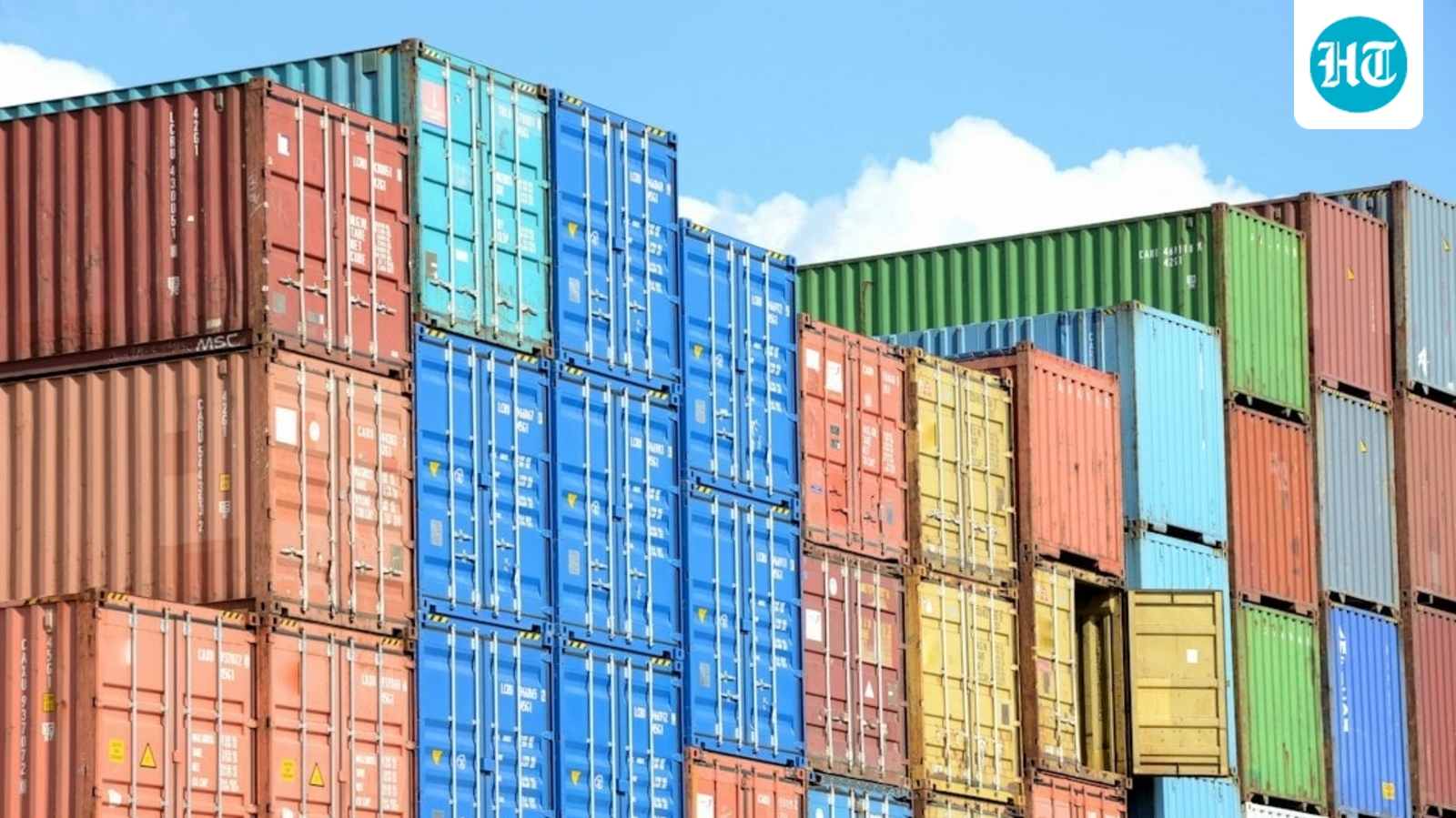
India’s merchandise exports rose 45% in October to $49.47 billion from $34.11 billion a year earlier, the highest monthly value on record, though costlier oil amid the conflict in West Asia kept the import bill rising.
Goods imports grew 16.51% to $89.35 billion from $76.69 billion in October 2025, according to data released by commerce secretary Rajesh Agrawal on Friday.
Agrawal said the growth was the fastest in five years and came across both products and markets, with 43 of India’s 50 largest export destinations buying more than they did a year ago.
The figures come as India’s trade deals with the UK and New Zealand take effect, operationalisation of an agreement with the European Union is due early next year, and negotiations continue on the first tranche of a deal with the US, its largest market.
“In the month of October 2026, merchandise exports registered a new peak of $49.47 billion. This is the highest ever monthly merchandise export value along with the highest monthly growth of 45.06% in last five years,” Agrawal said.
Also read: India's exports jump 29.9% to $89.99 billion in October, trade deficit narrows
Petroleum products lead export growth
Petroleum products led the rise. Their exports jumped 140% year-on-year, partly because of higher international oil prices, Agrawal said. Exports of other cereals rose 87%, oil meals 85%, electronic goods 62%, handicrafts 55%, gems and jewellery 40%, cereal preparations 37%, and engineering goods and organic and inorganic chemicals 36% each.
A sharp fall in precious-metal purchases helped contain imports and narrow the deficit from the corresponding period a year ago. Gold imports dropped nearly 63% to $5.51 billion from $14.72 billion in October 2025, and silver imports fell 28.3% to $1.95 billion from $2.72 billion.
Also read: India’s defence export boom must close its quality gap
Oil imports push up import bill
Oil pushed the other way: imports of petroleum products, mainly crude, by value rose 54.31% to $22.82 billion as the conflict in West Asia, including attacks on shipping in the Strait of Hormuz and near Bab el-Mandeb, disrupted energy markets and pushed the Indian crude basket close to $120 a barrel, according to government estimates.
India imports over 85% of the crude it uses.
Year-on-year, the merchandise trade deficit came to $39.88 billion, about 6.3% smaller than the $42.58 billion recorded in October 2025. Counting services, India’s overall trade deficit fell by about a fifth, to $20.08 billion from $25.15 billion.
Also read: India-UK trade deal: Indian exports rise 8%, imports fall 17% in first 2 months
Services exports for October were estimated at $40.51 billion and imports at $20.72 billion, a surplus of $19.79 billion, about 13.5% higher than a year earlier. The October services numbers are a conservative extrapolation from September’s, because the Reserve Bank of India publishes them with a lag.
Goods and services exports together reached $89.99 billion, up 29.91% from $69.27 billion, which Agrawal said was also the highest ever. “We have not achieved $89.99 billion ever till now in any month,” he said. Total imports rose 16.57% to $110.07 billion from $94.42 billion.
In the first seven months of 2026-27, merchandise exports grew 21.97% to $309.06 billion from $253.40 billion, while imports rose 16.42% to $527.21 billion from $452.86 billion. Including services, exports rose 16.66% to $568.84 billion and imports 16% to $662.19 billion, so the combined deficit grew about 12% to $93.35 billion from $83.25 billion, Reuters reported.
Also read: The export edge Indian SMEs can’t ignore
Exports to major markets record strong growth
Exports to Spain rose 352% in October, shipments to Malaysia, Togo, Singapore, South Africa, Egypt and Hong Kong more than doubled, and those to Kenya, Ghana, Turkey, Brazil, Oman, Mozambique, the UK, Mexico, Nepal and Taiwan grew more than 50%. Among larger markets, exports grew 48% to China, 45% to Japan, 39% to the US, 37% to Belgium, 33% to Germany, 22% to Australia, 21% to Bangladesh and 20% each to Russia and Italy.
Agrawal said India’s free trade agreements played a major role in the growth. “If you look at the first half, this April to September, we have grown in ASEAN by 58%, in Singapore by 103%, in Malaysia by 83%, Sri Lanka by 73%, Oman by 47%, Japan by 40%, South Korea by 24%, the entire SAFTA region as a whole went up by 22%,” he said. He said exports to Australia grew 11% in the first half, Mauritius 49%, Thailand 7% and the EFTA countries 5%.
KioskNews shows a cleaned-up reading view extracted from the publisher’s page — the original always lives on their site, not ours.