$7.5B airport outside Hanoi races to open its VIP terminal for APEC 2027
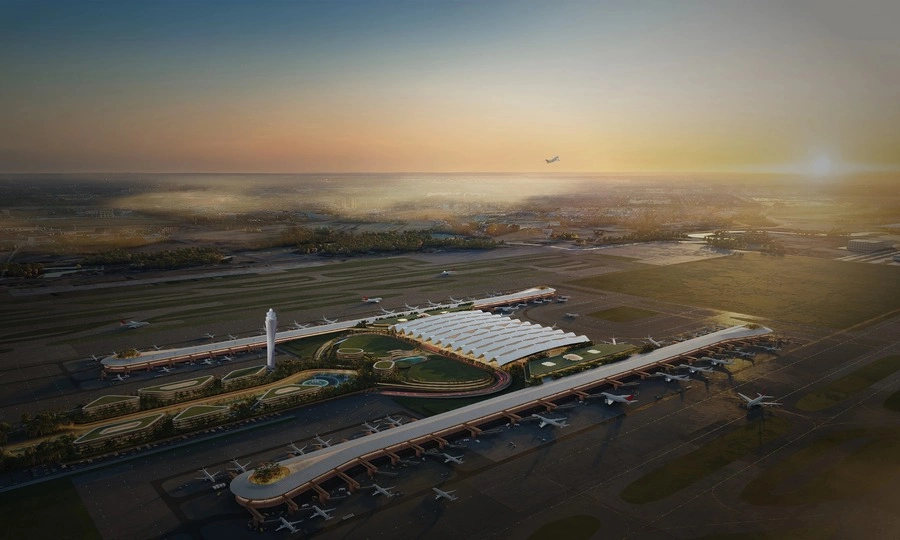
More than 94% of the site has been cleared and work is underway on the airfield, the VIP terminal and the control tower as Gia Binh International Airport pushes to ready its first facilities for APEC 2027.
Vietnam's National Assembly approved the investment policy for Gia Binh airport on Dec. 11, 2025, under a resolution that lists the APEC 2027 summit among the national diplomatic events the airport is meant to serve.
The first phase prioritizes the airfield, the VIP terminal, the control tower and the systems supporting flight operations, which will handle state aircraft and the international delegations attending.
Vietnam has designated Phu Quoc, some 1,700 km to the south, as the venue for the APEC leaders' week.
The forum also runs a year-long calendar of ministerial and senior officials' meetings across the host country.
The project management board says more than 1,800 of the site's 1,900-plus hectares have been cleared, above 94% of plan.
Bac Ninh Province is still reclaiming and compensating for the remainder.
The runway and taxiway system sit on fully cleared ground, where contractors are concentrating machinery on excavation and embankment work, crushed stone base course and foundation layers.
The first phase calls for two runways, rising to four by 2050.
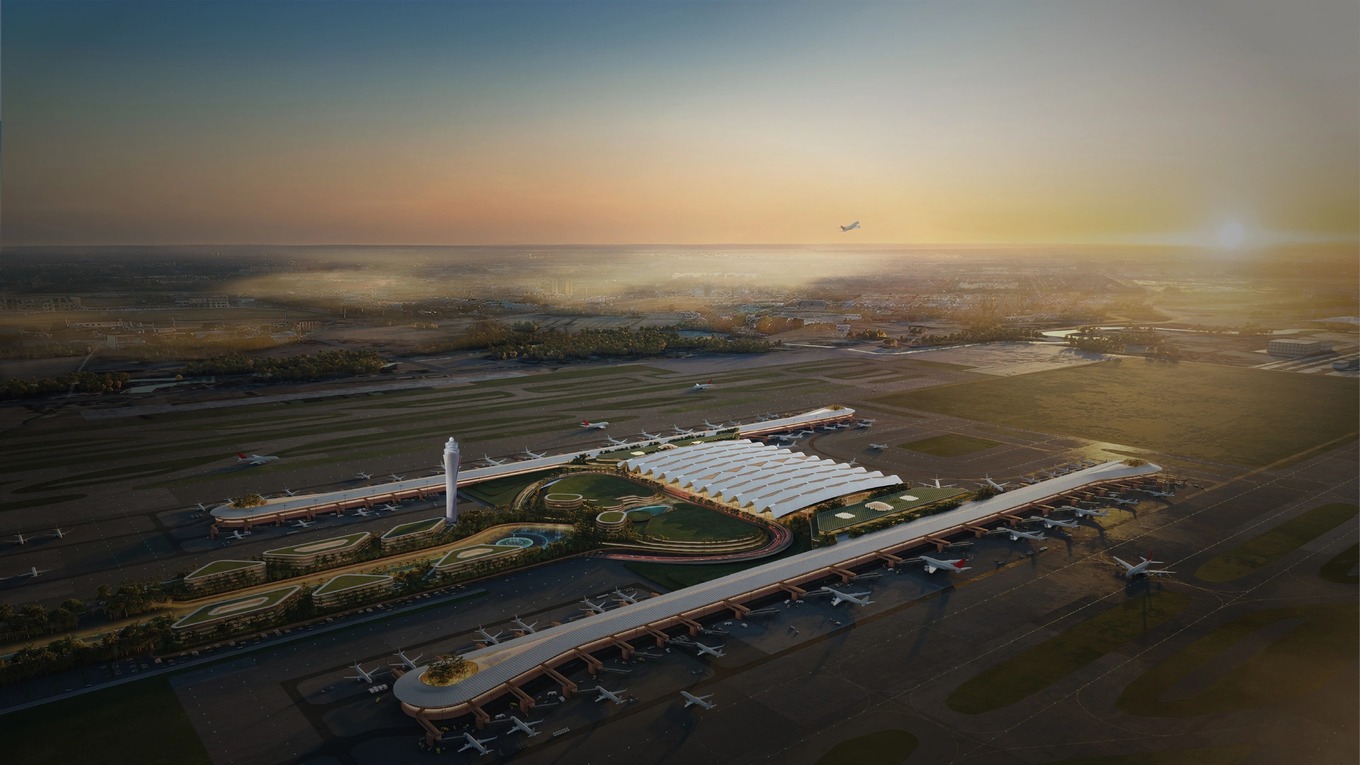
The VIP terminal's reinforced concrete basement is finished, all load-bearing steel columns have been delivered and about 80% have been erected.
The building, a priority for APEC, is scheduled for completion in early 2027.
 |
|
Gia Binh International Airport in Bac Ninh Province is being developed as a new-generation airport economic hub. Photo courtesy of Gia Binh International Airport |
At the control tower, the foundation is complete, the outer concrete wall has reached design elevation and the steel floor structure on the 19th level has passed inspection.
Runway lighting, navigation beacons, surveillance radar, and communications and flight operations equipment are going in alongside the buildings.
The resolution sets the project's land requirement at 1,884.93 hectares, about 922 of them double-crop rice paddy, and total investment at VND196.378 trillion ($7.5 billion), funded entirely outside the state budget.
The airport is planned to ICAO Code 4F, the top category, which accommodates the largest aircraft in service, and will operate as a dual-use facility serving both civil aviation and security and defense.
By 2030 it is planned to handle about 30 million passengers and 1.6 million metric tons of cargo a year.
The master plan the Ministry of Construction approved in August 2025 provides roughly 81 aircraft stands around the passenger and cargo terminals, rising to about 123 by 2050, when capacity is projected to reach 50 million passengers and 2.5 million metric tons of cargo a year.
The airport is being designed as "digitally native," with digital platforms, artificial intelligence and real-time data embedded in operations from the outset to support live decision-making, said Thomas Romig, chief airport operations officer at Gia Binh and a former senior vice president at Airports Council International.
Masterise Group, the investor, is building the airport through Masterise Aviation Infrastructure, a company it set up for the project in August 2025.
The group says it is aiming at an "Airport Economic Hub 2.0" model combining the airport with logistics, commerce and services.
40 km from Hanoi
Gia Binh sits about 40 km from central Hanoi and is intended to widen the north's international air links while relieving congestion at Noi Bai, in a region dense with manufacturing and export operations.
Phan Le Binh, an infrastructure engineering lecturer at Vietnam Japan University and a JICA expert, said that if the airport develops as intended it could strengthen international connectivity and drive logistics.
It could also attract high value-added sectors such as advanced technology, semiconductors, e-commerce and modern services, he said.
Nguyen Phuoc Thang, who teaches business and logistics at Victoria Hoa Binh University, said electronics, semiconductors and precision components are high in value and sensitive to timing, which leaves them dependent on shipping speed and reliability.
"Gia Binh's greatest value is its ability to create another gateway that carries high-value products from the northern industrial ecosystem into global supply chains faster and more reliably," Thang said.
Bac Ninh aims to complete site clearance by the end of 2026, a year before the APEC facilities are due.
KioskNews shows a cleaned-up reading view extracted from the publisher’s page — the original always lives on their site, not ours.