10 Classic Books You Can Read in a Weekend

Michael Block is a 14 time GLAM Award nominated writer, producer, and host of the podcast Block Talk. Throughout his time in the entertainment industry, he has worked on and off Broadway as a stage manager, written several produced plays, critiqued hundreds of theatrical performances, drag and cabaret shows, and has produced events randing from drag competitoons to variety concerts!
On Block Talk, he interviews nightlife personalities, covers the wide world of entertainment through features, ranking episodes, and recaps ALL of Drag Race, as well as Dragula and Survivor. He has interviewed hundreds of RuGirls that span the globe at DragCon NYC, DragCon LA, and DragCon UK.
In his free time, he makes one-of-a-kind jewelry and gift baskets with his mom. He is a proud member of the LGBTQ+ community.
Sign in to your Collider account
There is certainly a selection of classic books everyone should read at least once in their life. But with an ever-growing list, there’s only so much time to get it all in. Luckily, there are a handful of classics with a shorter page count that you can complete within a single weekend! Thanks to gripping narratives and timeless themes, these books are simply wonderful.
You may have read some casually on your own or been assigned them in school, but chances are you’re at least familiar with them by name. From horror masterpieces to profound philosophical wonders, these 10 novels are must-readsyou won’t be able to put down. With incredible prose, brilliant characters, and extraordinary stories, you’ll soon understand why they're among the greatest books ever written.
1 'A Christmas Carol' by Charles Dickens
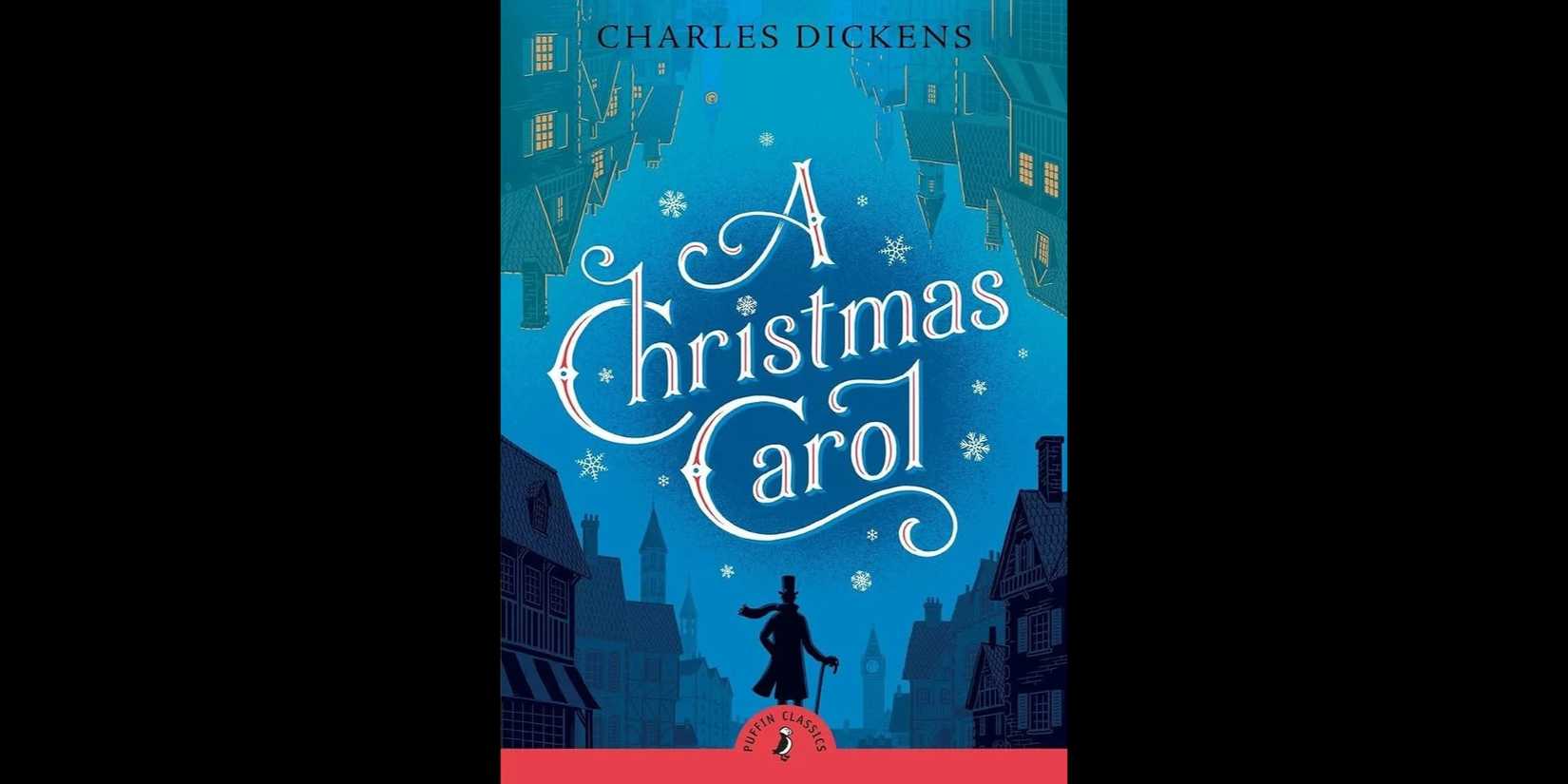
Charles Dickens was one of the most prolific British writers of all time. Regarded as the greatest novelist of the Victorian era, Dickens' crowning achievement is his most well-known work, A Christmas Carol. The novella follows Ebenezer Scrooge, a cold, greedy, and bitter old miser in Victorian London who undergoes a dramatic moral transformation as he’s visited by the ghost of his former business partner Jacob Marley and the spirits of Christmas Past, Present, and Yet to Come. The story proves that it is never too late to change, feel empathy, and redeem oneself. Evoking the Christmas spirit, A Christmas Carol champions generosity, kindness, family togetherness, and social responsibility over the pursuit of wealth.
With themes of redemption and hope, A Christmas Carol blends a gripping ghost story with a universal message that has been passed down for generations. Through symbolic figures like Tiny Tim, Bob Cratchit, and the personified children Ignorance and Want, Dickens issued a sharp critique of societal neglect and wealth disparity. The book helped redefine Christmas as a season of family, community, charity, and generosity. Rather than a Victorian brick of a book, A Christmas Carol is roughly 29,000 words long, which could be accomplished in a single sitting. Dickens split the story into five manageable chapters, making it a brisk read. Timing is on your side, as it’s a perfect segue before the upcoming Ebenezer, starring Johnny Depp, is released!
2 'Animal Farm' by George Orwell
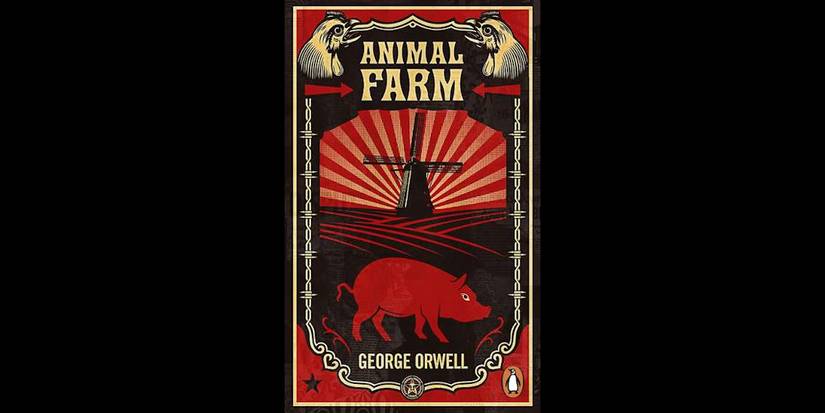
If there’s ever been a book that continues to resonate now more than ever, look no further than Animal Farm by George Orwell. The allegorical novella tells the story of farm animals at Manor Farm who rebel against their neglectful human owner, Mr. Jones, to build a free, equal society, only for the intelligent pigs to seize power and establish a brutal totalitarian dictatorship. Creating a system called "Animalism" based on the idea that all animals are equal, Napoleon and Snowball fight for leadership. The motto goes from “All animals are equal” to “All animals are equal, but some animals are more equal than others.” Animal Farm directly mirrors the 1917 Russian Revolution and the corruption of its ideals under Joseph Stalin.
The Orwellian classic uses a deceptively simple animal fable to deliver a sharp, universal warning about power, corruption, and the mechanics of totalitarianism. It illustrates how any group or bureaucracy, regardless of political banner, can slowly sacrifice its initial ideals for control. Written in the style of a straightforward fairy tale, Animal Farm’s accessibility comes through its simple language of heavy topics. It is a brief book you can finish in about two to four hours. The plot moves quickly through a series of short chapters that trace the rise and fall of the animal rebellion in a strongly crafted masterpiece. Once you finish, check out the hidden-gem animated film directed by Andy Serkis. Just know it’s not nearly as profound as the text.
3 'Frankenstein' by Mary Shelley
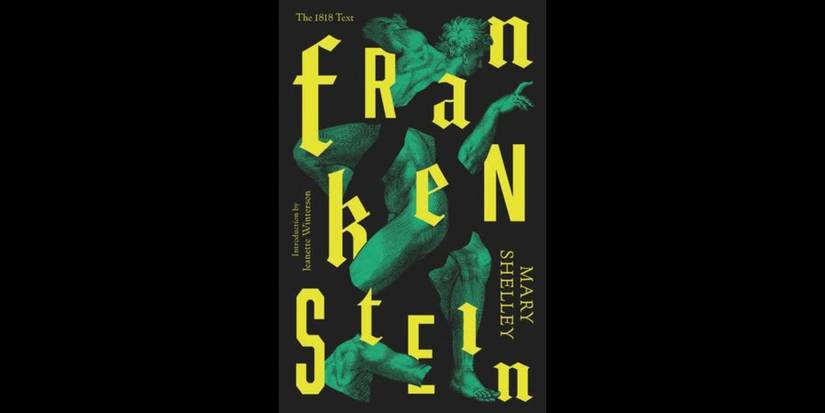
If you’re still in the mood for spooky season, pick up Frankenstein by Mary Shelley, the perfect gothic horror. A stellar monster story, the novel chronicles young scientist Victor Frankenstein, who creates a living, thinking creature from reassembled body parts. Driven by a desire to conquer death and unlock the secrets of life, Victor creates a living, thinking creature from reassembled body parts, but he leaves it alone to navigate a hostile world, horrified by the creature's grotesque appearance. Desperate for companionship and enraged by his creator's rejection, the creature demands that Victor build him a female companion. Through scientific hubris, Frankenstein explores the dangers of pushing past ethical and moral boundaries without considering the consequences.
Frankenstein explores what truly makes someone a “monster.” Shelley’s novel breaks from traditional ghost stories by using science fiction as its narrative framework. The book forces readers to ask if any creator has a moral duty to love, protect, and guide what they bring into the world. With moral consequences and flawed characters, Frankenstein balances its profound themes with the narrative's frightening nature. At about 70,000 to 85,000 words, Shelley keeps the momentum steady. Unfolding through letters and nested confessions, it breaks up the plot into distinct, fast-paced sections. The emotional, suspenseful plot moves quickly rather than getting bogged down in heavy scientific explanations. That’s why Frankenstein remains one of the most adapted horror stories ever.
Collider Exclusive · Oscar Best Picture Quiz
Which Oscar Best Picture
Is Your Perfect Movie?
Parasite · Everything Everywhere · Oppenheimer · Birdman · No Country
Five Oscar Best Picture winners. Five completely different visions of what cinema can be — and what it can do to you. One of them is the film that was made for the way your mind works. Ten questions will figure out which one.
🪜Parasite
🌀Everything Everywhere
☢️Oppenheimer
🐦Birdman
🪙No Country for Old Men
01
What kind of film experience do you actually want? The best movies don't just entertain — they leave something behind.
02
Which idea grabs you most in a film? Great films are driven by a central obsession. What's yours?
03
How do you like your story told? Form is content. The way a story is shaped changes what it means.
04
What makes a truly great antagonist? The opposition defines the protagonist. What kind of opposition fascinates you?
05
What do you want from a film's ending? The final note is the one that lingers. What do you want it to sound like?
06
Which setting pulls you in most? Where a film takes place shapes everything — mood, stakes, what's even possible.
07
What cinematic craft impresses you most? Every great film has a signature — a technical or artistic element that makes it unmistakable.
08
What kind of main character do you root for? The protagonist is the lens. Who you choose to follow says something about you.
09
How do you feel about a film that takes its time? Pace is a choice. Some films sprint; others let tension accumulate slowly, deliberately.
10
What do you want to feel walking out of the cinema? The best films leave a mark. What kind of mark do you want?
The Academy Has Decided Your Perfect Film Is…
Your answers have pointed to one Oscar Best Picture winner above all others. This is the film that was made for the way your mind works.
Parasite
You are drawn to films that operate on multiple levels simultaneously — that begin in one genre and quietly, brilliantly migrate into another. Bong Joon-ho's Parasite is a film about class, desire, and the architecture of inequality that manages to be darkly funny, deeply suspenseful, and genuinely shocking across a single extraordinary running time. Your instinct is for cinema that hides its true intentions until the moment it's ready to reveal them. Parasite is exactly that — a film that rewards close attention and punishes assumptions, right up to its devastating final image.
Everything Everywhere All at Once
You want it all — and this film gives you all of it. The Daniels' Everything Everywhere All at Once is one of the most maximalist films ever made: action comedy, multiverse sci-fi, family drama, existential crisis, and a genuinely earned emotional core that sneaks up on you amid the chaos. You are someone who responds to ambition, who doesn't want cinema to choose between being entertaining and being meaningful. This film refuses that choice entirely. It is overwhelming by design, and its overwhelming nature is precisely the point — because the feeling of being crushed by infinite possibility is exactly what it's about.
Oppenheimer
You are drawn to cinema on a grand scale — films that understand history not as a backdrop but as a force, and that place their characters inside that force and watch what happens. Christopher Nolan's Oppenheimer is a film about the terrifying gap between what we can do and what we should do, told with the full weight of one of the most consequential moments in human history behind it. You want your films to feel important without feeling self-important — to earn their ambition through sheer craft and the gravity of their subject. Oppenheimer does exactly that. It is enormous, complicated, and refuses easy comfort.
Birdman
You are drawn to films that foreground their own construction — that make the how of the filmmaking part of the what it's about. Alejandro González Iñárritu's Birdman, shot to appear as a single continuous take, is cinema examining itself through the cracked mirror of a fading actor's ego. You respond to formal daring, to the feeling that a film is doing something that probably shouldn't be possible. Michael Keaton's performance and Emmanuel Lubezki's restless camera create something genuinely unlike anything else — a film that is simultaneously about creativity, relevance, self-destruction, and the impossibility of ever truly knowing if your work means anything at all.
No Country for Old Men
You are drawn to cinema that trusts silence, that refuses to explain itself, and that treats dread as a form of meaning. The Coen Brothers' No Country for Old Men is a film about the arrival of a new kind of evil — implacable, arbitrary, and utterly indifferent to the moral frameworks we use to make sense of the world. It is one of the most formally controlled films ever made, and its controlled restraint is what makes it so terrifying. You want your films to haunt you, not comfort you. You are not interested in resolution if resolution would be dishonest. No Country for Old Men is honest in a way that most cinema never dares to be.
4 'Lord of the Flies' by William Golding

For his debut novel, William Golding kicked off his career in extraordinary fashion with Lord of the Flies. The allegorical novel tells the story of a plane carrying schoolboys that crashes on a deserted tropical island, leaving them completely without adult supervision. Two boys, Ralph and Piggy, find a conch shell and use it to call a meeting and elect a leader. But as the initial setup begins to fracture, Jack Merridew leads a group of hunters who abandon the signal fire, reject rules, and embrace tribal violence. Lord of the Flies explores how thin the line is between a structured society and primal chaos when rules and authority are removed.
A tale of lost innocence, Lord of the Flies boldly subverts optimistic adventure stories to expose the fragile veneer of human civilization. Golding argues that savagery and the capacity for evil are hardwired into human nature rather than learned. The story charts a rapid, dark descent into tribal violence and mob mentality. Instead of an external monster terrorizing the children, the true threat turns out to be the inner darkness and primal fear residing inside the boys themselves. Rich in symbolism, Lord of the Flies continues to resonate, operating as a grim warning about totalitarianism and cruelty. At roughly 60,000 words, Golding's direct narrative pace makes it a quick read. Golding uses a straightforward, linear plot that moves briskly and boldly through 12 chapters. This past year, Jack Thorne brought it back to life in a remarkable four-part series.
5 'Of Mice and Men' by John Steinbeck

One of the most profound classics ever written is John Steinbeck's Of Mice and Men. The story follows George Milton and Lennie Small, two displaced migrant ranch hands who strive to survive the Great Depression in California. They dream of owning a small piece of land where they can live independently and raise rabbits, but when accidental tragedy strikes, their hope for the American Dream is shattered. Of Mice and Men captures the strong bond individuals can form while living isolated lives. Steinbeck uses his novel's rich social commentary to depict the power and vulnerabilities of how the world treats the weak, the old, the disabled, and the marginalized.
Of Mice and Men is built around extraordinary character work. Nearly every character, from George and Lennie to Crooks and Curley's wife, is enriched through their relatability. They crave genuine human connection, but the larger surroundings and events can sometimes hinder that desire. Steinbeck uses authentic regional dialogue and rich symbolism to build empathy for the ordinary individuals he writes about. At roughly 100 pages, the tightly plotted narrative keeps the momentum high and the emotional impact sharp. Its straightforward, accessible vocabulary and quick pacing will keep you turning the pages. Adapted for both stage and screen, the 1992 version with Gary Sinise and John Malkovich remains one of the best book-to-movie adaptations.
6 'Siddhartha' by Hermann Hesse

Though it may be a more niche pick, everyone needs the experience of reading Siddhartha by Hermann Hesse. The philosophical novel from the German-Swiss novelist tells the story of a young Brahmin named Siddhartha who leaves his privileged life to seek spiritual enlightenment, inner peace, and the true meaning of existence. Discovering that true enlightenment cannot be borrowed, inherited, or handed down, Siddhartha indulges in worldly pleasures that leave him empty, weary, and disgusted by material obsessions. Hesse's novel shows that knowledge can be taught, but wisdom must be lived and felt, and that spiritual awakening is a personal journey.
The 1922 novel merges Eastern spiritual philosophy with Western individualism to remind readers to embrace the fullness of life. The timeless tale has resonated for generations because of its core message of quiet rebellion and personal quest for more. What "more" is changes for each reader. It becomes more than a work of fiction; it's a meditative journey and an encouraging reminder that time is an illusion and all life is deeply interconnected. Across 12 compact chapters, split into two parts, Hesse's clean, simple prose avoids being dense or overly academic.
7 'The Great Gatsby' by F. Scott Fitzgerald
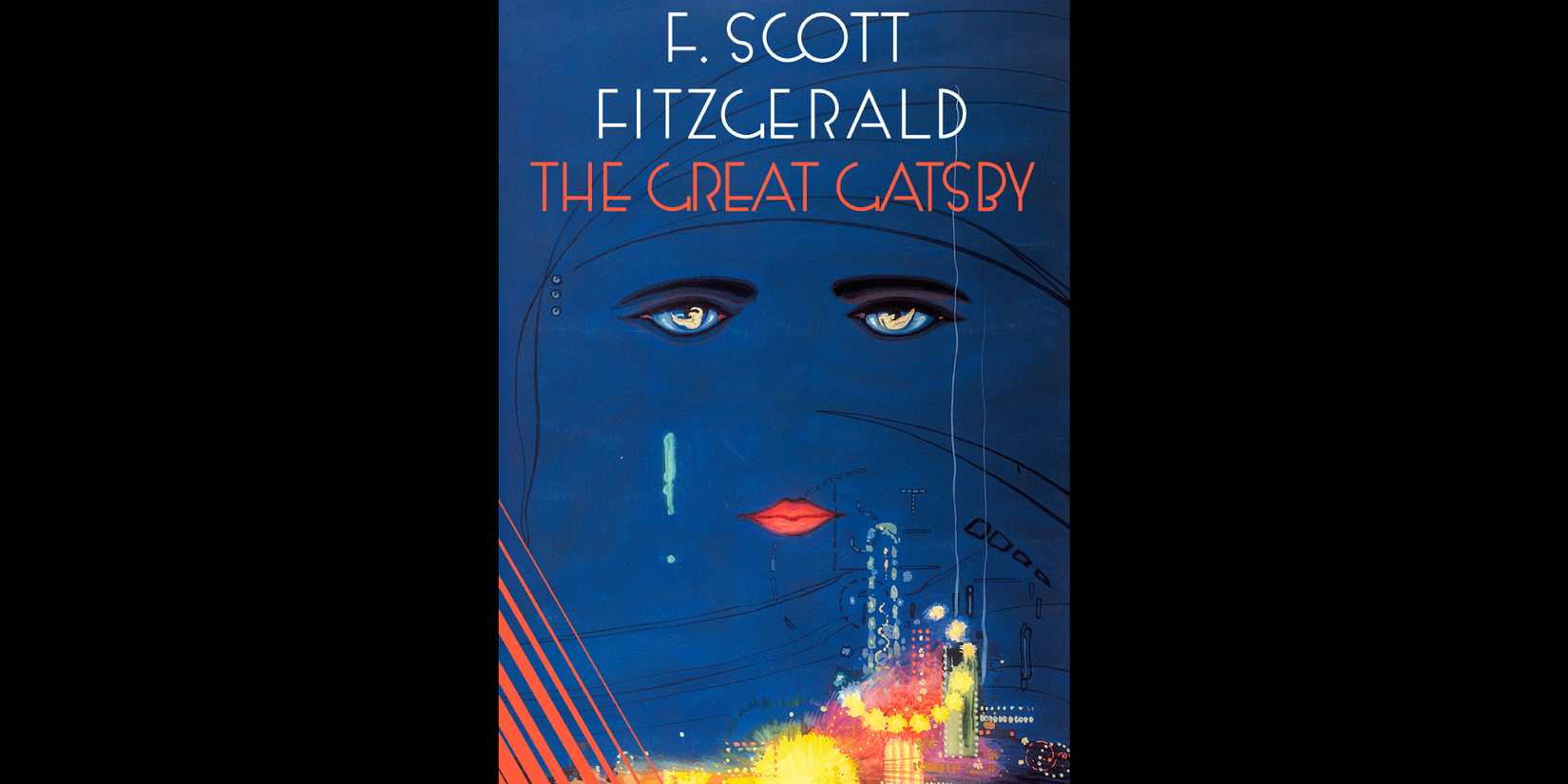
Often cited as bibliophiles' favorite book, The Great Gatsby has become a pillar of American literature. Written by F. Scott Fitzgerald, the tragic novel set during the Roaring Twenties follows Nick Carraway as he observes his mysterious, self-made neighbor, Jay Gatsby, throw lavish parties to win back his former flame, Daisy Buchanan. Set in a fictional town of new money, Gatsby lives inside an idealized fantasy of the past that cannot be recovered. The Great Gatsby depicts the American Dream's corruption into a shallow pursuit of wealth and status.
The Great Gatsby captures the disillusionment of the Jazz Age and the moral decay of a society in a trying time. Though Fitzgerald's work was originally deemed a commercial disappointment, time has proven it a masterpiece. Through sharp social commentary and poetic prose, the book has endured as a classic for its vivid portrayal of opulence and obsession. Through its rich character studies, The Great Gatsby makes its primary trio some of literature's most beloved characters. At only nine chapters, the book is short and fast-paced, keeping the momentum high from start to finish. Though it has dense themes and symbolic prose, The Great Gatsby's engaging narrative keeps you hooked throughout. Just like the book, the film adaptations are required viewing. Then it becomes a debate over whether Alan Ladd, Robert Redford, or Leonardo DiCaprio is the ultimate Jay Gatsby.
8 'The Old Man and the Sea' by Ernest Hemingway (1952)

A simple story about human endurance, The Old Man and the Sea remains Ernest Hemingway's crowning achievement. The novella follows Santiago, an aging Cuban fisherman who has gone 84 days without catching a fish. Desperate to break his bad luck, Santiago sails deep into the Gulf Stream, hooks a massive marlin, and endures a grueling battle to master the creature before sharks devour it on his journey home. At its core, The Old Man and the Sea highlights human resilience against overwhelming odds. Remembered for its iconic line, "A man can be destroyed but not defeated," The Old Man and the Sea is more than a simple man-versus-nature story.
While we may not be Santiago, we can absolutely relate to the plight he endures. The Old Man and the Sea's timeless allegory for human dignity and perseverance has resonated for generations. With a clean, understated style, Hemingway packs a hefty emotional and symbolic weight. The book's legacy is as powerful as the text itself. His final major work of fiction, The Old Man and the Sea earned him the Pulitzer Prize, which led to the Nobel Prize in 1954. At just over 100 pages, The Old Man and the Sea is a quick read because it follows a single, continuous event. Hemingway spares readers superfluous subplots, keeping Santiago's journey as the sole focus. The Old Man and the Sea remains a genuine classic that has lovingly been several multiple times for multiple generations.
9 'The War of the Worlds' by H.G. Wells (1989)

H.G. Wells' The War of the Worlds is one of the most influential science fiction novels of all time. The story depicts a devastating Martian invasion of Victorian-era England. Using heat rays and gas, the technologically superior aliens overwhelm human military forces, burning London and forcing mass civilian panic. Through the eyes of an unnamed narrator, he wanders the ruined countryside, hiding from the aliens before discovering what ultimately defeats them. The War of the Worlds established the classic alien-invasion template that has since permeated pop culture. The War of the Worlds exposes the fragility of human civilization and tech-reliant pride when faced with a ruthless natural order.
Wells used his story to flip the conversation about British colonialism, making the English the helpless victims of a superior power. The book places fantastical threats in a grounded, realistic setting to heighten the fear. The biggest twist remains that it's not humanity that defeats its foe but Earth itself. The War of the Worlds infamously became a major radio hoax in 1938 when the radio adaptation convinced listeners that a real alien attack was happening. That's how strong his writing is. At about 200 words, the text moves swiftly from the mysterious cylinders landing to London's rapid collapse under Martian attack. With a lean, action-focused journalistic style, The War of the Worlds is an easy read. With multiple adaptations, you'll most certainly want a companion film to watch. Just steer clear of the Ice Cube version!
10 'The Wind in the Willows' by Kenneth Grahame

They may be animals, but there is truly no greater story about loyalty and friendship than found in The Wind in the Willows. Written by Kenneth Grahame, the classic children's novel tells of the pastoral adventures and rich relationships of four anthropomorphic animals living along an English riverbank. Centered on the home-loving Mole, the poetic Ratty, the reclusive, wise Badger, and the impulsive Mr. Toad, The Wind in the Willows is a delightful tale about the tensions between home and adventure, the beauty of nature, and the dangers of excess and social irresponsibility.
The Wind in the Willows is a masterpiece in lush, lyrical prose. Grahame acts as a nostalgic reminder of a quiet, pre-industrial world that was rapidly disappearing. With evocative settings that capture a mythic, atmospheric sense of the natural world, The Wind in the Willows constantly balances the cozy safety of home with the dangerous allure of the open road. Each animal reflects distinct human quirks, making them entirely relatable. Divided into 12 short chapters, The Wind in the Willows follows a clear adventure filled with gentle humor and rich emotion. Whether you know the characters and stories from pop culture or not, it's worth returning to the source material to see where it all began.

the wind in the willows
- Release Date
- 1984 - 1988-00-00
- Network
- ITV1
- Writers
- Brian Trueman
-

Daphne Oxenford
Uncredited
-
David Jason
Toad
-
Emma Chambers
Rat (voice)
-
Jimmy Hibbert
KioskNews shows a cleaned-up reading view extracted from the publisher’s page — the original always lives on their site, not ours.