Italy found a workaround England’s shirt sponsors still need
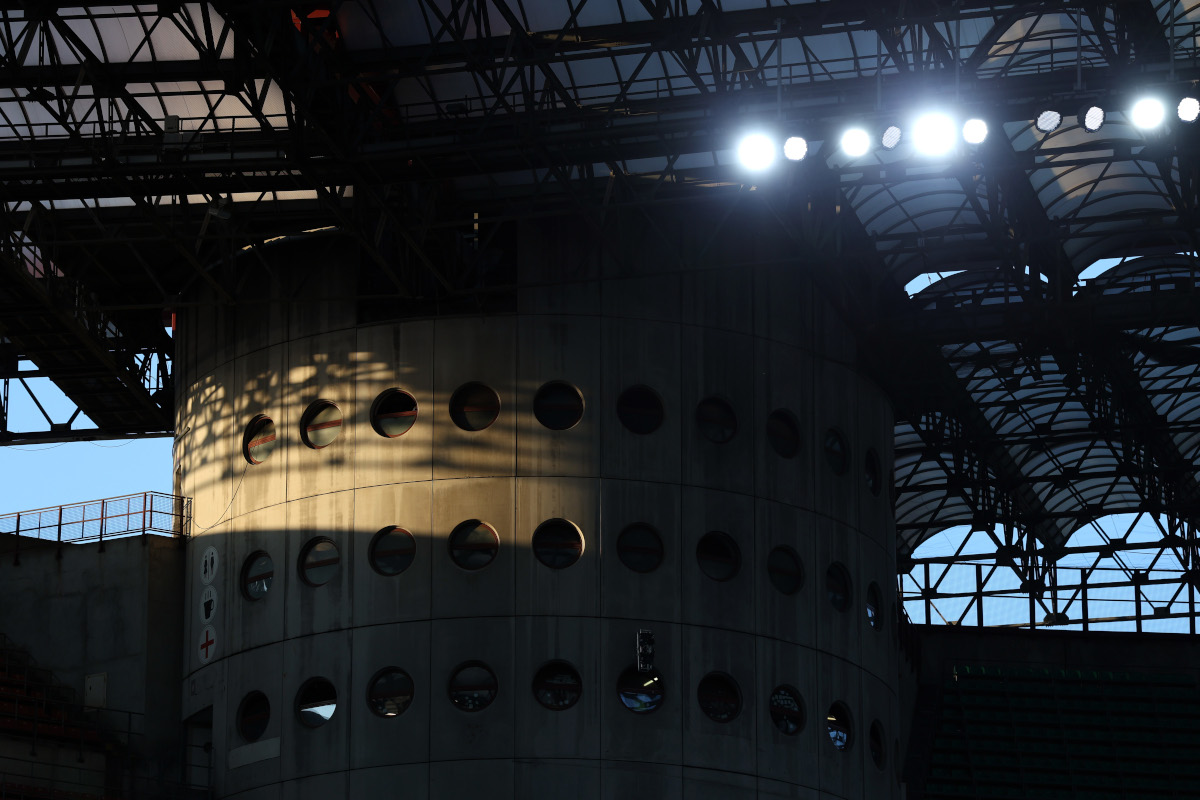
MILAN, ITALY - SEPTEMBER 14: General view inside the stadium before the Serie A match between FC Internazionale and Udinese Calcio at Stadio Giuseppe Meazza on September 14, 2026 in Milan, Italy. (Photo by Claudio Villa/Getty Images)
Inter are back as champions this season, having taken their twenty-first title last season with Cristian Chivu in his first campaign in charge, and they are doing it with the biggest shirt sponsorship in the club’s history.
The name printed across the chest, Betsson Sport, belongs to a betting company that Italian law will not let anywhere near a football shirt.
The workaround is a technicality with real money behind it. Betsson’s own gambling brand, the actual casino and sportsbook covered in various UK casino app guides, cannot sponsor an Italian club under the country’s advertising rules, so the deal runs through Betsson Sport, a separate media arm built around content, interviews and highlights rather than odds. Inter’s four-year agreement, worth an estimated thirty million euros a season, was announced as the biggest commercial deal in the club’s history, and it is not an isolated case.
One Workaround Covers Three of Italy’s Biggest Clubs
Milan and Roma carry a similar arrangement through Betsson’s StarCasino Sport brand, meaning three of Serie A’s most decorated clubs are currently dressed by companies whose main business is a casino and sportsbook the shirt itself is not allowed to mention. The reporting that tracked the Inter deal from rumour to record contract shows how far the pattern has spread since.
None of this happened by chance. Serie A’s total shirt sponsorship market has climbed past two hundred and eighteen million euros this season, and infotainment brands, the category pairing media content with a gambling company behind it, are the fastest-growing part of that number.
SportsPro’s Serie A media rights data, compiled with Ampere Analysis, puts international rights at around forty-one per cent of the league’s total broadcast revenue, the third highest share among Europe’s big five. That reach is exactly what makes an Inter shirt worth thirty million euros a year to a company that cannot even say the word betting on it.
Four Clubs Coming From Four Directions
Away from the sponsor boards, Napoli finished second under Antonio Conte and have since handed the job to Massimiliano Allegri, who arrives with six Serie A titles to his name, a figure only Giovanni Trapattoni has bettered, and a midfield built around Kevin De Bruyne and Scott McTominay. Juventus and Milan both ended last season outside the Champions League places and spent the summer rebuilding, while Como’s shock fourth-place finish on the final day is the detail both boardrooms have thought about all summer.
England’s Own Ban Just Landed With Less to Show for It
That kind of international reach is exactly what England’s clubs are now trying to sell without their old sponsors. The Premier League’s own front-of-shirt gambling ban has just taken effect this season, and the contrast with Italy is instructive. England’s restriction is narrower than Italy’s: gambling brands can still sponsor a sleeve, a training kit or a stadium hoarding, only the shirt front is off limits. Yet several clubs have started the campaign with no replacement sponsor at all, running out with a blank shirt or a placeholder while the industries that did step in, finance and travel among them, mostly pay less than the betting money they replaced.
Serie A’s ban is total, covering sleeves, hoardings and stadium branding as well as the shirt front, and yet Inter alone still pulls in roughly thirty million euros a year from a betting company that English clubs are currently struggling to replace with anything as lucrative.
That is the part England might learn from. Italy did not find a loophole so much as build a structure, a genuine media and content brand that a betting company owns and funds, and the arrangement has survived years of scrutiny intact. A Premier League still working out what replaces a betting logo might find the answer is not a different industry altogether but a smarter version of the one it just tried to remove.
Serie A Spent Big This Summer for Different Reasons
Serie A’s clubs spent just over one billion euros in the transfer window that closed this month, comfortably the second highest total in Europe behind the Premier League’s near four billion, and well ahead of the Bundesliga, La Liga and Ligue 1. It was the strongest summer of Serie A spending in years, with Milan’s move for Goncalo Ramos and a Juventus rebuild providing the headline deals.
The tidy version of this story would credit deals like Inter’s with funding it, and it would be wrong. Milan topped the spending charts on the back of sponsors with nothing to do with gambling, Emirates, MSC Cruises and Bitpanda among them, and Juventus built their summer around Jeep. Inter, the club that carries the infotainment money, was a comparatively modest spender by the league’s own new standards, and Serie A’s commercial income still varies enormously from club to club.

What the two stories share is less a cause and effect than a mood. A league confident enough to spend a billion euros on players is also a league confident enough to defend an inventive piece of sponsorship structuring for several years running, and neither habit belongs to a division still nervous about its own finances.
None of which decides anything on the pitch. Inter have the squad and the continuity, Napoli have a manager who has done this six times, and Juventus and Milan have spent a summer making sure last season is not repeated. Thirty-eight matchdays will settle the table. The sponsor patches, on both sides of the Channel, will keep telling their own story regardless of who wins it.
KioskNews shows a cleaned-up reading view extracted from the publisher’s page — the original always lives on their site, not ours.