Thailand weighs fuel tax cuts on E20 ethanol, B20 biodiesel blends to ease energy price burden
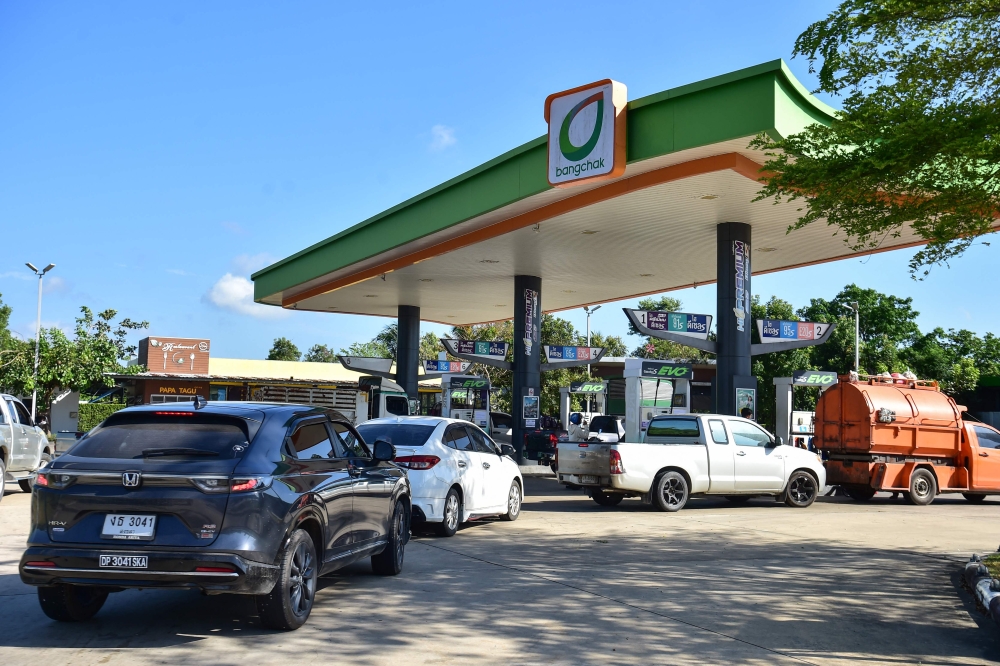

Motorists queue up at a Bangchak petrol station in the southern Thai province of Narathiwat on March 18, 2026. Thailand is considering targeted fuel excise tax cuts for E20 ethanol and B20 biodiesel blends to ease the impact of high energy prices, Deputy Prime Minister Ekniti Nitithanprapas said. — AFP pic
First Published: Monday, 21 Sep 2026 6:15 PM MYT
BANGKOK, Sept 21 — Thailand may consider targeted reductions in fuel excise tax, particularly for E20 (ethanol blend) and B20 (biodiesel blend) fuels, if necessary to ease the impact of high energy prices while supporting the country’s agricultural sector, said Deputy Prime Minister Ekniti Nitithanprapas.
Ekniti, who is also Finance Minister, said the government had several tools to manage energy prices, including using the Oil Fuel Fund, seeking cooperation from oil refineries to use excess refining margins to ease retail prices, and reducing fuel excise tax.
“Reducing fuel excise tax is another option if the situation warrants it,” he said in a statement on Monday.
Ekniti was responding to a proposal to use the remaining borrowing allocation under measures introduced to mitigate the impact of the West Asia crisis to support fuel prices.
However, he said, the government had so far refrained from cutting fuel excise tax as any reduction would immediately affect government revenue, while expenditure obligations would remain unchanged.
“Ultimately, the government may have to borrow again to compensate for the lost revenue. Therefore, the impact on the country’s fiscal position must be considered alongside any measures,” he said.
Ekniti said that if tax measures became necessary, the government was considering a more targeted approach by focusing on fuels such as E20 and B20, which contain relatively high proportions of ethanol and biodiesel respectively.
He said such an approach would ensure that the benefits extended beyond lower fuel prices to the agricultural sector, as ethanol used in E20 is derived mainly from sugar cane and cassava, while biodiesel is linked to palm oil.
“This would allow energy measures to also support the income of Thai farmers,” he said.
Ekniti stressed that measures to ease people’s cost-of-living pressures must be implemented alongside fiscal discipline, particularly as the current fiscal year ends this month.
He said Thailand’s remaining fiscal room was limited to slightly more than 10 billion baht (RM1.224 billion), making it necessary for the government to carefully assess the fiscal impact of any measures that could reduce state revenue.
“If measures that reduce government revenue are introduced without a comprehensive assessment of the resulting financial burden, the energy problem could spill over into a fiscal problem and become a ‘crisis within a crisis’,” he said.
For the next fiscal year, Ekniti said, the government would reassess its available fiscal space before deciding on the extent to which additional measures could be introduced. — Bernama
KioskNews shows a cleaned-up reading view extracted from the publisher’s page — the original always lives on their site, not ours.