Huanggang Port praised for ‘light speed’ checks, but some find layout huge
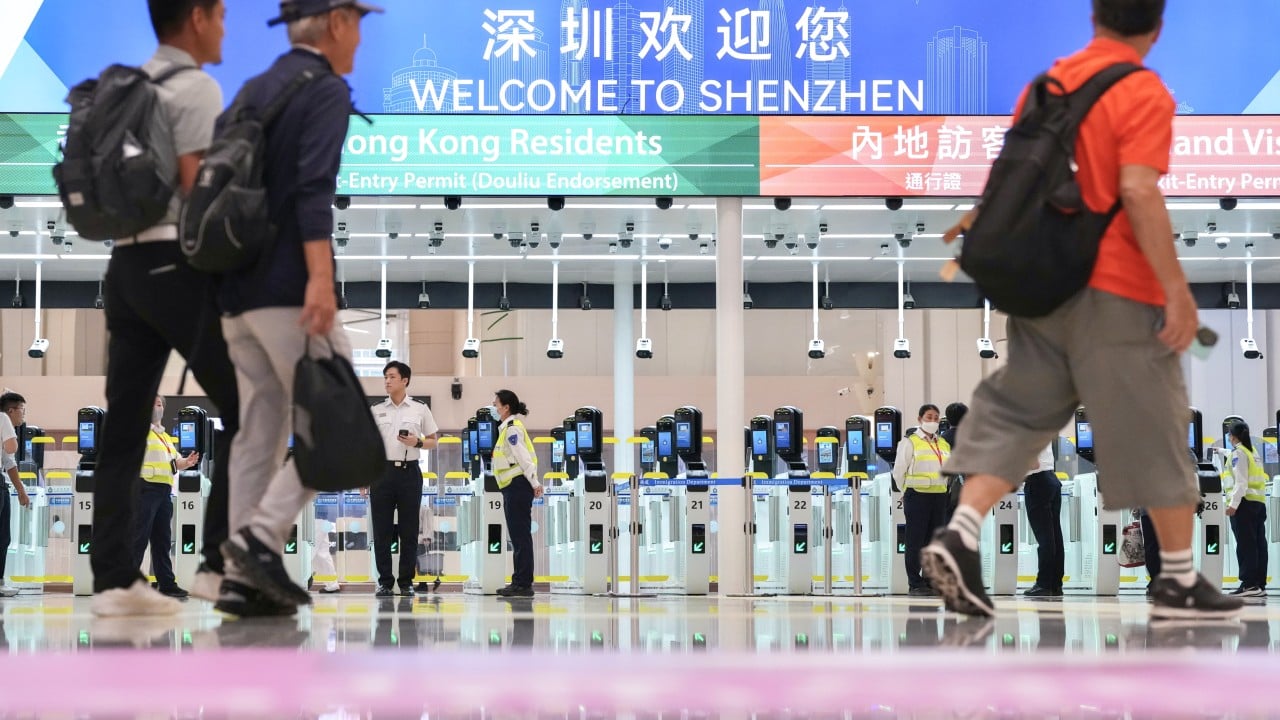
More than 42,000 travellers and 5,700 vehicles passed through the revamped Huanggang Port on Monday under a “smooth” first-day run of the new “joint clearance” system to cross between Hong Kong and mainland China, as officials braced for larger crowds over the coming long weekend.
Early bird travellers and residents simply curious to see how the new system worked were the first to pass through the facility when it opened at 6.30am, with some calling the clearance process “light speed”.
Many travellers said they approved of the new approach, by which travellers heading in either direction need only show one identification document. Others also said they were impressed with the architecture of the building, which took six years to construct.
But others found the facility mazelike and simply too huge to cross quickly, which undercut the appeal of the new clearance process.
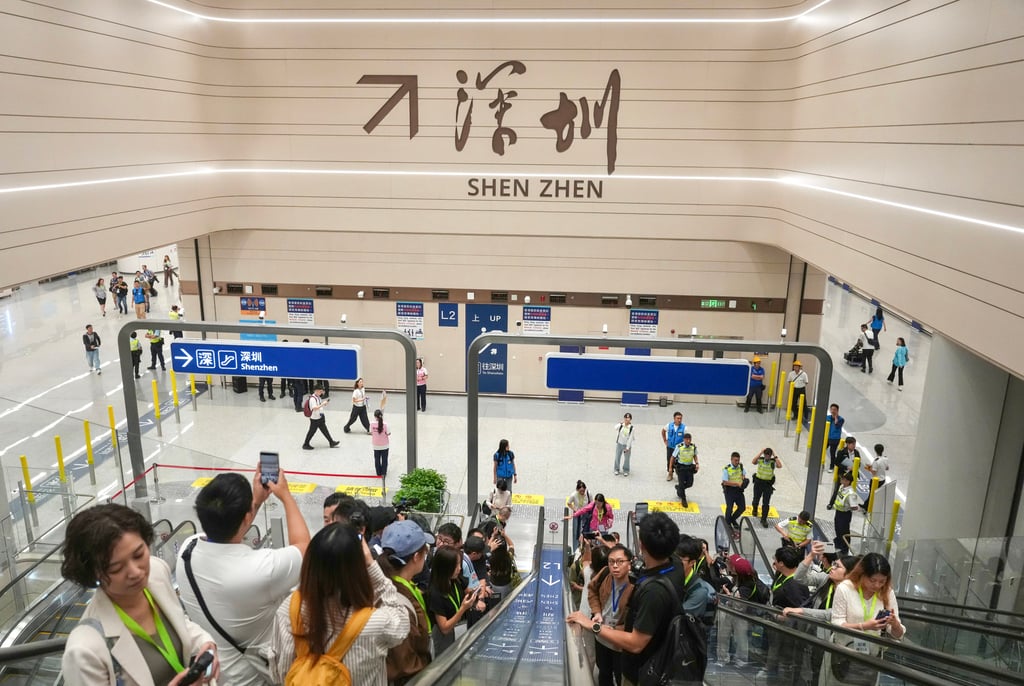
Speaking to the press after inspecting the new 24-hour checkpoint’s operation on Monday, No 2 city official Eric Chan Kwok-ki said he was pleased with the “smooth” operation.
“There’s a reason we chose [Monday] to open. The National Day ‘golden week’ holiday has just ended,” he said. “We believe there will be fewer visitors. So everyone has time to get familiar with the operations.
“We hope our colleagues will quickly familiarise themselves with the operation over the next few days so they can handle the bigger challenges during the peak on Saturday and Sunday when there will be more people,” the chief secretary said.
Chan also said that if the new “collaborative inspection and joint immigration clearance model” worked well, the government would consider extending it to other checkpoints.
Officials said clearance at Huanggang could be cut to five minutes, from about 30 minutes needed at the previous facility.
03:45
Revamped Huanggang Port officially opens amid bid to boost Greater Bay Area connectivity
Hong Kong residents who hold a valid mainland travel permit can use their Hong Kong ID cards interchangeably at the joint clearance channel for both outbound and inbound trips.
Secretary for Security Chris Tang Ping-keung said a joint command centre had been set up with Shenzhen authorities to ensure operations went smoothly on both sides of the border.
“It will be in operation as long as necessary, especially during peak times, like weekends or during the Apec conference,” Tang said.
Shenzhen is hosting the Apec Economic Leaders’ Meeting in mid-November, while the bloc’s finance ministers will gather in Hong Kong later this month.
Traffic at the crossing is expected to surge on the coming long weekend, as Monday is a public holiday following the Chung Yeung Festival on Sunday.
Secretary for Transport and Logistics Mable Chan said contingency plans were in place to ensure sufficient public transport for the anticipated rush.
“We will not underestimate the challenge to be brought about in the coming long weekend,” Chan said.
According to the Security Bureau, the new control point had handled 20,201 incoming and 22,011 departing travellers by 5pm.
The 42,212 passenger trips recorded represented a 181 per cent increase compared with average Monday traffic last month at the previous control point.
The new port also handled 2,713 incoming and 2,995 outgoing vehicles. The number of vehicle trips was 12 per cent more than the average recorded on Mondays last month.
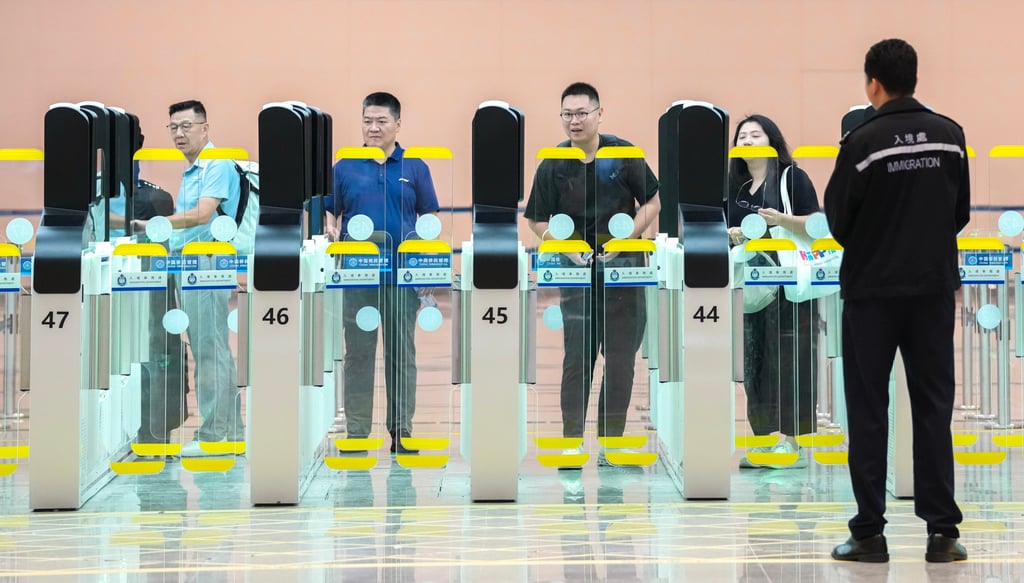
Among the first travellers using the new facility was a Shenzhen resident, surnamed Liao, who crossed into Hong Kong at around 6.30am and returned to the mainland shortly before 7am.
“The clearance was done in a minute,” he said, adding praise for the architecture of the building, which he likened to a modern airport.
Another mainland visitor, surnamed Wen, also praised the speed of the clearance process.
“It was light speed,” Wen said.
Dey Wu, a Shenzhen resident who holds an American passport, agreed the clearance was efficient.
“The process took less than a minute,” she said, adding that officials told her she was the first foreigner to cross.
“I used to come [to Hong Kong] once a month. Now, I would be happy to come twice a week.”
But on the Shenzhen side, a 70-year-old Hong Kong traveller who uses a cane to walk, Helen Ho, said the building was too big.
“I did not feel it was actually much faster as the building is so big and I had to take many lifts, and I had not been guided enough along my way,” Ho said.
A Tung Chung resident also said a technical glitch prevented him from using facial recognition clearance although he had registered for the option in advance. He ended up using his Hong Kong ID card to pass the gate.
Cheerful members of a mainland tour group held up signs with slogans such as “New Huanggang, first in line” as they arrived.
One traveller, 52, and 11 of her family members spent five hours taking a high-speed train from Hunan province to Shenzhen.
“It is great. It is modernised and service is great,” said the woman, surnamed Kuang, adding they would continue their journey to Hong Kong.
Hong Kong authorities said 30 tour groups used the crossing to head south into the city.

Timothy Chui Ting-pong, executive director of the Hong Kong Tourism Association, said he expected more local travel agencies to launch tours themed around the crossing in the near future.
He added that some visiting mainland tour groups had already switched to the facility for their departure.
Visitors also drove to cross the border, but some said the time they spent waiting for their turn was more than double compared with the previous checkpoint as drivers were not familiar with the new procedures.
But celebrity feng shui master Mak Ling-ling, who also drove across, said it took her one minute for clearance.
“The facility is new, it is quite natural drivers may take some time to familiarise themselves with the new procedures,” she said. “Overall, the new port has more lanes so the process was in general faster.”
The crossing is expected to be able to handle up to 300,000 travellers a day. The Immigration Department said it expected about 100,000 people to use Huanggang Port daily during initial operations. It can also handle 15,000 vehicles a day.
The previous facility began 24-hour clearance in 2003, becoming the country’s first land crossing to provide round-the-clock clearance for both travellers and cargo.
It handled an average of 40,000 visitors a day and a peak flow of 65,000 people. On average, 9,000 vehicles used the crossing.
KioskNews shows a cleaned-up reading view extracted from the publisher’s page — the original always lives on their site, not ours.