A Cray-1 supercomputer replica from 30 "obsolete" Mac Minis
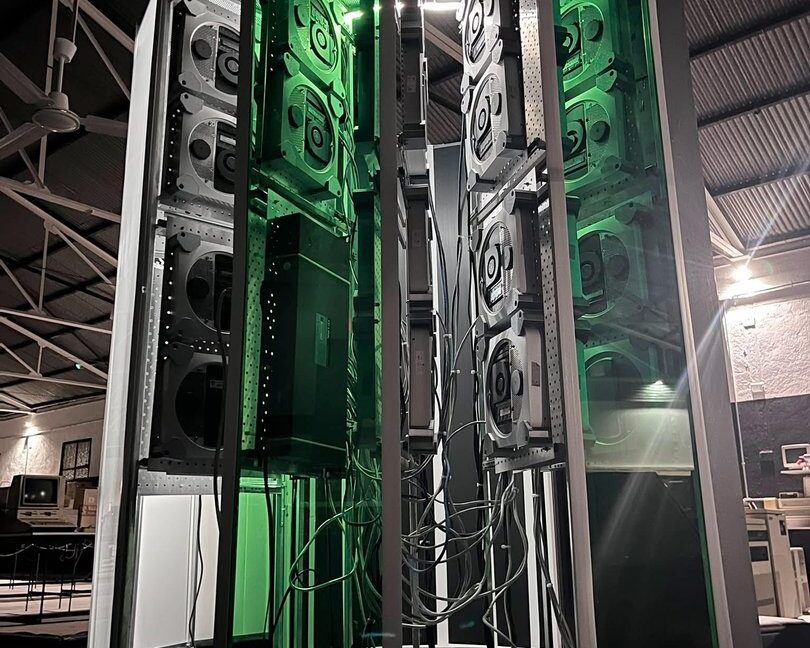
The Museo de Historia de la Computación in Spain has unveiled a 1:1 scale visual replica of the famous Cray-1 supercomputer from 1976. Instead of sourcing expensive, cutting-edge tech to run the system, the creative team powered the project with 30 2012-era Mac Minis. Developed over 18 months, the project serves as a 50th-anniversary tribute to the Cray-1 and Apple’s founding.
Mac Minis from over a decade ago might not seem like the obvious first choice for building a cluster supercomputer, but when networked together, the developers can orchestrate the 64 active processing cores into a combined 1.3 teraflops of performance in their most recent tests. The museum reportedly achieved 1.5 teraflops previously using all 70 available cores, prior to one node going offline. Benchmarks were obtained using a custom matrix-multiplication Python script. Five PCs are quad-core i7s, and the remaining 25 are dual-core i5 models. Except for two units from 2014, the rest of the array dates to 2012.
The replica is a valuable tool for museum-goers to understand the shifts in computer architecture since 1976. The original Cray-1 used vector processing, applying a single instruction to multiple data elements simultaneously, whereas the replica distributes work across independent processors in a parallel cluster. The peak theoretical performance of the original Cray-1 was approximately 160 megaflops. What was originally a purpose-built research machine has been re-created with consumer hardware that’s vastly more capable than the machine that inspired it.
Rather than opting for a more standard Linux distribution, the team found that macOS Mojave (10.14) met their project needs by harnessing macOS’s built-in support for MPI (Message Passing Interface), the software layer that allows all the nodes in the cluster to pass tasks to one another.
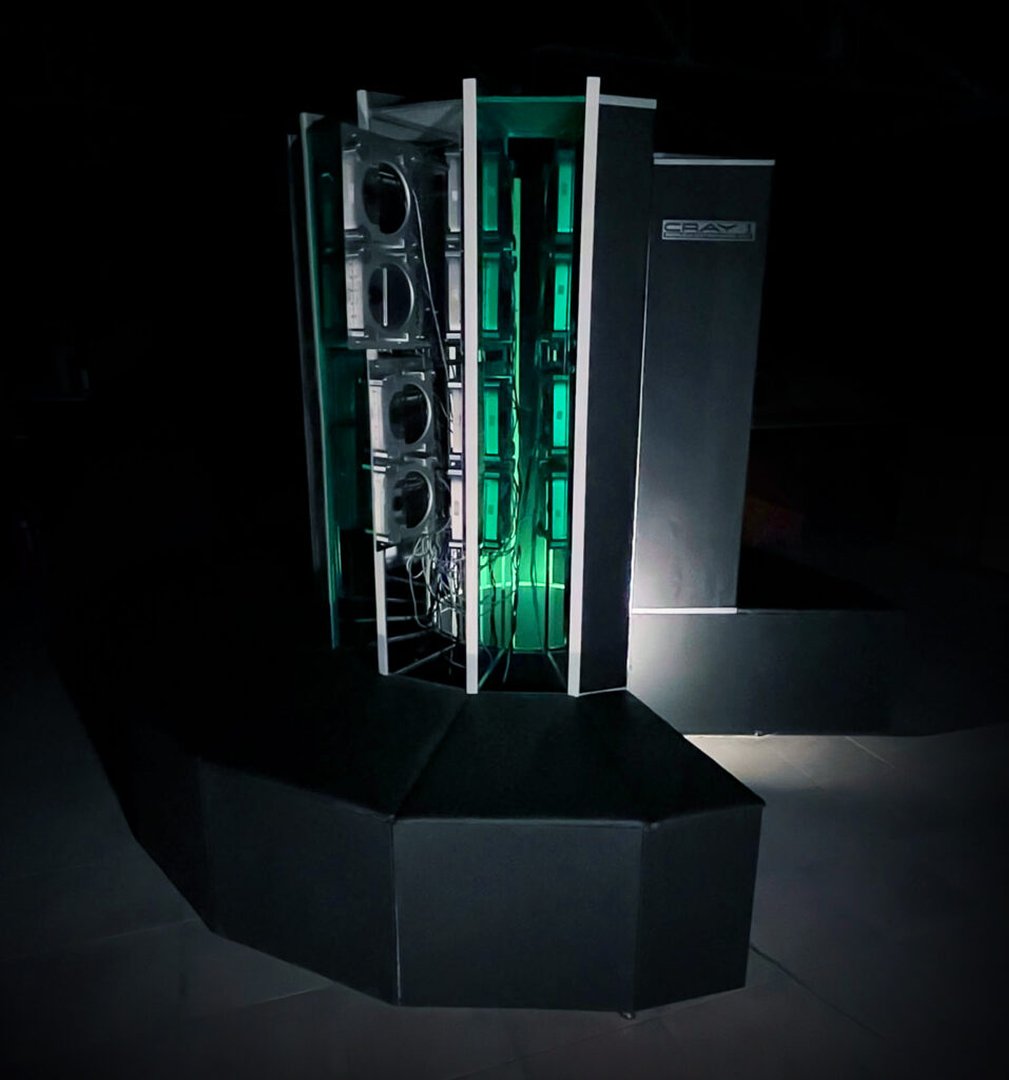
The Cray-1 replica, complete with iconic padded bench seating. The only thing missing is Robert Redford and Ben Kingsley having a discussion on SECTEC Astronomy. Credit: Museo de Historia de la Computación
Credit: Museo de Historia de la Computación
The Cray-1 replica, complete with iconic padded bench seating. The only thing missing is Robert Redford and Ben Kingsley having a discussion on SECTEC Astronomy. Credit: Museo de Historia de la Computación Credit: Museo de Historia de la Computación
Guests at the Museo de Historia de la Computación can watch in real time as the system runs matrix algorithms, mapping the scale of system performance from a single core to the full suite running in parallel.
Stealth supercomputing
Combining 30 consumer PCs into an operational cluster wasn’t the only engineering challenge the team faced. If you’ve ever stepped inside a server room, or, like me, foolishly installed one in your own basement, you know that fan cooling can be loud. The museum team used passive convection cooling via a steel rack chassis and aluminum tray mounts for each Mac Mini. Compared to the roaring thunder of a modern data center, this cluster is nearly inaudible.
KioskNews shows a cleaned-up reading view extracted from the publisher’s page — the original always lives on their site, not ours.