New Zealand election first count ends with 2 main parties nearly deadlocked
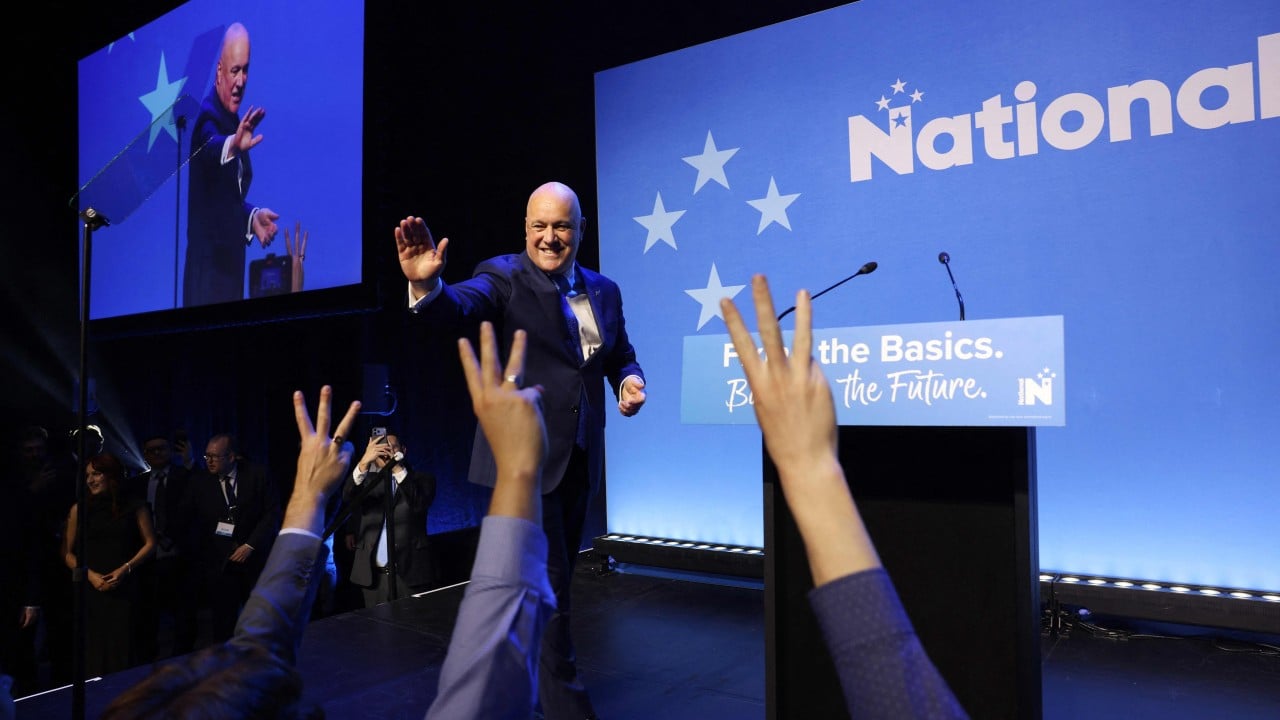
New Zealand’s ruling centre-right National Party and main opposition Labour were nearly deadlocked in the popular vote after initial counting in the nationwide general election on Saturday.
Results from the Electoral Commission show that with more than 95 per cent of the ballots counted, both parties were polling just short of 30 per cent of the popular vote, with just a few thousand votes separating the two.
A projection from New Zealand’s Electoral Commission showed the current three-party ruling coalition led by National would have a majority of two seats, after an election dominated by a struggling economy and voter disillusionment with the two biggest contenders.
Both parties said it would take time for the final results to be known.

“It is heartening to see that on the numbers so far, National is once again the largest party in parliament, and we have a pathway to forming the next government,” Prime Minister Christopher Luxon told supporters in Auckland.
“But I have to tell you right now, it is too close to call.”
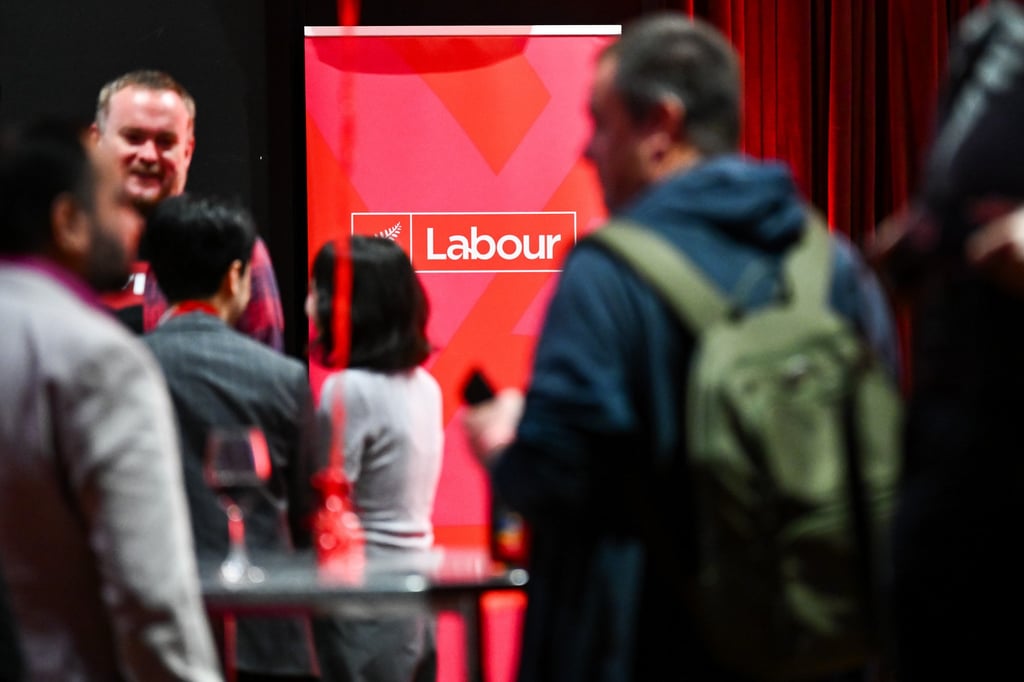
Labour leader Chris Hipkins delivered a similar message in Upper Hutt, a city northeast of the capital Wellington.
“Tonight, New Zealand has spoken. It may take us a little bit longer to figure out exactly what it is that you’ve said,” he told supporters.
Government could take weeks
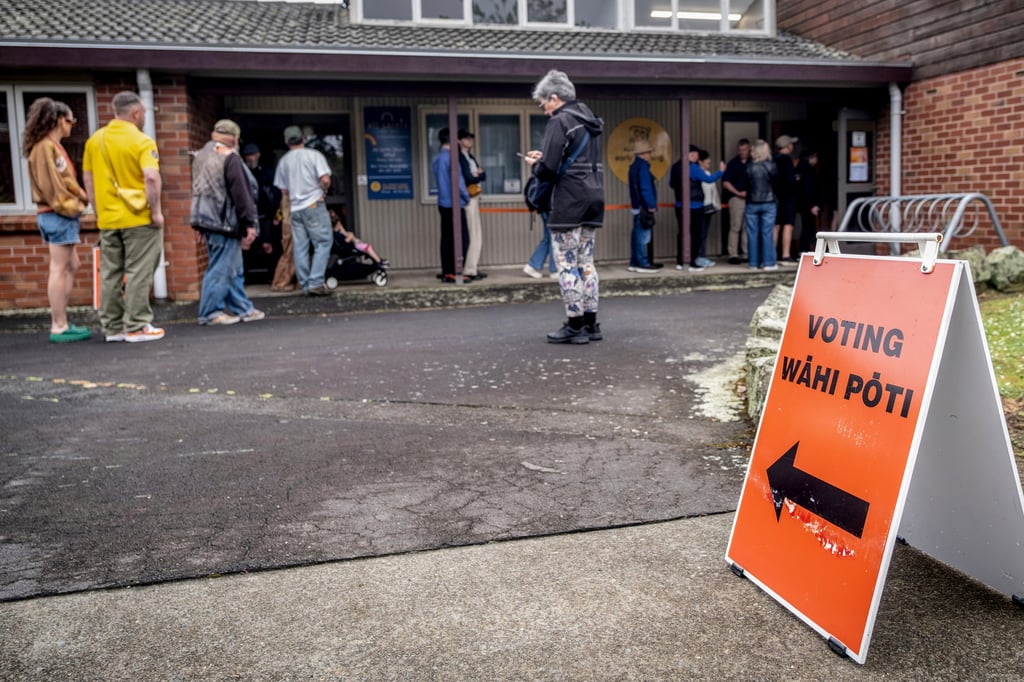
Special votes, which include those from overseas voters or people outside their electorate, will not be included in the vote count until official results are released on November 27.
Those votes have typically favoured the left, with parties on the right losing support following the count. This could also be key in seats where races remain tight between Labour and National candidates.
Left-leaning parties including Labour are aiming to make the National-led coalition the first one-term government in just over 50 years.
New Zealand’s electoral system makes coalitions the norm, and the tightness of this year’s race means one or more of the country’s smaller parties will almost certainly participate in a governing coalition.
The country switched to a mixed member proportional system in 1996, which means people vote for both the party and a local constituency candidate.
There are 71 constituency seats and at least 49 party seats, and a party or coalition needs a majority to form a government.
Minor parties will be key
Popular support for Labour and National is at historically low levels, with surveys showing voters have lost faith in the major parties to find solutions to the sluggish economy and to make the necessary changes to fix ageing infrastructure.
If the National-led coalition loses its majority at the official count, either it or a left-leaning coalition would require the support of the centrist Opportunity Party, which looks likely to enter parliament for the first time.
Opportunity leader Qiulae Wong said she would look to negotiate with the party that secured the largest number of seats after the official results.
“We made that call based on the fact that we need a majority of seats in parliament in order to form a government. So that is what we will stick to,” she said.
New Zealand has emerged only slowly from a prolonged economic downturn, with growth subdued, household budgets strained and unemployment rising to 5.7 per cent in the third quarter, its highest level in 11 years.
Healthcare and hospitals rank alongside the economy as leading concerns for voters, while housing affordability is still a major issue, even though house prices have broadly stabilised.
Indigenous Maori voters are also concerned about the current government’s attempts to roll back historic policies meant to improve conditions for the community as well as efforts to reduce the influence of the country’s founding document, the Treaty of Waitangi, on policy.
KioskNews shows a cleaned-up reading view extracted from the publisher’s page — the original always lives on their site, not ours.