The Guide #270: Grand Theft Auto VI is everywhere – but is it really the cultural event of the decade?

An estimated cost of $1bn. A development period of 13 years. A production team of 5,000 people. A game map the size of Manchester. An estimated 24m copies sold through pre-orders and launch day alone, generating $2.36bn. Thousands upon thousands of days of leave booked and sick days taken to play the thing, costing the US economy an estimated $1bn (yep, another billion figure) in lost productivity. The scale of Grand Theft Auto VI – and the tidal wave of facts and figures surrounding its making and economic impact – truly boggles the mind.
Even if you, like me, are unlikely to ever sit down and play the thing, you will struggle to escape its influence. Footage both sinister and benign – from graphic shooting sprees to mellow clips of its protagonists strolling, hand in hand, down the beach – will follow you around Facebook, Instagram, X and TikTok. Whatever your preferred publication, left or right, high- or lowbrow, it will have proffered its own take on the game, whether it’s to bemoan its godless influence on adolescent men or to laud its unlikely celebration of stable (if criminally inclined) relationships. It even receives extended segments on BBC News at 10 – much to the annoyance of veteran political reporters.
Michael Crick might not agree, but GTA VI’s arrival is inarguably newsworthy, its status as a capitalised Cultural Event assured. Still, I find it tricky to figure out just how major a cultural event it is. Certainly, within the gaming world, it’s as big as big gets: the most successful, controversial and creatively revered game series of all time returning after more than a decade away, with by far its biggest ever instalment. Harder to determine, though, is where it sits more broadly, when comparing apples and oranges, video games and Marvel movies or Eras tours. Is it really, as some have suggested, the Cultural Event of the Decade?
Perhaps the most straightforward (if somewhat soulless) measure of GTA’s Cultural Eventishness we have to hand is cold, hard cash. By this metric, it eclipses just about everything. Gaming has for some time now been by far the highest-grossing of all the cultural sectors, generating more revenue than the film and music industries combined. It’s notable that there are next to no significant film releases in the US this weekend. GTA VI alone – one game out of thousands – is expected to earn around $3bn by the end of this year (for a game only released in mid November, let’s remember; video game sales tend to have a very long tail); as such, it is estimated to be the biggest entertainment release in history.
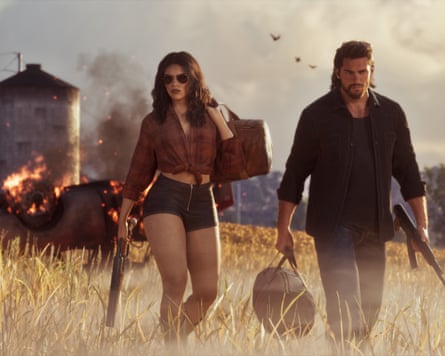
Case closed? Not quite. Money is one thing, but there are also the more nebulous ways in which cultural heft is measured. I’ve seen GTA VI referred to by quite a few commentators as ‘monocultural’, achieving a vanishingly rare moment of mass engagement in a fragmented age. There are strong arguments for that: it is, as discussed, inescapable even for non-fans. Right at this moment, vast numbers of people will be watching other people play GTA VI on Twitch, YouTube and Kick; watching others play games is a primary form of entertainment for so many in gen Z, and increasingly in gen Alpha.
For all that, there are arguments against GTA VI as a true monocultural event. For one, there’s a barrier to entry – either financially, or in terms of time – that means many people are unlikely to ever play the game itself, while others will object to its sexual and violent content. As with previous instalments, its players are expected to skew overwhelmingly male, based on pre-sale data, with a majority of its purchasers under the age of 35. It’s reasonable, then, to assume that a huge chunk of society isn’t engaging with GTA VI at all, or at most, is doing so passively, through headlines or clips they quickly scroll past on their phones.
Does that argue against GTA VI as the Cultural Event of the Decade? Perhaps – but then, it’s hard to crown anything in such a splintered cultural landscape. Something like Live Aid, watched globally by close to 2bn people, is impossible to imagine today, when viewers are scattered across so many different platforms. (Sport is, of course, the one thing that can manage Live Aid levels of reach in 2026.) In the absence of anything of that magnitude, GTA VI has as decent a claim as most.
after newsletter promotion

KioskNews shows a cleaned-up reading view extracted from the publisher’s page — the original always lives on their site, not ours.