Milei moves to professionalise Argentina’s intelligence service
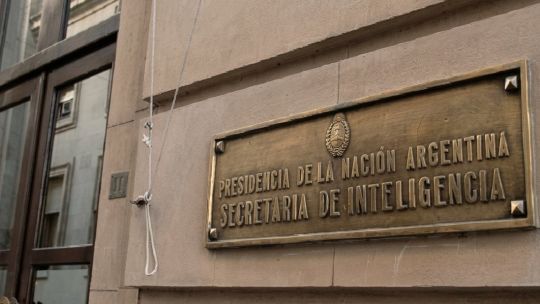
President Javier Milei’s government is moving to overhaul the structure of Argentina’s intelligence agency, presenting the changes as a drive to professionalise and depoliticise the country’s intelligence apparatus.
Through a presidential decree, the government will introduce a new statute for personnel at the State Intelligence Secretariat (SIDE), establishing open recruitment, competitive selection, specialised training and performance-based promotions. The new system is due to begin in 2027.
The reform is the latest in a series of changes at the intelligence agency under Milei, who has sought to restructure and strengthen SIDE since taking office. It follows a broader reorganisation of the intelligence system, changes to SIDE’s leadership and expanded powers for the agency, as well as successive above-inflation increases in its budget.
The centrepiece of the latest reform is the creation of a new National Intelligence Corps, which the government says will be made up of agents selected according to professional qualifications and merit, rather than political connections or seniority.
Candidates will be selected through open recruitment and competitive examinations, giving the agency what the government describes as a professional and depoliticised structure.
“During decades, our country’s Intelligence service suffered the consequences of improvisation, institutional degradation and the absence of a long-term policy,” SIDE said in a statement announcing the changes.
“For the first time, SIDE will have a genuine intelligence career, with an open and transparent entry process and rigorous, competitive and depoliticised selection mechanisms.”
Under the new system, seniority will no longer be the sole criterion for promotions. Minimum periods of service, physical and psychological fitness, mandatory training and favourable performance assessments will also be taken into account.
The government has also placed a strong emphasis on depoliticisation. Government-friendly journalist Eduardo Feinmann reported on his A24 programme on September 14, citing government sources, that the administration believes people linked to the opposition have been placed within SIDE. The claim has not been independently established.
The issue comes amid separate allegations that SIDE has monitored political opponents and social organisations. A report last year by Página/12, citing a document obtained by journalist Hugo Alconada Mon, said the agency had gathered information on planned trade union protests, political meetings and activities involving opposition figures, trade unions, retirees and disability organisations.
Opposition politicians have called for congressional scrutiny, while former intelligence officials have argued that collecting information on people solely because of their political views or lawful activities could violate Argentina’s Intelligence Law. The government has denied that SIDE is being used to persecute its critics.
The announcement comes just days after Milei proposed creating a National Security Council as part of a package of measures related to Argentina’s sovereignty dispute over the Malvinas (Falkland) Islands.
“We are going to create the National Intelligence Corps, made up of the best profiles in Argentina,” said SIDE Secretary Cristian Auguadra. He explained that the new statute seeks to build a corps that is “professional, modern and permanently at the service of the interests of Argentines”.
The intelligence secretary also stressed the importance of institutional continuity.
“This reform seeks to build something that transcends governments and generations,” he said, describing the new corps as a professional structure with an institutional identity.
SIDE says its members will have to be trained to “understand the world, anticipate threats and protect [Argentina’s] interests”.
“The reconstruction of the National Intelligence System is not merely about modernising structures. It means recovering an essential capability of the Argentine state,” Auguadra said.
He added that the process would begin with the selection of agents who were “competent, honest, highly trained and selected from among the best”.
Intelligence Undersecretary José Lago Rodríguez also backed the new framework.
“At SIDE, we seek to train the best professionals to defend the country’s interests,” he said, arguing that the statute would allow the creation of a “stable, demanding and apolitical” career based on merit and professional excellence.
KioskNews shows a cleaned-up reading view extracted from the publisher’s page — the original always lives on their site, not ours.