Why is Rosary Month celebrated in October?
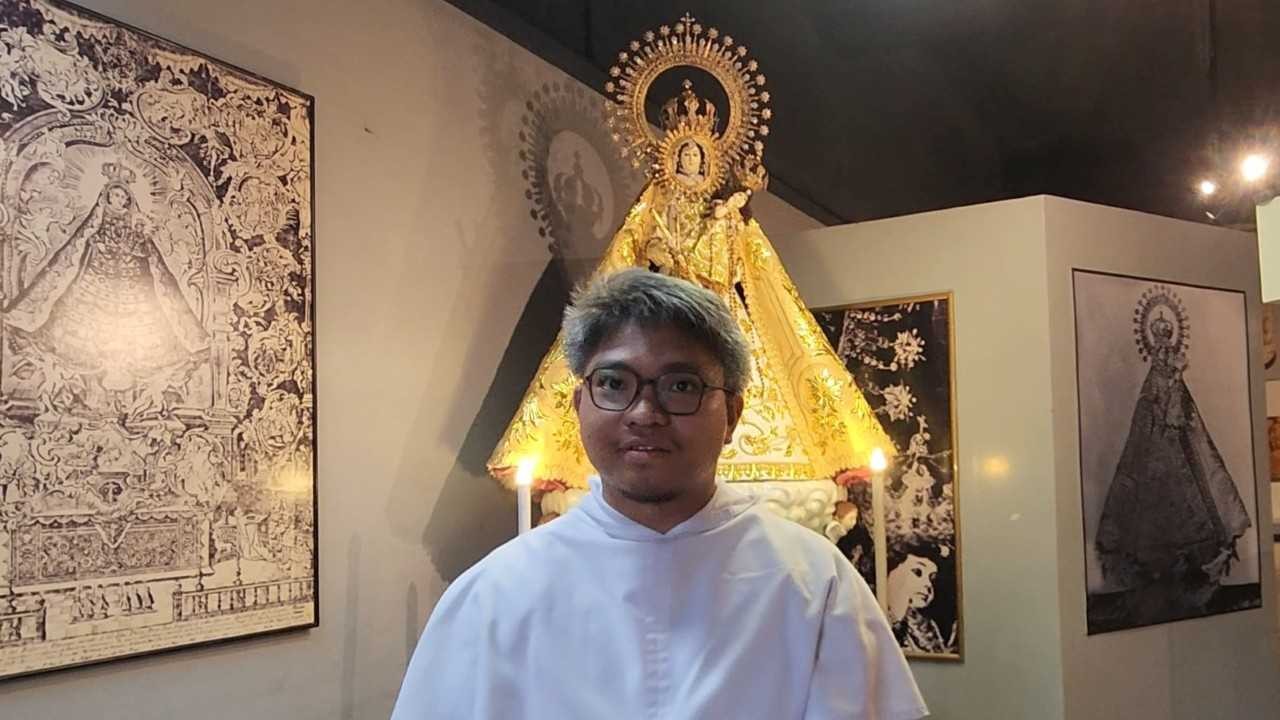
As the Catholic Church dedicates the entire month of October to praying the Rosary, the faithful are urged to seek the intercession of the Our Lady of the Rosary and contemplate the life of Jesus Christ through the mysteries.
During his Apostolic Journey to France, Pope Leo XIV urged the faithful to pray the Rosary for peace, particularly in the world’s conflict areas.
“Let us accompany this prayer with concrete acts of penance and mercy, committing ourselves always to fostering dialogue and reconciliation,” the Pontiff said.
But why is the Rosary Month celebrated in October, and how did the veneration of the Marian image begin in the Philippines?
An October victory
Pope Pius V established the feast of the Our Lady of Victory, the name of the Our Lady of the Rosary then, on October 7, 1571, after Christian forces won a battle against the Ottoman Empire in the Gulf of Patras in western Greece.
The victory weakened the Ottoman Empire’s westward expansion and helped prevent its potential conquest of Christian Europe.
In an interview, historian Br. Dennis Amarante, O.P., of the Order of Preachers, said Pope Pius V asked the faithful to seek the Blessed Virgin Mary’s intercession for the victory of Christian forces by praying the Rosary.
“Pope Pius V, who was a Dominican, asked the people, and he himself, prayed the Rosary to ask the intercession of the Blessed Mother in order for the Christian forces to prevail,” Amarante told GMA News Online.
“And they did prevail. So they won the naval battle. And as a result, in thanksgiving, Pope Pius V instituted October 7 to be the feast of Our Lady of the Rosary,” he added.
In 1573, Pope Gregory XIII changed the name of the feast from Our Lady of Victory to the Feast of the Holy Rosary to honor the power of the Rosary used during that battle.
Since the Feast of Our Lady of the Rosary falls in October, the entire month eventually became known as the Rosary Month.
Filipinos’ faith in the Rosary
After the victory in the Battle of Lepanto, the praying of the Rosary was soon introduced in the Philippines after the Order of the Preachers (Dominicans) arrived in the country in 1587.
"One of those missionaries who came to the Philippines was the Dominicans, and being the primary propagators of the Holy Rosary, they brought the veneration to the Marian image in the country,” Amarante said.
He shared that when the Dominicans arrived in the Philippines, they brought a statue of Our Lady of the Rosary and housed it in the Sto. Domingo Church in Intramuros, Manila.
“When Santo Domingo Church was still standing in Intramuros, it was there in the façade. Unfortunately, one of the casualties of the Second World War,” said Amarante, who published articles and conference papers on Philippine Church history, Philippine Dominican history, and historical methodology.
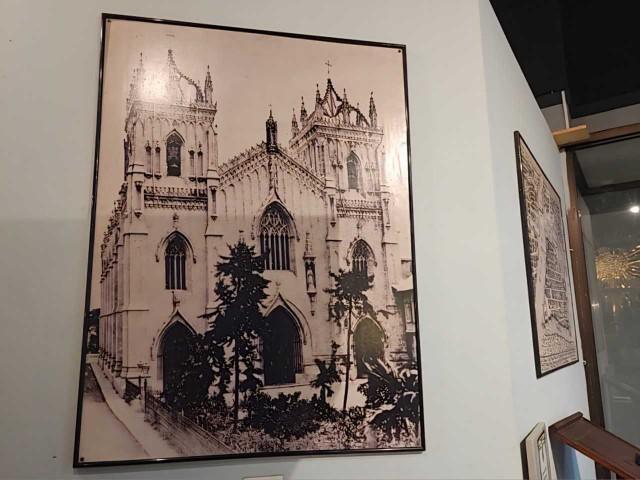
An image of Sto. Domingo Church in Intramuros, Manila, before it was destroyed during the bombing in World War II. The image is displayed at the Museo de Santo Domingo in Quezon City. Mariel Celine Serquiña/GMA News
For Catholics, praying the Rosary is a way to seek healing, solace, and comfort while reflecting on the life of Jesus Christ.
The Rosary is divided into four sets of mysteries: the Joyful, Sorrowful, Luminous, and Glorious Mysteries. Each set consists of five events from the life of Jesus Christ.
As they meditate on each mystery, Catholics pray the Hail Mary 10 times, followed by one Glory Be.
For Amarante, despite the Marian image’s Western iconography, it eventually took on a local context in the Philippines, with devotions to Our Lady of La Naval de Manila in Quezon City, Our Lady of Manaoag in Pangasinan, and Our Lady of the Rosary of Orani in Bataan, among others.
READ: 5 must-know facts about Our Lady of Manaoag
"Eventually, over time, it would have a significant effect on the lives of Filipinos. Filipinos would eventually call her their own,” Amarante explained.
One reason, the Dominican brother said, is that the Marian image “transcended the bounds of the context” to which Filipinos can relate.
“They see not just a Western icon or statue, but they see it as a representation of the Blessed Mother who is there with them despite challenges and tribulations, guiding them towards her Son, our Lord Jesus Christ. Each of them would carry their own prayers of supplication,” Amarante said.
Lessons from Our Lady of the Rosary
Like the Blessed Virgin Mary, Amarante challenged the faithful to be courageous in doing good and be devoted to God and his teachings.
"Pinakita ng Mahal na Ina na kahit na maraming pagsubok, kahit na ang daming pagihirap, dumipende siya sa kanyang pananampalatay sa Diyos," Amarante said.
(The Blessed Mother showed that despite the many trials and hardships, she relied on her faith in God.)
"Ginawa niya ang tama, sumunod siya, at namuhay siya bilang isang mabuting hapo, isang mabuting ina, isang mabuting pananampalatay," he added.
(She did what was right, obeyed, and lived as a good person, a good mother, and a woman of faith.)
In a time where there is violence, division, dishonesty, and disregard for what is right, Amarante said it's easy to show "religious fervor."
"Sa panahon ngayon, ang dali-daling mag debosyon, ang dali-daling magpakita ng religious fervor, we always depend on the externalities of things," the Dominican brother said.
(In these times, it is easy to practice devotion and show religious fervor, but we often rely too much on the external aspects of our faith.)
"So sana, sa patuloy nating pamumuhay bilang mga Kristiyano na may debosyon sa Mahal na Birheng Maria, sana yung mga lessons na yun maglulot sa atin ang internal transformation, conversion," he added.
(So, as we continue to live as Christians devoted to the Blessed Virgin Mary, may the lessons we learn from these devotions lead to an internal transformation and conversion.)
Follow facebook.com/gmanewsonline for real-time news and developments in the Philippines and around the world.
—RF, GMA News
KioskNews shows a cleaned-up reading view extracted from the publisher’s page — the original always lives on their site, not ours.