Young people can be part of Singapore’s best defence against online extremism: Zaqy Mohamad
SINGAPORE – Young people are not just vulnerable to online extremism, but can also be part of Singapore’s strongest defences against it, said Acting Minister-in-charge of Muslim Affairs Zaqy Mohamad.
They understand the online world in a way that many adults do not, and know how online communities shape opinions and create a sense of belonging, he said at the Inter-Agency Aftercare Group’s (ACG) youth forum on Nov 17.
Young people may also be the first to notice when a friend is heading down a dangerous path, and may be the person that the friend is most willing to listen to, he added.
“If someone expresses support for violence or an intention to harm others, raise the concern promptly. Do not try to manage the situation by yourself,” said Zaqy, who is also Senior Minister of State for Defence.
“Sometimes there’s this bro code or sister code. You’re afraid that if you speak up against someone, you’re betraying a friend. But the reality is that early counselling and intervention can help someone step back from radicalisation.”
The annual forum brought togther about 150 students from madrasahs, Institute of Technical Education, polytechnics, junior colleges and universities, who learnt about online extremism.
They then created 30-second videos within an hour, applying the lessons to real-world scenarios.
The students drew on a talk by Sheryl Chua, head of public safety and security programme at Singapore University of Social Sciences, who suggested that youth carefully assess online messages and question divisive narratives using a four-point framework.
They should first assess how the content makes them feel – whether it stirs up negative emotions such as anger, humiliation or fear, said Chua.
The second step is to take note of the messaging of the social media posts, such as whether it attempts to provide absolute answers to complex real-world issues which may not be so black and white.
Thirdly, students can check the source of the content to see if it is from a trustworthy outlet or bad actors who try to provoke reactions from netizens.
The final step is to talk to trusted adults about what they have come across online.
Schools and educators must also know the telltale signs of radicalisation, such as supporting terrorism, glorifying violence, or promoting hatred, added Chua.
There is a growing threat of online radicalisation, particularly among young people, said the Ministry of Home Affairs (MHA) during the event.
It said militant jihadist groups and far-right accelerationists use digital platforms such as social media, gaming sites and online communities to spread their extremist ideologies. These platforms can gamify hate, normalise violence and draw vulnerable youth to extremist narratives.
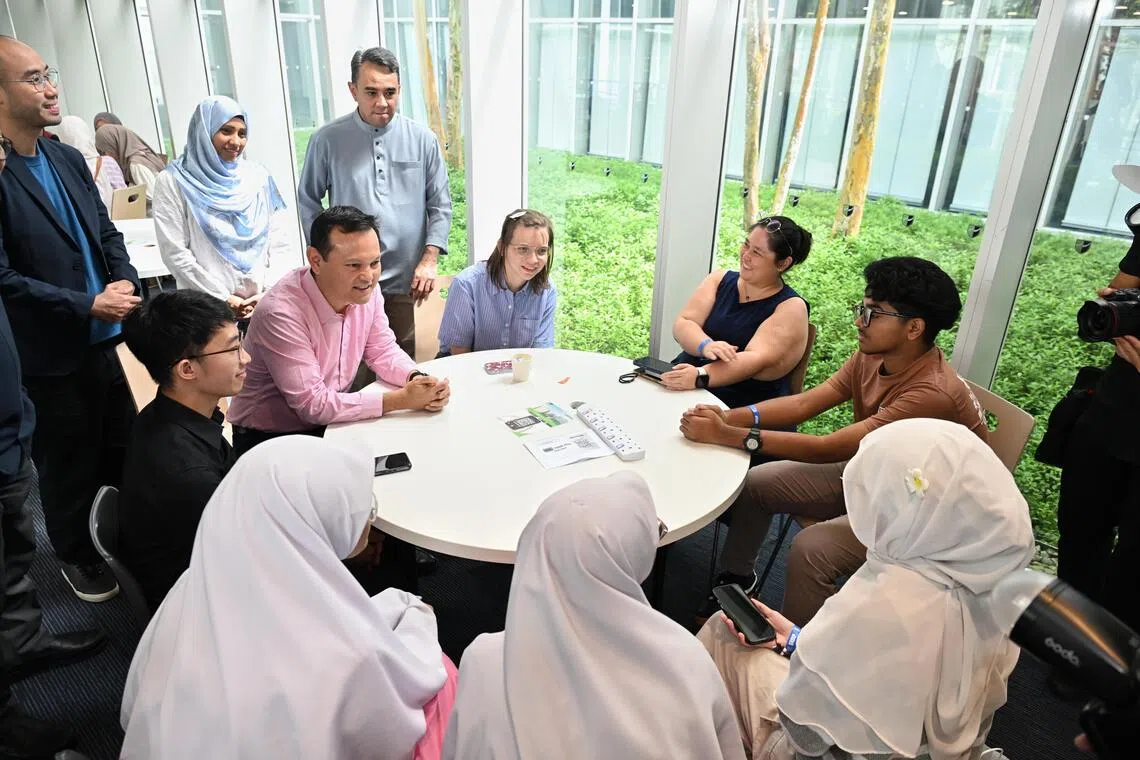
Acting Minister-in-charge of Muslim Affairs Zaqy Mohamad (left, in pink) said youth should not be afraid to raise concerns about radicalisation.
ST PHOTO: AZMI ATHNI
Accelerationists believe that existing social, economic or political structures are flawed and promote the hastened collapse of those structures.
In its annual terrorism report on Sept 10, the Internal Security Department said youth radicalisation is a pressing concern.
The number of cases involving young people in the past five years almost quadrupled from four cases between 2017 and 2021 to 15 cases since 2022.
Three of the young people detained between April and June 2026, aged between 14 and 19, had formulated local attack plans, and were close to executing them.
The youngest person to have been detained under the Internal Security Act to date was a 14-year-old boy who supported the Islamic State in Iraq and Syria and held far-right extremist ideologies. The Secondary 2 student was detained in June 2026 after drafting a 21-page manifesto detailing his plan to conduct a stabbing attack against non-Muslim teachers and students at his school.
Singapore Polytechnic computer science student Ammar Sufi said there were times when he came across extremist views online.
“I do turn a blind eye to these things… because it’s like the fear of being influenced myself,” he said.
Through the forum, the 21-year-old learnt that youth have a strong influence on the messages and posts in online communities.
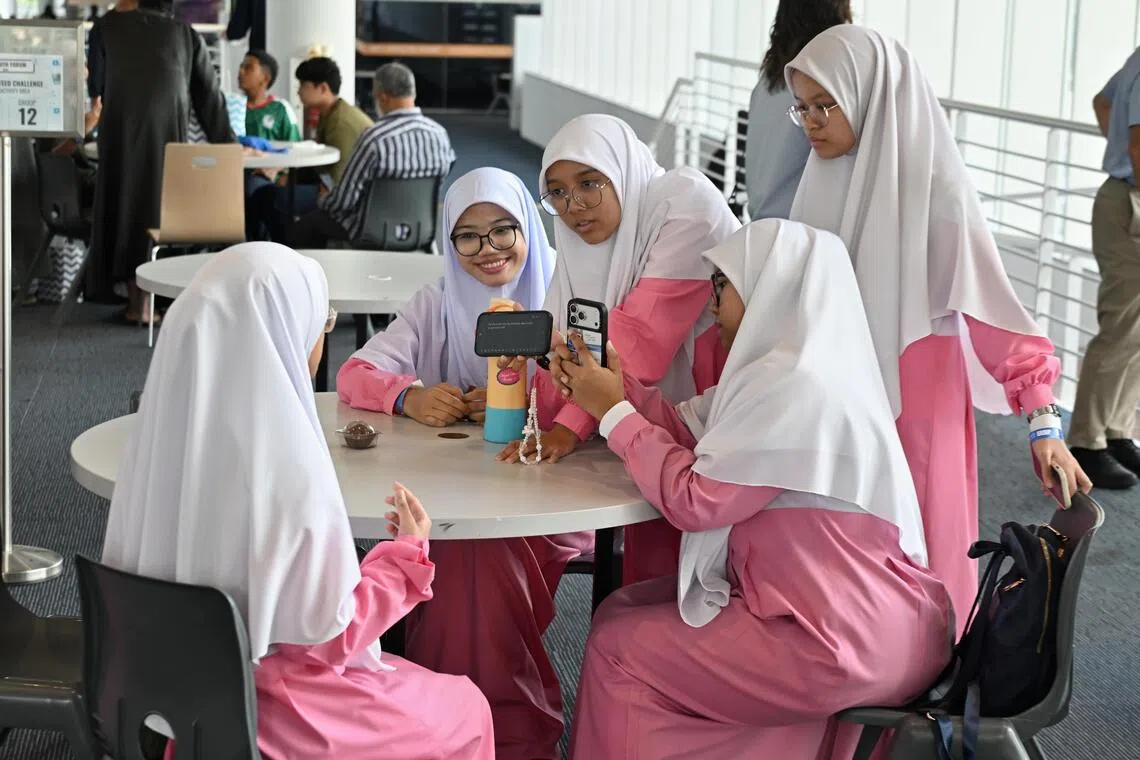
Forum participants had one hour to create 30-second videos showing how to apply the lessons about online extremism to real-world scenarios.
ST PHOTO: AZMI ATHNI
As a volunteer who works occasionally with children, at-risk youth and people with intellectual disabilities, Ammar said he will share what he learnt with them.
Madrasah Al Maarif Al Islamiah student Nur Asyiqin Kamsani said she thought radicalisation was a small issue that some people face in their teenage years.
“I’ve come to learn that being radicalised will heavily impact one’s development into adulthood,” the 17-year-old said.
Her team was one of the winners of the video-making competition. Their video was about a Muslim girl who began questioning her own faith after encountering extremist content online about Islam.
“It shows that someone’s extremist views can affect another person. I have seen hateful posts on TikTok, Instagram and Threads,” she added.
The forum was organised by community self-help group Mendaki in partnership with the ACG and MHA.
KioskNews shows a cleaned-up reading view extracted from the publisher’s page — the original always lives on their site, not ours.