ASEAN chief highlights unusually extensive haze talks, hurdles in South China Sea code negotiations
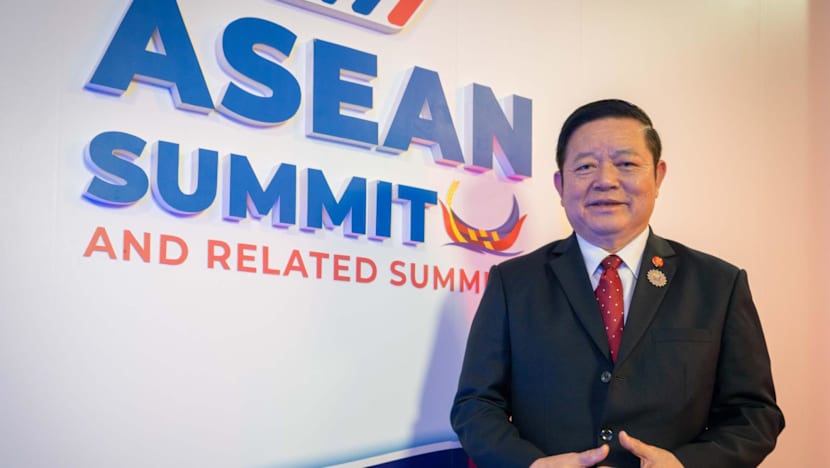
In an interview with CNA at the ASEAN summit, Secretary-General Kao Kim Hourn said leaders discussed tackling companies linked to forest fires, while the geographic scope of a proposed South China Sea code of conduct remains unresolved.
New: You can now listen to articles.

This audio is generated by an AI tool.

17 Nov 2026 02:38PM
MANILA: Leaders of the Association of Southeast Asian Nations (ASEAN) discussed transboundary haze more extensively than the grouping's chief Kao Kim Hourn had heard before, including the need to tackle companies involved in forest fires.
Speaking to CNA on Monday (Nov 16), the ASEAN secretary-general said the issue featured prominently in discussions among leaders at the current 49th ASEAN Leaders’ Summit in Manila, with attention focusing on both immediate measures and longer-term solutions to a problem that has plagued the region for decades.
He said leaders had discussed the need to address the root causes of haze, including the role of individuals and companies whose activities contribute to the pollution.
“For example, how we deal with not only people, but companies that are involved and need to be addressed.”
According to Kao, the attention given to the issue in Manila stood out.
“It's the first time that I heard this issue being discussed quite extensively by the leaders,” he told CNA.
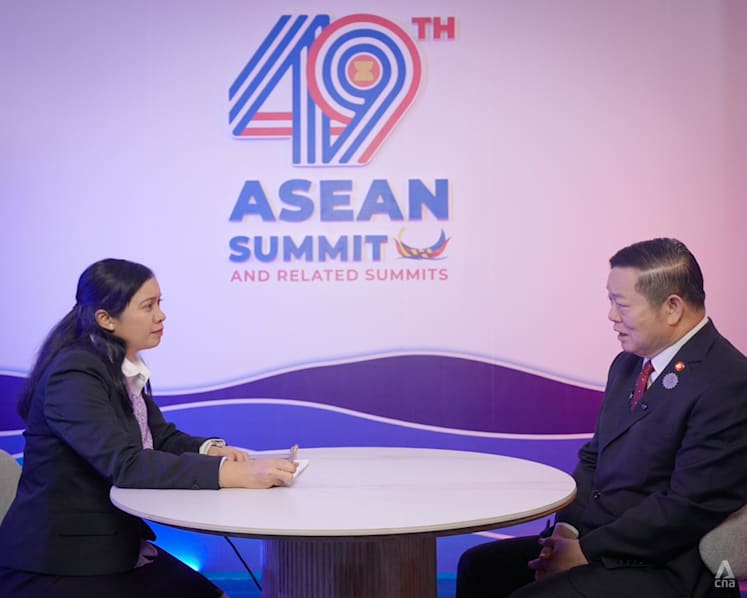
Kao said the discussions were frank and considered both short-term measures and longer-term solutions.
He said transboundary haze was a concern for the entire region, noting that mainland Southeast Asia would soon enter its dry season, when forest fires and smoke pollution could also become a problem.
“It's important for the entire region that we need to address this issue,” he said.
The ASEAN chief also called for faster ratification of the agreement establishing the ASEAN Coordinating Centre for Transboundary Haze Pollution Control.
He said Vietnam, Singapore and Malaysia had already completed their domestic ratification processes, while other member states had yet to do so.
Once operational, the centre would facilitate the exchange of expertise, experience and best practices in controlling forest fires and addressing haze pollution, he added.
Kao stressed that no single ASEAN member state could address the problem alone, given its impact on public health, the environment and the economy.
“Fires do not understand borders,” he noted.

STICKING POINT IN SOUTH CHINA SEA TALKS
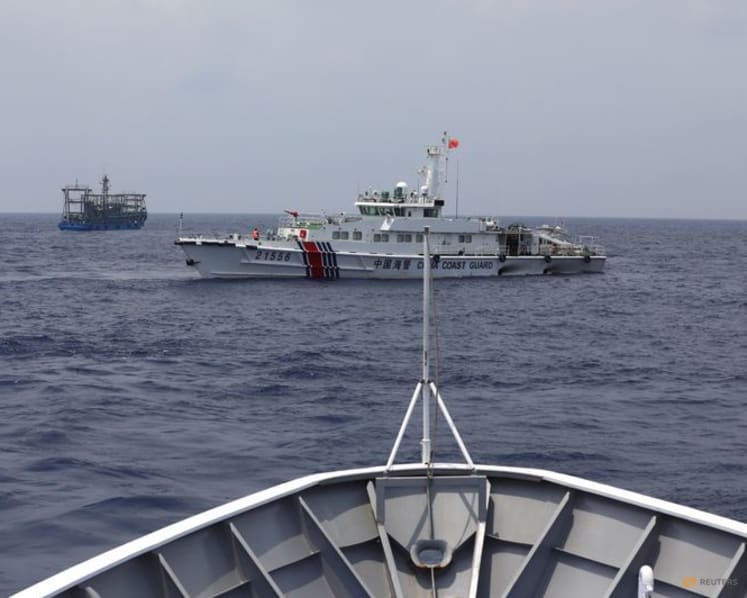
Asked about obstacles to concluding negotiations on a South China Sea Code of Conduct, Kao said significant issues remain unresolved between ASEAN and China.
“One issue would be the geographic scope,” he said.
The proposed code aims to set rules for conduct in the disputed South China Sea, where overlapping territorial and maritime claims have long been a source of tension.
Kao said ASEAN and China had made considerable progress, but further negotiations were needed to resolve outstanding differences.
“I think what's important is the quality of the outcome,” he said. “Let us add a bit more patience.”
“Countries involved, they want to make sure that they want to have the final code of conduct that they can accept.”
Asked whether negotiations could conclude during Singapore's ASEAN chairmanship in 2027, Kao expressed optimism that the remaining work could be completed next year.
“We've made a lot of progress, but we have not reached the final destination yet,” he said.
“I'm sure that Singapore will lead on this work because that's part of the work of ASEAN. If the current chair can finish it, we will finish it. If not, then the incoming chair will take over the leadership.”
The issue was raised at the ASEAN-China Summit on Monday, although leaders did not delve into the details of the negotiations, Kao added.
ENGAGEMENT WITH MYANMAR
On Myanmar, Kao defended ASEAN's current approach despite limited progress in implementing the bloc's Five-Point Consensus, adopted in 2021 to address the crisis following the military takeover.
“As long as there is engagement, I think this is something I'd like to see rather than a non-engagement,” he said.
ASEAN leaders agreed on Sunday (Nov 15) to pursue a phased, progress-based approach to Myanmar, while maintaining restrictions on its political representation at summits and foreign ministers' meetings until there is meaningful progress on the Five-Point Consensus.
ASEAN's Five-Point Consensus
Following a 2021 military coup, ASEAN has excluded Myanmar from high-level meetings as it has yet to make meaningful progress on the bloc's Five-Point Consensus to end hostilities.
During a meeting in April 2021, all ASEAN leaders reached a consensus about the situation in Myanmar.
The five points are:
First, there shall be immediate cessation of violence in Myanmar and all parties shall exercise utmost restraint.
Second, constructive dialogue among all parties concerned shall commence to seek a peaceful solution in the interests of the people.
Third, a special envoy of the ASEAN chair shall facilitate mediation of the dialogue process, with the assistance of the secretary-general of ASEAN.
Fourth, ASEAN shall provide humanitarian assistance through the AHA Centre.
Fifth, the special envoy and delegation shall visit Myanmar to meet with all parties concerned.
Collapse Expand
Kao said ASEAN wanted to see a gradual reduction in violence, increased humanitarian assistance and more inclusive dialogue among Myanmar's stakeholders.
He stressed that Myanmar remained part of the ASEAN family and that its people ultimately had to determine its political future.
While ASEAN leaders have discussed a calibrated approach to engagement with Myanmar, Kao did not specify a timeline or benchmarks for measuring progress when asked. Instead, he pointed to the importance of maintaining dialogue and encouraging a Myanmar-owned process to resolve the crisis.
The 49th ASEAN Leaders’ Summit began on Sunday and will conclude on Tuesday when the Philippines hands over ASEAN's rotating chairmanship to Singapore.”
KioskNews shows a cleaned-up reading view extracted from the publisher’s page — the original always lives on their site, not ours.