Captain America Officially Broke Marvel's Longest-Running Sci-Fi Series for the Better

Jeffrey is a freelance features writer at Collider. He is an MPA-accredited entertainment journalist and a Tomatometer-approved critic based in the LA area. He graduated from the University of Texas at Austin with a Bachelor of Science in Radio, TV, & Film and a Bachelor of Arts in Theater.
Sign in to your Collider account
September 2013 saw a momentous event with the debut of Marvel's Agents of S.H.I.E.L.D. The new series was produced by Marvel Television, the first of the Marvel Studios/MCU era. With the MCU in full swing and becoming one of the biggest franchises in the world, the new series was set within the canon, with Clark Gregg reprising his fan-favorite role from the MCU movies as Agent Phil Coulson, miraculously back from the dead after the events of The Avengers. However, midway through the first season, events from Captain America: The Winter Soldier literally broke the series, altering its very fabric for the show's entire run!
'Agents of S.H.I.E.L.D.' Premise Got Turned on Its Head With 'The Winter Soldier'
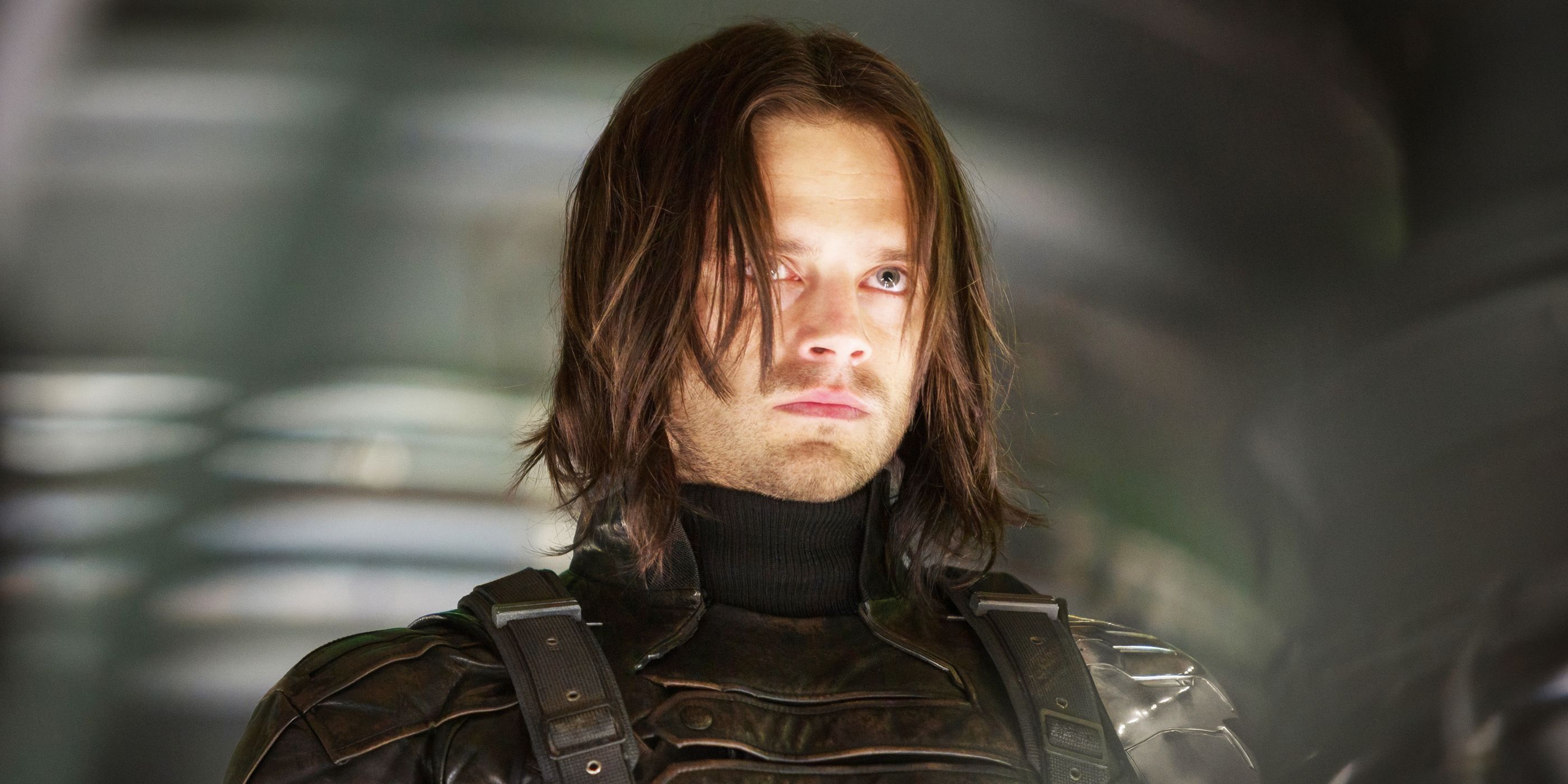
The original setup for Agents of S.H.I.E.L.D. featured a miraculously resurrected Agent Coulson leading a ragtag team of agents. Under the orders of Nick Fury (Samuel L. Jackson), they take part in various adventures across the MCU, investigating strange phenomena. However, a major event midway through the first season ripped open the series, altering its trajectory for the rest of its run. During Captain America: The Winter Soldier, it was revealed that the malevolent criminal organization Hydra had infiltrated S.H.I.E.L.D. decades earlier. The corruption grew out of control, so Captain America/Steve Rogers (Chris Evans) exposed all of S.H.I.E.L.D. and Hydra's collected secrets, toppling both organizations.
Collider Exclusive · 8 Questions · 2 Minutes Which MCU Villain Do You Align With? Killmonger · Namor · Zemo · Thanos
Eight honest questions about how you actually are: what you do about something unfair, how long you will wait for what you want, who you are really loyal to, how easily you let a thing go. Answer them and we will tell you which one of these four you have more in common with than you would like. Every one of them thinks they are the reasonable person in the room.
🐆Killmonger(Black Panther)
🔱Namor(Wakanda Forever)
🎭Zemo(Civil War)
🧤Thanos(Infinity War)
01
How do you react to something you think is unfair? All four of these men started here.
02
How long will you wait for something you want? Patience separates these four more than anything else.
03
Who are you actually loyal to? Answer for the real one, not the polite one.
04
How do you win an argument? Everybody has one method and uses it every time.
05
How easily do you let something go? This is the question that makes villains out of people.
06
What do you think about breaking the rules? Nobody on this list has ever felt guilty about it.
07
What do people say about you behind your back? You already know which one it is.
08
What would you do with real power? Eight questions in, this is the one that picks your villain.
The Case Is Made You Align With…
Four villains, and four arguments the films were honest enough to actually let them make. Here is the one you lean towards, the part of it that holds up, and the exact point where it stops holding up.
Erik Killmonger
You align with the one who was right about the problem and wrong about the solution. Killmonger is the most persuasive villain Marvel has produced because the film never pretends his anger came from nowhere.
- You notice who was abandoned and you cannot let it go, which is a moral instinct before it is anything else.
- His argument lands because Wakanda really did watch and do nothing, and the film makes T'Challa admit it out loud.
- Where it breaks is the method, since a man who was failed by power decided the answer was to hold more of it.
- Michael B. Jordan plays him as somebody performing certainty over grief, which is why the last scene of that film still works.
Namor
You align with the protector, which is the most understandable and most dangerous position on this list. Namor is not chasing power or revenge, he is doing whatever keeps his people hidden, and he has been doing it for centuries.
- Your loyalty has a hard border around it, and everything inside that border matters far more to you than anything outside it.
- Talokan is the best realised world Marvel has built since Wakanda, and the film makes you understand exactly what he is guarding.
- His logic is airtight right up until it requires somebody else's people to pay for his people's safety.
- He would rather be feared by the surface world forever than trust it once, and history has given him reasons.
Helmut Zemo
You align with the patient one, the only man on this list with no powers, no army and no hurry. Zemo lost his family in Sokovia and then spent years working out that you do not fight the Avengers, you introduce them to each other's secrets.
- You go quiet when you are hurt, and the quiet is where the thinking happens.
- Zemo is the only MCU villain who completely won, and he did it with a notebook, a plan and a great deal of self control.
- His grief is real, and the film is careful never to let you forget that he started as an ordinary man with a family.
- Where it fails is the cost, since taking apart the people who hurt him meant hurting a great many people who did not.
Thanos
You align with the one who decided the answer was arithmetic. Thanos is not angry and not grieving in any way he will admit to, he simply reached a conclusion and never once revisited it, which is precisely what makes him frightening.
- You are capable of holding a position that costs you everything, and you would call that conviction rather than stubbornness.
- Infinity War works because it is structured as his film, with a goal, a journey and a sacrifice, and the heroes are the obstacle.
- The flaw in the plan is not the cruelty, it is that he never seriously considered a single alternative to it.
- Josh Brolin plays him tired rather than triumphant, which is the choice that turned a purple giant into a real character.
The events of The Winter Soldier bled directly into Agents of S.H.I.E.L.D. in a multi-episode storyline, kicking off with "End of the Beginning," which aired on April 1, 2014, shortly before The Winter Soldier's release. The episode set up Agent Colson and his team seeking to bring down their chief enemy, an elusive criminal mastermind nicknamed "The Clairvoyant." The next week, "Turn, Turn, Turn," which premiered shortly after The Winter Soldier's release, showcases the Hydra infiltration of S.H.I.E.L.D. after their combined secrets are exposed. The episode revealed that model super-agent John Garrett (the late Bill Paxton) was in fact a high-ranking operative for Hydra and The Clairvoyant. Also reporting directly to Garrett was one of Coulson's team members, Grant Ward (Brett Dalton). One of the main characters in the series was in fact a double agent working for Hydra all along. The Winter Soldier effectively shattered the status quo of Agents of S.H.I.E.L.D., and nothing would ever be the same again.
The Hydra Twist Is What Made 'Agents of S.H.I.E.L.D.' So Good
The events of The Winter Soldier left the MCU's chief intelligence organization in tatters, with Coulson left trying to pick up the pieces. No one knew who to trust, and Ward initially maintained his ruse as a double agent. Coulson and his team are then forced to go on the run, becoming fugitives from the law, pursued by General Glenn Talbot (Adrian Pasdar). At the start of the series, Coulson and his team were fully resourced and empowered by S.H.I.E.L.D. With Captain America toppling the organization, the team became rogue agents without a home, disavowed by the American government due to Hydra's influence. Also, due to Hydra's corruption, Coulson and his loyal agents didn't know who they could trust.
Suddenly, Agents of S.H.I.E.L.D. was no longer a series where the agents faced a random superpowered threat of the week, and the story shifted to Coulson's team versus Hydra. The series' original format was criticized as run-of-the-mill and formulaic, but the S.H.I.E.L.D. versus Hydra plot imbued the series with the intrigue it was missing. It demonstrated that the writers were not afraid to throw the show's entire premise out the window and get creative after the status-quo-altering events that unfolded in the larger MCU. Agents of S.H.I.E.L.D. tackled the Hydra infiltration head-on, improving the show for the better.
The Season 1 Twist in Agents of S.H.I.E.L.D. Set the Stage for the Rest of the Show

The Hydra storyline culminated in the first season finale, "Beginning of the End," when Fury reunites with Coulson and Coulson finally learns about his mysterious resurrection, and Garrett is finally defeated. With Fury appointing Coulson as the new "director" of S.H.I.E.L.D., it's now up to Coulson to rebuild the organization from the ground up, free of Hydra's corruption. Season 2 picked up with the team still fugitives on the run, taking refuge in derelict bases and desperately fighting for scraps of tech and vehicles.
Later seasons depicted Coulson seeking to restore S.H.I.E.L.D.'s legitimacy as an intelligence organization, while investigating the mysterious past of one of his young agents, Skye (Chloe Bennet). Skye's origins eventually tied into the revelation of the existence of the Inhumans in the MCU, with Skye becoming the Inhuman superhero Quake. The Hydra storyline reverberated throughout the rest of the series, with Ward becoming one of the show's lead villains. The major event was easily the highlight of Agents of S.H.I.E.L.D.'s first season and set the tone for the show's epic seven-season run.
KioskNews shows a cleaned-up reading view extracted from the publisher’s page — the original always lives on their site, not ours.