Why did China choose a retired diplomat to welcome Sanae Takaichi to Apec?
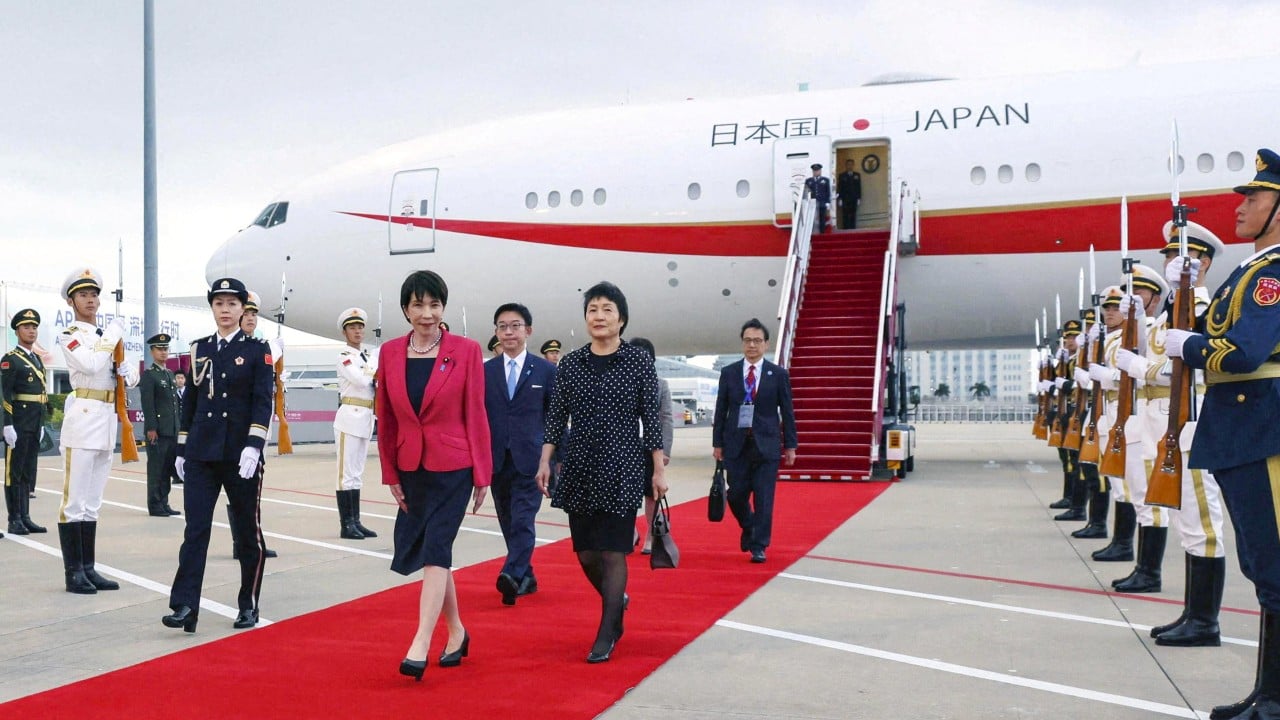
When Japanese Prime Minister Sanae Takaichi arrived and left the Apec host city Shenzhen last week, retired diplomat Zhang Qiyue was there on the red carpet for the greeting and send-off.
Other leaders were received by serving senior officials but Takaichi was welcomed by the 67-year-old former envoy to Belgium, Indonesia, and Greece.
Zhang is also the daughter of Zhang Shu, Beijing’s ambassador to Tokyo in the late 1980s – a deliberate choice that analysts said sent a careful message: while China was unwilling to warm ties now, it had not entirely shut the door.
Zhang Shu was China’s ambassador to Japan from 1985 to 1988, a relatively cordial period despite tensions over historical issues.
Back then, both governments prioritised pragmatism and cooperation. Tokyo provided 85 billion yen in infrastructure loans in 1987, and relations improved and culminated in a landmark bilateral investment treaty signed in August 1988.
136:53
Live: Leaders speak at Apec summit
Xu Weijun, an associate research professor at the Institute of Public Policy at South China University of Technology, noted that Zhang Shu’s tenure showed the two countries could get along.
“By having a senior diplomat with direct family ties to that period to receive Takaichi, China is reminding Japan that the two countries once had a time when they could properly manage differences and maintain cooperation,” Xu said, adding that China’s arrangement preserved space for restoring bilateral exchanges in the future.
Shin Kawashima, an international relations professor at the University of Tokyo, agreed that Beijing had a deliberate intention.
“Given that her [Zhang Qiyue’s] father served as ambassador during the late 1980s, the message conveyed by this can be seen as preserving some possibility for ‘improvement’ in China-Japan relations – a glimmer of hope,” he said.
But he cautioned against overinterpretation because Zhang Qiyue was China’s foreign ministry protocol ambassador during the summit and among the welcome party for various delegations.
Takaichi’s arrival on Wednesday was also notable for the drop between the plane cabin and the airstairs.
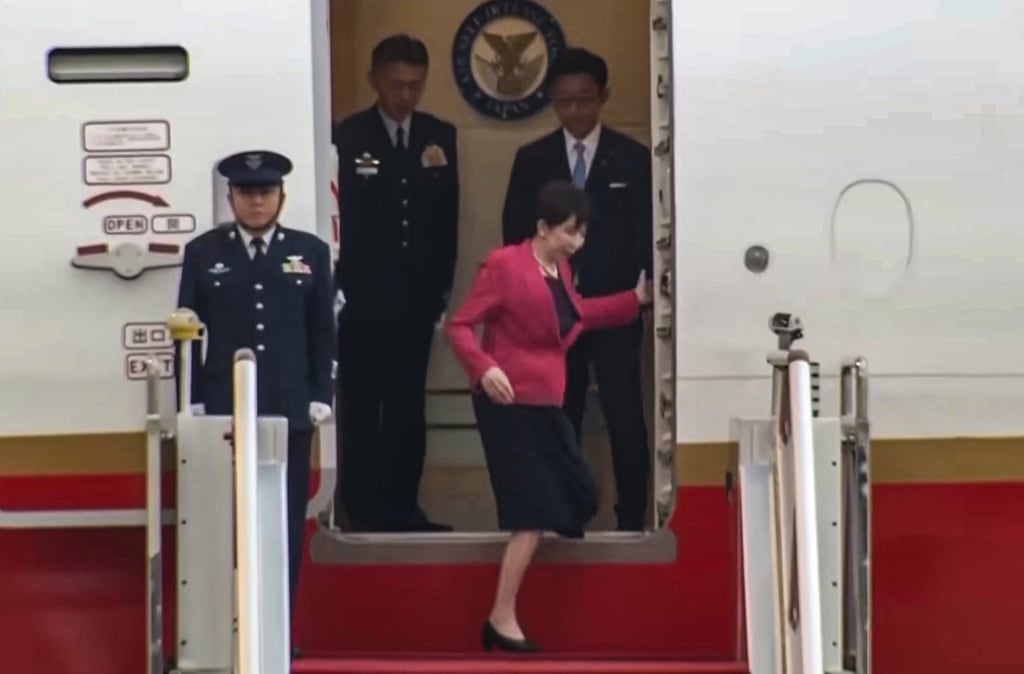
The Japanese prime minister has an artificial joint and she had to steady herself against the door frame as she navigated the first step in a skirt and heels.
Some Japanese lawmakers suggested that China had sought to embarrass the prime minister but Japanese Chief Cabinet Secretary Minoru Kihara later confirmed that safety measures were in place.
Japanese media quoted a Japanese foreign ministry official as saying that Takaichi’s aircraft arrived more than an hour early, and the airport’s specialised stairs for the Boeing 777’s high fuselage may have been in use by another aircraft.
Hotaka Machida, a former Japanese diplomat and a visiting senior research fellow at the Institute of Geoeconomics, said Zhang’s reception and send-off appeared to be more about courtesy and less about goodwill towards Japan.
Machida said China selected someone of an appropriate rank with Japanese connections to receive Takaichi but that did not mean China was ready to improve the relationship with Japan.
Relations between the two countries have been particularly tense over the past year since Takaichi suggested that an attack on Taiwan could trigger a “situation threatening Japan’s survival”.
Beijing sees Taiwan as part of China to be reunited by force if necessary. Most countries, including Japan, do not recognise Taiwan as an independent state.
Takaichi’s comments were seen in Beijing as a departure from the position of previous administrations but in Shenzhen on Thursday, she said that Tokyo’s position on Taiwan aligned with the 1972 communique normalising ties between China and Japan. She also said there was no change to Tokyo’s position on the four foundational political documents governing bilateral ties.
04:47
Why have Takaichi’s Taiwan comments sent China-Japan ties into a tailspin?
Chinese foreign ministry spokesman Guo Jiakun responded on Friday with a demand for “concrete actions” and correction of erroneous words and deeds from Tokyo.
Nevertheless, Machida called China’s response “a little more positive than expected”.
“The Chinese side needs Japan to take some action that will allow it to explain to its domestic audience that Japan has changed, but it will be difficult for Japan to take any significant action regarding the Taiwan issue,” he said.
Kawashima described Takaichi’s remarks on the four political documents as a significant shift, noting she had previously never indicated she would adopt them.
“This time, China is demanding that Japan’s words and deeds align with its commitments – a consistent position from Beijing,” he added.
Xu, however, was less optimistic.
“Takaichi adjusted her expression but did not fundamentally adjust the controversial remarks that sparked the dispute,” he said.
“As long as she continues to refuse to substantively retract her erroneous Taiwan-related remarks, fundamental improvement in relations will be difficult.”
KioskNews shows a cleaned-up reading view extracted from the publisher’s page — the original always lives on their site, not ours.