EMERGENCY MODE: 197 more ambulances, but Eastern Cape’s EMS crisis is still critical
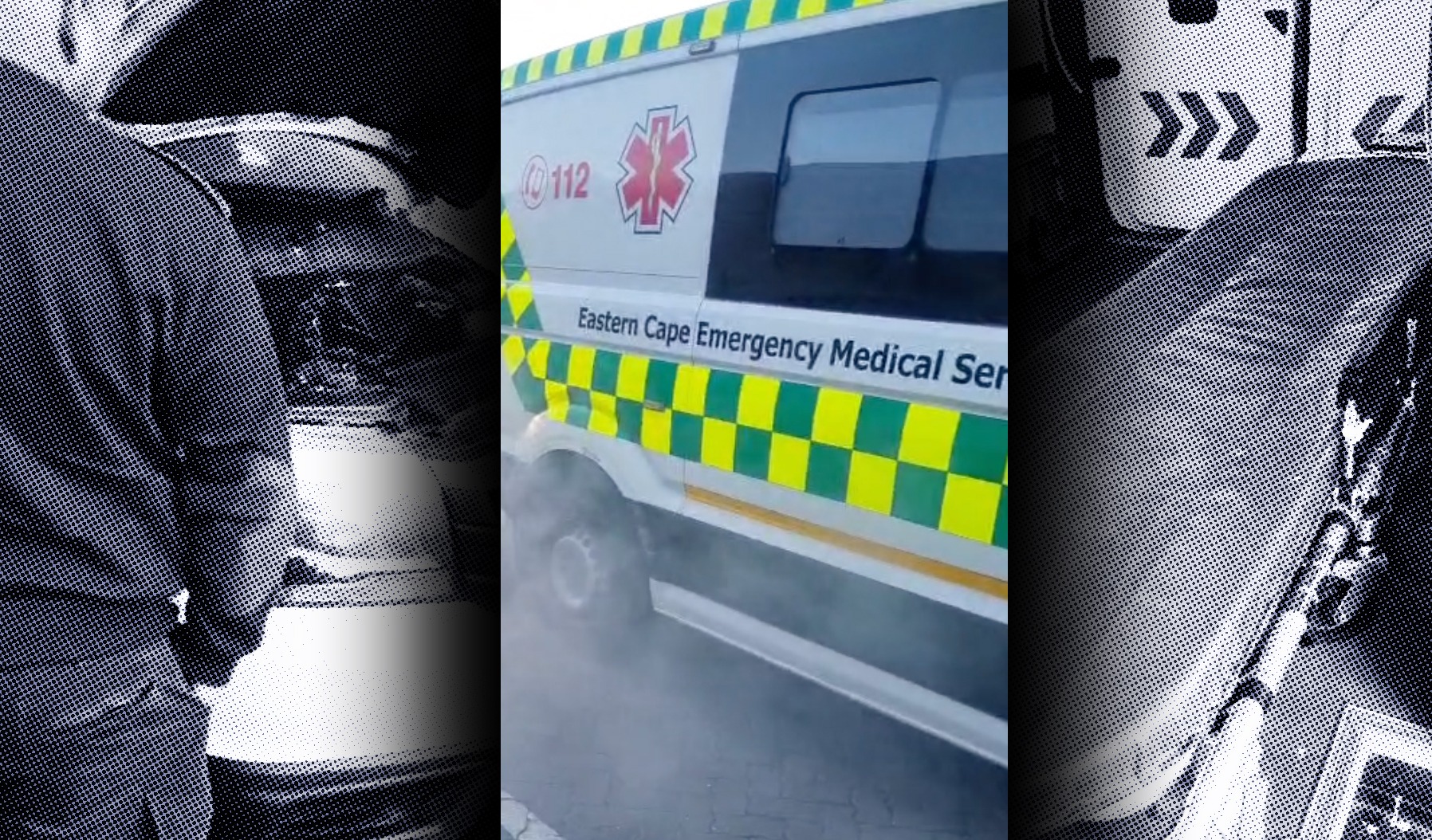
Eastern Cape Health MEC Ntandokazi Capa has conceded that the province’s promised delivery of 197 ambulances by the end of March next year will not come close to solving its emergency medical services (EMS) crisis — because the province needs about 600 vehicles to operate at full capacity.
Capa made the frank admission on Friday when the province received a further 26 ambulances as part of a programme aimed at replacing an ageing and increasingly unreliable fleet.
“We know it’s not going to solve our issues, but it’s going to make a difference,” Capa said.
“We know the challenges and we only want to appeal to our communities that they must really bear with us. We are trying our level best,” she said.
“We are really excited with the ones that we are receiving.”
Earlier figures provided by Capa in response to a written question from DA MPL Jane Cowley show that the Eastern Cape has 353 ambulances, of which 161 are grounded and only 192 are operational.
“For a province to have full capacity, we need about 600 ambulances. For now, we’ve got about 400. And out of the 400, there are still those that are grounded,” Capa said.
Her admission comes as frontline EMS workers, unions and patients continue to describe a service under severe strain, with concerns ranging from shortages of operational ambulances to vehicles being deployed without critical equipment.
/file/attachments/orphans/Kyran-Ambulances_237448.jpg "Twenty-six ambulances were rolled out in KuGompo City (formerly East London) on Friday, 4 September 2026, for deployment across the Eastern Cape, which is currently facing a serious shortage of ambulances. (Photo: Facebook / Eastern Cape Department of Health)")
A moving target
The latest delivery follows the deployment of 21 ambulances about two weeks ago, with further vehicles expected in October and again in February and March next year.
Capa said the total number delivered under the programme would reach 197 by the end of the financial year.
“What we are receiving today, it’s not new ambulances. It’s a replacement of the ones that we have. So it means we have not yet reached an ideal target,” she said.
Daily Maverick previously reported concerns from EMS workers in Nelson Mandela Bay who disputed official operational figures, saying ambulances parked at depots could be missing basic equipment such as stretchers, oxygen cylinders and electrocardiogram machines.
Health and Other Services Personnel Trade Union of South Africa (Hospersa) Eastern Cape provincial labour relations organiser Thembisa Witbooi said Nelson Mandela Bay, with a population of more than 1 million people, needed at least 150 ambulances to adequately serve its residents.
Witbooi had previously described the state of the ambulance service in Nelson Mandela Bay as “laughable, and it is deliberately being collapsed”. She said that an ambulance without the necessary equipment was little more than “an empty box”.
On Sunday she said it was concerning that no mention was made whether ambulances would be deployed to Nelson Mandela Bay.
The department also confirmed to Daily Maverick that Nelson Mandela Bay “has not received an allocation from the first two batches. Nelson Mandela Bay will be considered in the next batch.”
Witbooi said that the deployment of the 26 ambulances for the seven districts is a “drop in the ocean”. She also again emphasised the urgency to equip ambulances that do not have equipment like stretchers, oxygen tanks and ECG monitors so that emergency personnel can adequately do their jobs.
‘When you’re buying, the other one is broken’
Capa said the province’s shortage was compounded by the difficulty of keeping ambulances on the road.
“This is a moving target. When you’re buying one, the other one is broken,” she said.
The problem, she said, was particularly severe in rural areas, where ambulances travel long distances over difficult roads.
“For example, we don’t have challenges in Nelson Mandela Bay except for the issues of crime. But when you come to the rural districts, that’s where you get a challenge because of the roads and the distance that they travel,” she said.
But the shortage in Nelson Mandela Bay has already had serious consequences for residents trying to access emergency medical care.
In August, a family in Kwazakhele tried for more than 12 hours to get an ambulance for a seriously ill 17-year-old boy.
The family said they began calling emergency services at about 11am on Monday, 18 August, but repeatedly struggled to get through. An ambulance eventually arrived at the boy’s home at about 11.15pm.
The boy’s relative, Luzuko Gedze, subsequently lodged a complaint with the South African Human Rights Commission (SAHRC).
Gedze said the family had called 10177, 112 and 10111 in their attempts to get help, as well as contacting Dora Nginza Hospital.
At one point, the family considered using a private ambulance service but was told to expect to pay at least R2,500 for a dispatch, excluding any further treatment or services.
The SAHRC has confirmed that access to emergency medical services in the Eastern Cape — including concerns around emergency lines, ambulance dispatch and operational capacity — has been added to a pending systemic investigation.
The commission has warned that failures in access to emergency medical services may have serious implications for the constitutional rights to healthcare, dignity and, in appropriate cases, life.
Fixing the grounded fleet
Capa said the province could not rely solely on the delivery of new ambulances and was working with the Eastern Cape Department of Transport to get grounded vehicles back into service.
“There’s constant engagement with the Department of Transport in order to address the ambulances that are grounded, so that we don’t only depend on the ones that are new, but those that are out for repairs, so that the process can move swiftly and make sure that our communities are serviced,” she said.
She said she was engaging with Transport MEC Xolile Nqatha and Finance MEC Mlungisi Mvoko to find a longer-term solution.
The scale of the problem means that even if all 197 ambulances promised by the end of March are delivered, the province will remain well short of the roughly 600 vehicles Capa says are needed for full capacity.
And unless more of the existing grounded fleet can be returned to service, the number of vehicles on paper will continue to tell a very different story from the number available to patients in an emergency.
New system for emergency calls
Capa also announced that the department was working on a new system intended to make it easier for members of the public to lodge complaints and requests, including requests for EMS assistance.
She said the department had recently appointed a new cellular network service provider and had asked the company to help address difficulties experienced by people trying to contact the department.
/file/attachments/orphans/Kyran-Ambulances1_317729.jpg "Eastern Cape Health MEC Ntandokazi Capa standing inside one of the ambulances. (Photo: Facebook / Eastern Cape Department of Health)")
“They’ve promised to develop a system that is going to assist us,” Capa said.
The department previously acknowledged that EMS telephone services had experienced intermittent disruptions, including temporary line drops, cable theft and vandalism.
It maintained, however, that the Nelson Mandela Bay EMS Communication Centre remained operational. DM
KioskNews shows a cleaned-up reading view extracted from the publisher’s page — the original always lives on their site, not ours.