Rugby union power rankings: how the teams stand a year from World Cup

Beaten by Australia last weekend but the manner in which they came back after Rassie Erasmus emptied his bench was emphatic. The series victory over New Zealand was the one they really wanted this year and achieving that, romping from 1-0 down to 3-1 victors, underscores that they are the team to beat in Australia next year.
Many feel Erasmus needs to manage his ageing squad between now and then, but that was precisely what he was doing in Perth. Set-piece dominance and physicality remain the Boks’ hallmarks and that isn’t going to change in the next 12 months.
If they are to win a third World Cup in a row, South Africa are likely to have to do it the hard way – they are on course for a quarter-final against New Zealand and a semi against France but you wouldn’t bet against them at this point.
An autumn that brings fixtures against France and Ireland should be fascinating but when the Springboks are truly dialled in, they remain almost impossible to stop.
2. New Zealand
There was so much to like about their performances against South Africa that, while losing the series, highlighted how the All Blacks are the closest challengers to the Springboks’ supremacy.
Under Dave Rennie they have simply gone back to what they are good at – namely, playing at pace and showcasing handling skills that once made them the most feared nation.
There is a lesson there for other teams seeking to topple South Africa: focus on the way you play the game best rather than trying to ape Erasmus’s men. Richie Mo’unga has the chance to stake his claim for the No 10 jersey in forthcoming Tests against Australia with Ruben Love injured while in Jordie Barrett and Quinn Tupaea, Rennie has a formidable centre partnership.
Leroy Carter does not look up to it defensively but the All Blacks have a habit of unearthing wing sensations in the buildup to World Cups and in Ardie Savea, New Zealand boast the world’s best player.
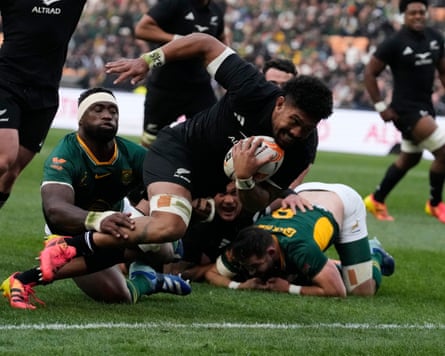
3. France
For the second time in successive summers, an understrength French team ran the All Blacks close in New Zealand, which demonstrates the remarkable depth at Fabien Galthié’s disposal. For all that the All Blacks impressed over the summer, France are in many quarters considered the side most likely to trouble South Africa because they possess hulking forwards to match their stunning back division, led by the Pau duo of Fabien Brau-Boirie and Théo Attissogbe.
You sense that last autumn’s heavy defeat by the Springboks - in which Lood de Jager was shown a first-half straight red card - spooked Galthié. A coaching overhaul has taken place and Galthié has added more size to his pack with Emmanuel Meafou now among the first names on the team-sheet.
That he will miss the autumn fixtures – which include a rematch with South Africa – is a blow but Galthié’s pack is a moveable feast at the moment. In keeping with a global trend, Galthié has been deploying Matthieu Jalibert at full-back of late and, of course, in Louis Bielle-Biarrey they have the game’s most lethal finisher.
The big question mark is tighthead prop and Galthié must find an answer between now and the World Cup.
4. Ireland
Andy Farrell’s side are at the front of the second cluster of teams chasing the genuinely elite sides. The summer defeat by New Zealand demonstrated how much further they need to progress in the coming 12 months and Ireland do not look as strong as they did at this point in the last World Cup cycle. That is not necessarily a problem given how poorly Ireland have performed at World Cups, but Farrell has much to get right in the coming autumn and then the Six Nations.
The fly-half debate is not going away and while strengthening depth in summer victories over Australia and Japan is a positive, selection becomes all the more difficult as a result. Sean Jansen came out of the summer series with his reputation firmly enhanced, adding to the back-row competition – and Farrell is clearly leaving no stone unturned with a warm-up match next September against the Wallabies set to take place in Canberra.
Clearly some of Farrell’s senior players are past their peak but the manner in which Ireland stormed Twickenham this year demonstrates what experience can achieve.
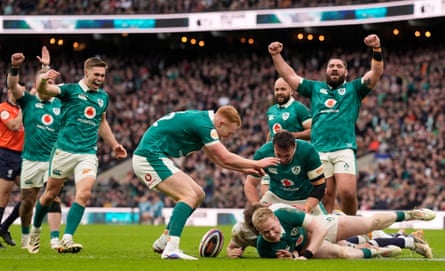
5. Australia
A win against the Springboks is to be celebrated regardless of caveats. It might have been a second-string South Africa, the Wallabies might have been reduced to 11 men and clinging on for dear life at the end, but defeating the world champions will do wonders for the hosts’ confidence.
Strides were taken forward by Joe Schmidt, and Les Kiss – under whom Australia remain unbeaten – has picked up the mantle. If they can make a fist of the forthcoming Bledisloe Cup fixtures then the Wallabies, with the benefit of home advantage, can consider themselves among the pretenders to South Africa’s throne.
In players such as Tom Wright, Joseph Suaalii and Fraser McReight, Australia boast some supremely gifted individuals. They do not have the depth to cope with a spate of injuries but, if they can get lucky in that regard, they will be among the most entertaining sides to watch next year.
6. Scotland
Declared the third best team in the world by Rassie Erasmus after giving South Africa a considerable scare over the summer, there is momentum with Gregor Townsend’s side a year out from the World Cup. The trouble is that whenever Scotland have momentum, they have a horrible habit of proving any dawn to be false.
That said, they are in a far better position than at the start of the year, when Townsend was under pressure after a difficult autumn, and clinched victories over England and France in the Six Nations to enhance their burgeoning belief. In the summer, they emphatically put Argentina to the sword, avoided an upset against Fiji and in Sione Tuipulotu they can claim to have the world’s finest inside-centre.
A first victory over New Zealand in the autumn, followed by a rare triumph over Ireland in the Six Nations, would be the demonstrable progress needed to show Scotland can be a force in Australia.
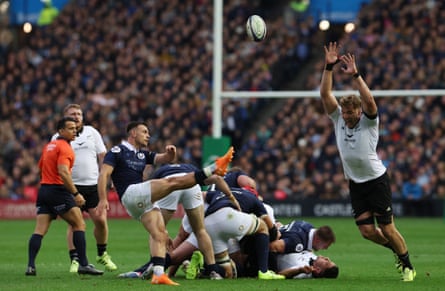
7. England
As demonstrated with their first-half performance against Argentina over the summer, England are a good side. As shown in the second quarter against South Africa, they have plenty of spirit, too. The harsh reality though is that England are no closer to closing the gap on the genuinely elite sides than at the last World Cup.
Granted they lost their semi-final to the Springboks by just a point in 2023 but they had such a favourable draw, the last four was the minimum requirement.
World rankings suggest they are on course for a quarter-final against Australia in Sydney and that looks a daunting prospect, assuming the Wallabies can harness home advantage.
after newsletter promotion
The length of England’s pre-World Cup training camps will always be to their benefit but Steve Borthwick is yet to achieve a statement away win with England and his last chance before the next year’s tournament comes in their Six Nations opener against Ireland. Immanuel Feyi-Waboso gives them an x-factor and he must be fit and firing if England are to stand any chance.
8. Argentina
The most frustrating side in the Test game. Awful for 40 minutes against England, inspired for 20 – thanks in no small part to the magic of fly-half Tomas Albornoz – before throwing away the chance to sink Borthwick’s side with no sense of game management or how to capitalise on such a hefty numerical advantage.
The Pumas have played six matches this summer, won only one, but all of them have finished with a margin of 10 points or fewer, which says plenty about how close they are to the elite and how much they still have to do. The scrum is a problem – long gone are the days when Argentina’s set-piece was feared – but get that right and the last four can be in sight again next year. At this stage it is hard to see the Pumas going beyond that, however.
9. Japan
Last month we found out that Eddie Jones had been showing his squad videos of geese flying together in formation in order to improve Japan’s support play. History tells us that when Jones takes measures such as these, he has a confidence that his team are going places or he has lost control and is clutching at straws. Recent results suggest it is the former.
Japan won the Pacific Nations Cup earlier this month and while they were battered by Australia in Townsville, they lost a thriller by just three points against the Wallabies at home and chalked up a victory over Italy in the summer. In Warner Dearns, Jones boasts a genuinely elite second row and is still calling on the experience of Michael Leitch, who will turn 39 during next year’s tournament. Jones’s last World Cup campaign was an unmitigated disaster but, whisper it, he may just be putting together another Japan side who could spring a surprise or two in Australia.
10. Wales
There are one or two green shoots of recovery under Steve Tandy and a win against Fiji, however poor the Pacific Islanders have been of late, is not to be sniffed at. But Welsh rugby remains in a parlous state and there are times that Tandy’s men still look like they are swimming against the tide.
At least they have a sense of identity under Tandy, giving the impression that they have a back-to-basics game plan and know what they are trying to achieve, but Wales just don’t have the calibre of players they once did. They do have World Cup pedigree, however, and will have nothing to lose in what is likely to be a pool decider against England, provided both sides avoid disaster against Tonga and Zimbabwe. If they are to have any chance, the irrepressible Jac Morgan must stay fit.
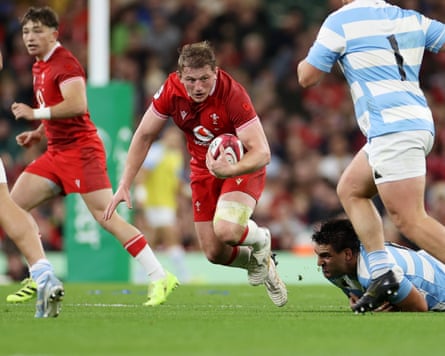
11. Italy
Not a good summer for Gonzalo Quesada’s side with hefty defeats by New Zealand and Australia followed by a demoralising loss to Japan. That they were coming off the back of a Six Nations campaign in which they claimed a first win over England makes it an all the more disappointing Nations Championship series.
They have a dreadful World Cup record, too. Italy are the only side to have played in all 11 editions to date and never reached the knockout stages. That does not bode well for next year’s trip to Australia. That said, any side who boast a centre pairing of Ignacio Brex and Tommaso Menoncello have the firepower to cause an upset. If the pool stages go to plan, Italy – by virtue of expansion to 24 teams – should find themselves in the last 16 and a date with England. Stranger things have happened.
12. Fiji
They were just desperate against England in Liverpool over the summer. Indeed, it was a sad sight to see Fiji so out of kilter. Scorelines against Scotland and Wales were at least more flattering but these are the sorts of matches Fiji should be winning if they are to take the next step that the watching world wishes they would.
All is clearly not right within the union, it rarely is, and the players demanded a pay increase before those Nations Championship defeats. The response of the chairman John Sanday did little to suggest harmony. “We pay them well and they recently demanded more in this camp,” Sanday said. “We couldn’t afford what they were asking for. But we then agreed on an increase in their daily allowance. It’s business now. We need to perform and get wins.”
Blessed with remarkable talent , they should breeze through their pool next year. If they get everything right off the field, they will be a force but at this stage that looks too big an if.
13-18. Best of the rest
The tranche of sides upon whom it rests to bring life to the World Cup pool stages. Expansion to 24 teams has made reaching the knockout stages a cakewalk for the established sides and there are obvious fears that there will be too many blowouts because there are not enough sides capable of causing an upset.
Georgia, on their day, could be one of them while Tonga will ruffle feathers and may call on some former All Blacks to add some star quality. Chile and Portugal are climbing up the rankings and the hope is that, in World Cups of the future, they will come to be seen as sides capable of giving the elite a decent match. They are hamstrung by being shut out of the Nations Championship, however, and at present, it is only really Fiji, Japan and Italy capable at the moment.
For now, the others will battle against each other, and the minnows, to scrape into the last 16 and how entertaining that is will dictate the success of the pool stages. All eyes will be on the USA in the hope they will not just be cannon fodder when they host the World Cup in 2031, while it is finally a first World Cup appearance for Spain since 1999, having qualified for 2023, only to be thrown out.
19-24. Outsiders
A World Cup debut awaits for Hong Kong, who have been given the honour of appearing in the tournament opener against the hosts Australia. They are likely to be on the receiving end of a few cricket scores but will not be the only ones.
It may be harsh on Uruguay to include them in this category given this is their fourth World Cup campaign in a row, but they did lose to Hong Kong in July. Zimbabwe’s first appearance since the game went professional will be eye-catching and they have one or two Prem players to give a sense of familiarity but they, Romania and Canada are among the teams who can only hope to show the sort of upward trajectory that Portugal did at France 2023.
Then there is Samoa, who are in a desperate place at present. They barely qualified and the disbanding of Moana Pasifika has led to widespread fears of a talent drain to the NRL. Maybe Samoa can get their act together next year but unfortunately their continued decline may be one of the sorry stories of the 2027 World Cup.
KioskNews shows a cleaned-up reading view extracted from the publisher’s page — the original always lives on their site, not ours.