What do demolished homes leave behind? An artist explores memories in fragments of bricks and cement
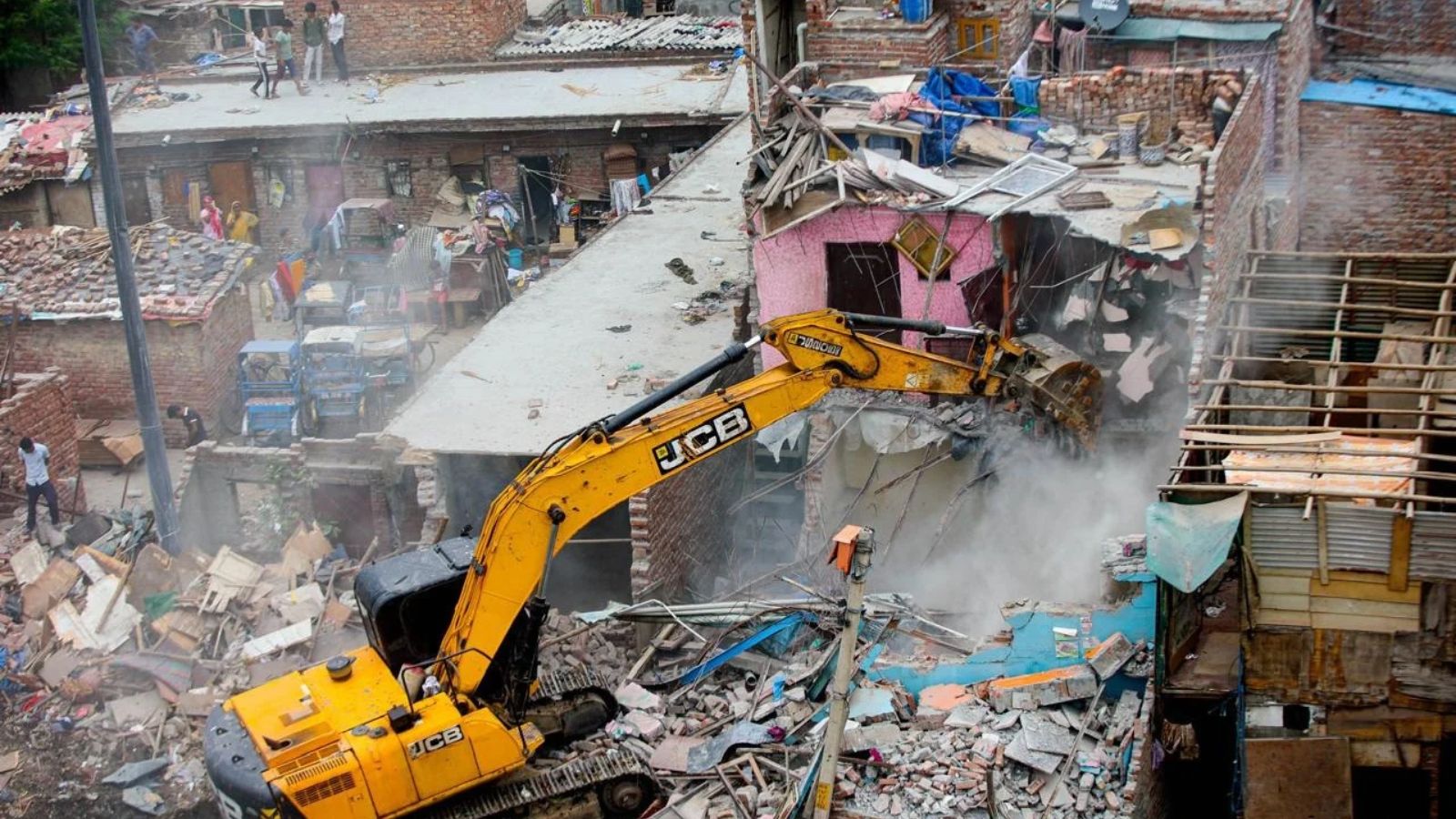
When a home is bulldozed, something that once felt unshakeable vanishes. The walls collapse, the doorways dissolve, rooms disintegrate, and every corner disappears. What is left are fragments – brick, plaster, cement and the memories.
For Girjesh Kumar Singh, a 45-year-old sculptor based in Vadodara, these fragments have become a way of imagining what people take with them when they leave a place: pieces of their home, their identity or their history.
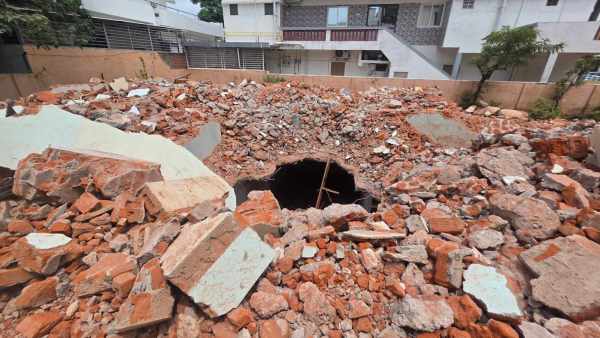 Girjesh got bricks from The Royal Saloon Shed, built in Baroda around the 1880s to house the Maharaja’s private royal saloon coaches. (Courtesy: Girjesh Kumar Singh)
But home, leaving home and carrying parts of a home with you had been part of Girjesh’s life long before he began making sculptures out of debris from demolition sites.
When he was about five, his mother, worried that she could not discipline him, sent him to stay with his aunt. At home, he was free to be himself. At his aunt’s, he changed. He listened, learned quickly and “never said no to anybody”. His masi began praising him to his mother as obedient. But something was wrong; he was no longer his curious self.
His mother eventually noticed and brought him home after two years.
That was his first experience of leaving home, what he calls a “mini-migration”.
A few years later, he left home again. From his village of Semra in Gujarat, he travelled nearly 160 to 170 kilometres to Jawahar Navodaya Vidyalaya, a residential school for rural children with academic potential.
Story continues below this ad
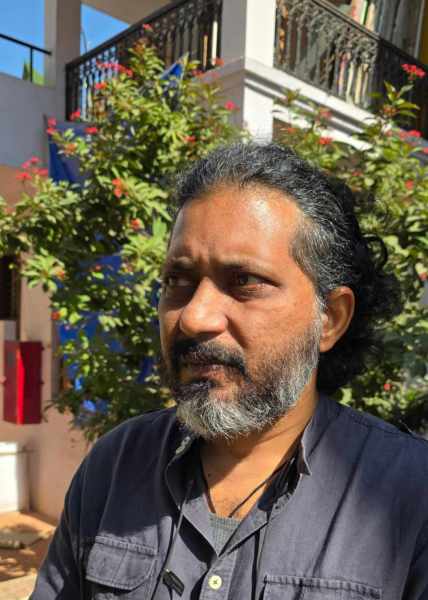 Artist Girjesh Kumar Singh.
But his connection with Semra stayed strong. Even after 20 years in the city centre of Vadodara, he feels he left something behind in his village.
“I wear slippers inside the house and the studio. But when I go home to my village, I roam around barefoot, outside in the garden, everywhere. Every bit of sand knows me; it’s a different connection.”
He had seen this attachment to a place in his extended family, too. His aunts, he recalls, were identified by the names of the villages they came from: “Yahawali, Bastiwali, Ramurali, Tati”. They had, in a sense, carried the villages where their homes were into their marital homes.
Seeing and experiencing these kinds of migrations made Girjesh curious about what people leave behind when they move, whether the displacement is voluntary or forced.
Story continues below this ad
His father, he says, paved the way for him to become an artist, giving him the freedom to forge his own path from an early age. He was a government employee in the health department, but Girjesh remembers him as an “artist” because of the way he approached ideas. His father encouraged him to question things. “The best thing in life is innovation,” he would say.
Girjesh completed his BA at Allahabad University, his BFA in Banaras, and then his MFA in Sculpture at Maharaja Sayajirao University in Vadodara. The BA programme, under which he studied philosophy, literature and economics, made him more involved as a person and an artist, he believes.
At art college, he was drawn to sculpture within a few days.
“It was a way to work through material rather than simply impose an image on it,” Girjesh says now.
Story continues below this ad
He worked with stone from quarries for the first few years. Around 2006–08, while travelling near his hometown, he began noticing bricks differently. The broken structures in Shravasti and Chunar made him wonder whether he could work with such material himself. He would forget the thought, then it would return.
“If something keeps coming back to your mind, you know you like something about it,” he says, reflecting back.
Soon, he began experimenting with bricks and cement, gradually working out tools and techniques to carve them.
“Bricks have their own character, colour and texture that itself has a very human story sometimes,” he says.
Story continues below this ad
One song, Laaga Chunari Mein Daag, would be stuck in his head while he worked with bricks and cement. The imagery in the song, of stains, attachment and the impossibility of returning to a certain past, stayed with him. He began wondering what the bricks, retained from the demolished structures, were once part of.
This became the series Laaga Chunari Mein Daag: small heads carved from individual bricks, with the cement still stuck to them. Singh describes it as “strictly about identity and migration”.
The faces in the installation are different, marked by hairstyles, beards, moustaches, caps and other ways people choose to present themselves. For Girjesh, these are all ways of carrying one’s identity through the world.
“Sometimes it becomes a barrier to assimilation with others…,” he says. “Our personality is ever-changing… we don’t always know what we have learned from where, but ultimately it becomes our identity.”
Story continues below this ad
The idea of a place surviving through its material appears again in Haal Mukaam. For the series, Girjesh got bricks from The Royal Saloon Shed, built in Baroda around the 1880s to house the Maharaja’s private royal saloon coaches.
The shed was being demolished, and Girjesh did not want it gone forever.
From its bricks, he made faces with slashes of mortar. The passage of time, he says, has shaped the sculptures as much as his own slashes.
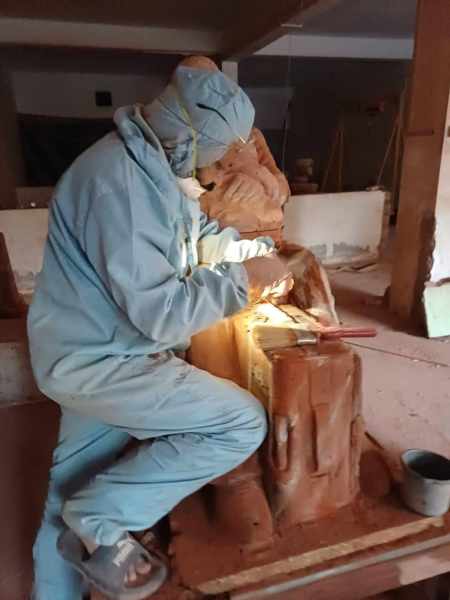 Artist Girjesh sculpting in his workshop.
In another series, In Transit, figures made from the same bricks hold their bags and lean against walls. The series looks at the migration people face when their homes are demolished, Girjesh says.
Story continues below this ad
“The resting time during transit is emotionally significant. In this break, you are swinging like a pendulum between the past and the future. While moving, you are on the present path, but while resting, you focus on the future. You reflect on the past while anticipating your future, wondering what kind of people you will meet, where you will stay, and what will happen,” he explains.
The bags are symbolic, representing both “physical and emotional baggage”.
At one point, the idea came alive in the gallery itself. “Someone accidentally bumped their backpack into an In Transit sculpture. So, I suggested writing a note: ‘Be careful of your baggage, you might hurt someone’s belongings’,” Girjesh says, laughing.
But working with bricks also means giving up some control as an artist. Unlike stone, bricks are not as sturdy. They chip away, and they have lines of concrete that cannot be stripped. Girjesh works around these patches and cracks, never knowing exactly how the sculpture will eventually look.
Story continues below this ad
“I carve all the surfaces with fine needle detailing: it adds dimension, creates curiosity, and invokes memory. But I don’t have full control over how the brick will shape up,” he says.
That is also why he refuses to do portraits and religious sculptures. He wants the brick to determine the direction of his works.
“If it (brick) breaks, I accept that too,” he says.
The pieces he considers unsuccessful remain in his studio, waiting for the next time he is inspired to revive them.
His doorways series, The doors which open to let you leave, returns to the idea of leaving home, and is partly inspired by his parents’ decision to let him leave home for boarding school.
“When I returned home, there was someone to open the door, maybe my father or my mother. What you call home can be a place or a person,” Girjesh says.
He calls doorways “primary memories”.
“Wherever you go, a haveli or a small house, everybody tries to make them special. They draw designs outside or decorate it with flowers because this is where a home begins.”
The bricks Girjesh works with come from demolition sites, old buildings and railway infrastructure that have been brought down. He wants to capture the “stories that the bricks hold”, moving beyond his own experience to highlight what he calls “our collective identity”.
“Everybody is carrying a story; a story of moving from somewhere to somewhere else, destruction or creation,” he says.
His works have been displayed at the India Art Fair in Delhi, the Mumbai art festival, and in Chicago, Dubai, Istanbul, London and Singapore. But for Girjesh, his work finds meaning in what it may make people see beyond the gallery.
“It feels good when people come and say, ‘I saw your work, and now whenever I see a demolition site, I think of what was there before all of it disappeared’,” he says.
KioskNews shows a cleaned-up reading view extracted from the publisher’s page — the original always lives on their site, not ours.