Ukraine’s drone rescue of wounded soldier puts much touted idea into practice
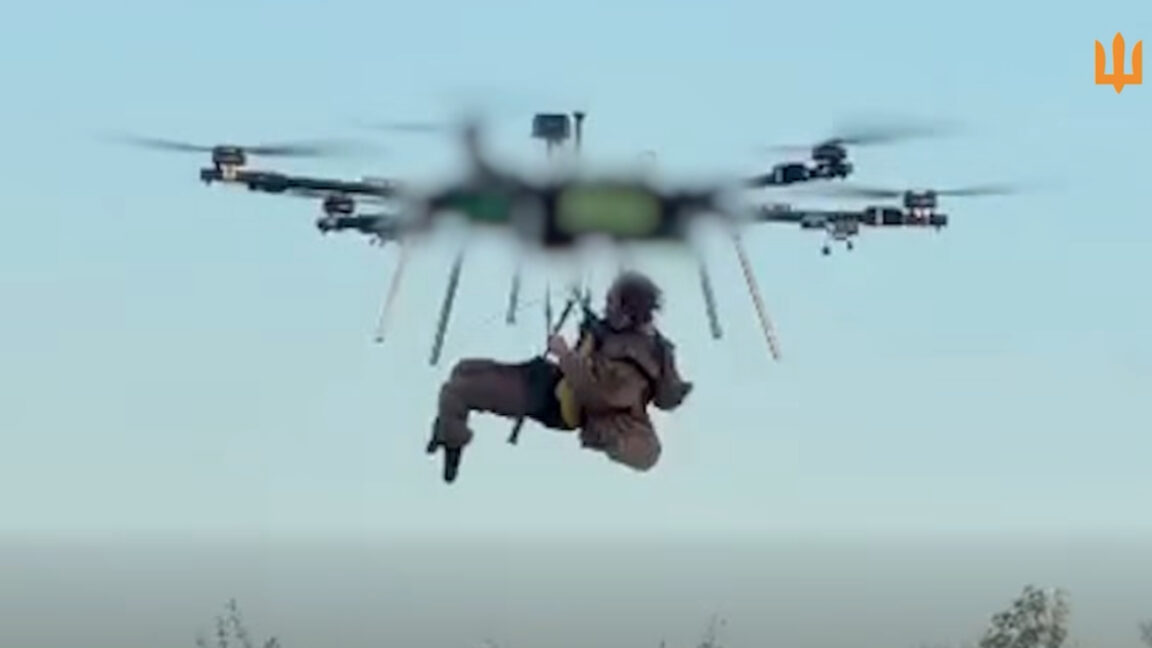
Heavy drones offer the advantages of speedy evacuation and potentially greater survivability for wounded soldiers, along with likely representing the only realistic option for extracting soldiers from dangerous frontline positions. Such drones also reduce the risk to physical rescue operations by relying on drone pilots who remotely control them from positions farther back.
But Pavlo Feldblium, cofounder of Gurzuf Defence, told The Kyiv Independent that such drone evacuations were also risky for wounded soldiers and should only be used as a last resort.
The necessity of drones
This first-time evacuation of a battlefield casualty by drone comes just a week after a separate Ukrainian drone manufacturer, SkyFall, had unveiled its own StarGate hexacopter drone specially designed with a stretcher-based container for carrying wounded soldiers. The SkyFall drone was sent to a Ukrainian brigade for frontline testing starting in October, according to The Associated Press.
The SkyFall drone relies in part on the Starlink satellite communication service but also has a separate proprietary communication system as backup. The latter may be especially useful given recent throttling of the US-provided Starlink services in Ukraine. The drone also has its own onboard AI system to help the drone return to a safe area if it loses all communications.
Ukraine’s StarGate drone for casualty evacuation.
Ukraine’s battlefield experiences may offer useful lessons for the Pentagon, which has spent decades developing and testing uncrewed aircraft for casualty evacuation missions without actually putting them into operation. The US military has been relatively fortunate to have operated on battlefields where it holds the edge in aerial superiority and surveillance, making it safer to conduct casualty and medical evacuations.
But the reality of modern warfare in Ukraine has been that wounded soldiers often remain stuck at frontline positions for long periods of time because of the risk of enemy drone surveillance and drone strikes to rescue operations. Even robotic ground vehicles may struggle to spend hours crossing rough terrain and can fall easy prey to enemy drones.
Many wounded soldiers in Ukraine end up either dying or being listed as missing in action, according to Kai Gilmour Gath, a former British Army and Ukrainian Armed Forces reconnaissance operator who served in the contested Donetsk region of Eastern Ukraine, in an article for War on the Rocks.
For now, the US military still relies primarily on crewed helicopters to evacuate wounded soldiers—although the Navy sent a drone boat to help rescue downed aviators from the sea near the Strait of Hormuz in June 2026.
KioskNews shows a cleaned-up reading view extracted from the publisher’s page — the original always lives on their site, not ours.