'I Play Rocky' Team Details Anthony Ippolito's Unbelievable Sylvester Stallone Transformation
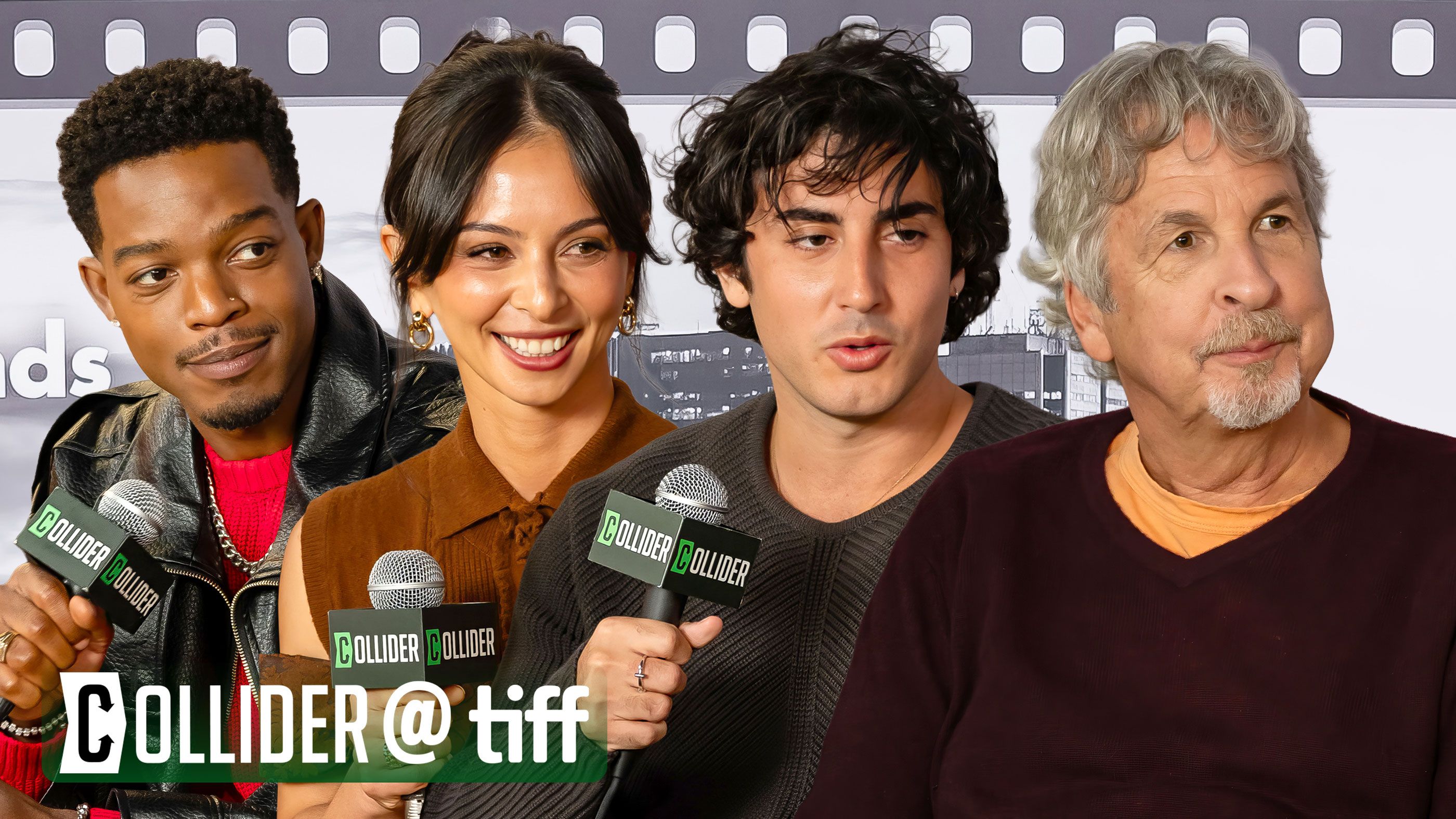
- Collider's Steve Weintraub talks with the team behind I Play Rocky at TIFF 2026.
- Peter Farrelly, Anthony Ippolito, Stephan James, and Kiki Seto discuss their preparation and the making of the film.
- The team discuss casting, what they chose to include from Sylvester Stallone's life, what they're nervous for him to see, training, matching frames from Rocky, and much more.
At this year’s Toronto International Film Festival, Oscar-winning director Peter Farrelly’s I Play Rocky World premiered, with rising star Anthony Ippolito (The Offer) headlining in a career-making performance as a then-unknown Sylvester Stallone. The movie chronicles the unbelievable true story behind the making of one of the greatest underdog stories of all time as one man defied all odds.
Before he became an action icon and Hollywood multihyphenate, Stallone grew up poor and dreamed of becoming an actor. By his twenties, the closest he’d gotten was a porno and a job as a theater usher, but a fight between Muhammad Ali and Chuck Wepner sparked inspiration that drove Stallone to pen one of the silver screen’s all-time greats: Rocky. When he presents his screenplay to studio executives, they can’t wait to get their hands on it, but Stallone’s one stipulation — that he play Rocky Balboa — is a hard no. But no matter how much they offer him, Rocky and Stallone are a joint deal. When they finally cave, Stallone’s impossible journey from script to screen has only just begun.
At the Collider Media Studio, presented by Campari and The Cayman Islands, Steve Weintraub sat down to chat with Farrelly, Ippolito, Stephan James (If Beale Street Could Talk), who plays Carl Weathers in the movie, and Kiki Seto (The Studio), who plays Talia Shire, to discuss the film. In this interview, they discuss how the script and cast came together, why Ippolito was the only person they considered for Stallone, and how the young star prepared to portray the action movie icon. James and Seto talk about joining the project, playing characters within characters, and the team discusses what they chose to include, what they're excited (or nervous) for Stallone to see, and tons more. Check out the full conversation in the video above, with a transcript provided below.
Get to Know the Cast and Director of 'I Play Rocky'
Anthony Ippolito also jokes which iconic actor he'd like to play next.
COLLIDER: I watched a lot of movies before I got here, and you guys are one of my favorite films of the year. It is just a fantastic movie, and you're going to have an amazing night at your premiere.
PETER FARRELLY: Can't wait.
ANTHONY IPPOLITO: Thank you. Me too. Yeah, it's going to be crazy.
FARRELLY: It’s 2,000 people, I think, in that room. It's going to be fun.
You're going to have an amazing night. Let me just say it like that.
IPPOLITO: I've never seen a movie with that much of an audience, ever, period. Any movie.
I think this is going to be one of those life moments for you where you will remember it for the rest of your life. Before we get into the movie, I'm doing a supercut, and the supercut right now is: Where do you like to sit in a movie theater?
FARRELLY: Aisle, halfway down. I like an aisle seat.
IPPOLITO: Back middle.
KIKI SETO: Middle aisle.
STEPHAN JAMES: Yeah, all the way in the back, middle, probably.
The last row?
JAMES: Last row. Me and Anthony will be fighting for that seat.
It’s so interesting. A lot of filmmakers recommend sitting where the frame is to your left and right, where you can't see the wall, but then a lot of people like sitting in the back. Is it because you use your phones during the movie?
IPPOLITO: No.
JAMES: You got us. [Laughs]
IPPOLITO: No, no, no. You just get it. You're centered. My neck hurts too close to the front.
Of course. So the other thing I'm doing before we get started is something called Get to Know Your Cast Member/Director. What's your favorite failure?
FARRELLY: Wow, that's good. I will say this: I love failure. I have a lot of failures, and they've helped me throughout my entire life — I think my entire youth — because I got into my 20s and I had nothing going for me, so I thought, “Well, I'm going to try making movies.” And if I had been successful in anything, I don't think I would have done that. So, I always tell people failure can be really good. It pivots you and finally pushes you in the right direction.
It's very true, though. If you’d been very successful when you were 18…
FARRELLY: I always tell the story where I had a friend who I went to high school with; he was captain of the hockey team, he went to Yale, he was captain of the hockey team at Yale. He became a lawyer, and he worked for a bank. We were at one of my premieres, and he goes, “Man, are you lucky.” He goes, “You could screw up.” He goes, “I was on a track.” He said, “I couldn't get off that. If I wasn't a lawyer, doctor, NBA, Wall Street guy, everybody would have yelled at me. You, they were like, ‘Whatever. Try whatever you want.’”
I'm very happy it worked out and that you’re sitting right here. What do audiences misunderstand most about your job?
IPPOLITO: Oh, great question. I think a lot of people kind of miss the work element, the homework element. People know between action and cut, and this stuff, which is very foreign to me, by the way, which is very cool, but something that I'm not very familiar with at this point. But yeah, there's a lot of homework, and it's kind of a lonely ride. You're kind of by yourself with a lot of it, and a lot of that's captured in this movie. But yeah, I think a lot of people miss that part of it.
If you could have a song play when you enter a room, what song would it be and why?
SETO: I like listening to Chinese healing music. That's what I type into Spotify. So whatever comes on shuffle when I type that in.
Sounds great. If you could redo one scene from your career, what would it be and why?
JAMES: Jeez Louise. It's a good one. I can't pick one. There's probably a thousand that I wish I could redo, as most actors do. They judge themselves pretty harshly. This is a really good question.
FARRELLY: That's a real tough question.
IPPOLITO: It could also be a redo if you want to do it again, as well.
JAMES: Anything to do with you guys, I think. I'll say that. I had so much fun working on this film and working with these guys that I would redo any one of those scenes just for fun.
You played Al Pacino in The Offer, and now you're playing Sly in this. Who is the next ‘70s star that you are going to capture on a movie or TV show?
IPPOLITO: Got any ideas?
I do not, but I figured you do.
IPPOLITO: It's a good question. No, honestly, I don't really have an answer. I've just been so privileged and overwhelmed by both of these opportunities, and it's really been something else. I've had the pleasure of really going through a lot of ‘70s cinema because of it, in doing the homework for both of these, so that's really been a privilege. But I couldn't give you another name.
FARRELLY: Travolta.
IPPOLITO: Hey, maybe.
FARRELLY: Stick with the Italians.
The real question is, can you dance?
IPPOLITO: No, so maybe we figure that out.
That's why you do the homework.
FARRELLY: But he's an athlete.
IPPOLITO: The homework. This is the homework part.
"He's the only person we looked at for the role."

Exactly. So as I said before, I love the movie. How did this one happen? Was it tough to get off the ground, or was this one where everyone saw, “Oh, this could be a really good movie?”
FARRELLY: Every movie's hard to get off the ground. It's shocking to me. You can't believe. Like you have a really good movie, it does well, and the next one is hard to get off the ground. So, yes, it's always hard.
But this came when I read a script by Peter Gamble. Toby Emmerich gave it to me, and I was like, “This is the best script I've ever read.” I immediately wanted to do it. The hard part was going to be: How do you find the Stallone character?
We were planning to do a worldwide search, and all of a sudden, my casting agent called me, and he goes, “I got our guy.” I go, “What are you talking about?” He goes, “Kid sent the tape in.” He heard about the movie, somehow tracked down the script, put himself on tape — in your apartment?
IPPOLITO: Yeah.
FARRELLY: He had three scenes he put down, and he sent it to us before we even started casting. We looked at it, and we're like, “Yeah, that's the guy.” We never looked past it. He’s the only person we looked up for the role. And then the studio loved the script. Amazon MGM, they loved the script, and they said, “But how are you going to find Stallone?” And we said, “We already got him.” They said, “What are you talking about? You haven’t even started casting.” I said, “I know, but we got him.” I sent them the video that he sent us, and they called 10 minutes later and said, “Yeah, okay, we'll do this.”
That is ba-effin-nanas. So I have to ask you, who is the person that you owe a birthday gift to for the rest of your life? Who got you that info to do this?
IPPOLITO: Interesting. I mean, I had just seen an article, honestly, and then a bunch of people sent it to me because I had talked about Stallone's story and been inspired by it. But when I saw that article that he was doing this movie with Toby Emmerich, I just knew that I had to try to get in front of them.
I knew it wasn't necessarily going to be easy. As an actor, trying to get in front of people in a timely way before things go in a different direction isn't always the easiest thing, but I just really felt that at least if I was seen and I could present my interpretation, then I'd be able to live with it even if it didn't go my way. I just really had to try to get in the door.
My question is, had you had a Stallone, not impersonation, but a version of Stallone that you’d already been working on?
IPPOLITO: No.
How quickly did you develop his accent, his mannerisms, to be able to self-tape and then send it in?
IPPOLITO: It was a lot, and it happened very fast. It was similar to Pacino; so much of the homework had to be done prior to even submitting the tape, that you already have a pretty good understanding of what you want to do prior to even getting the part. But yeah, a lot of work went in even before the audition.
FARRELLY: And by the way, after we got it, the one thing he wasn’t was he wasn't buff like Stallone. So luckily, he got to us beforehand, so we had him working out for a year and learning how to box and doing everything.
IPPOLITO: Yeah, like a year and a half.
FARRELLY: And how many pounds did you gain? Like 40?
IPPOLITO: Something like that, yeah.
FARRELLY: And he's, by the way, since then taken off most of it, right?
IPPOLITO: Yeah. It's a lot to maintain, and it's not my natural. You mentioned the Pacino part; I was kind of normally like that. So, it was a lot.
FARRELLY: This was like a Raging Bull thing to me. It's like De Niro in Raging Bull where he just transformed into Jake LaMotta. That's what he did for Stallone.
People don't realize that to maintain that kind of weight, you have to be eating all the time.
IPPOLITO: It was an entire lifestyle shift and a really disciplined, regimented thing, day in, day out. Consistency. It was a lot, but it was worth it. We knew we had to do it that way.
FARRELLY: By the way, you asked was it hard to get made? Yeah, it was. We went to a couple of places before we found the right place, and the whole time all I could think was, “We’ve got to get this made because this kid's been getting his face punched in for a year, I swear to God, and working out.” I was like, “We can't stop. He's been killing himself!”
IPPOLITO: We were in too deep at that point.
Kiki Seto and Stephan James Dish on Playing Talia Shire and Carl Weathers
"There's intrigue because you understand how beloved this franchise is."

For the two of you, a script like this doesn’t come along all the time. When you read the script, and you were auditioning, or however you got it, how much did you want these roles, and what was it like reading the script for the first time and seeing what you were going to be a part of?
SETO: Reading the script was surreal. I went to a coffee shop and sat down and read it there, and I was just like, “Wow, this is absolutely incredible.” I was laughing, I was crying, I think people around me were like, “What is going on with this girl?” I could tell that it was going to be an incredible film just by reading the script.
JAMES: Initially there's intrigue because you understand how beloved this franchise is, this IP is. When you get the call, like you're going to play someone like Apollo Creed, at first there's a daunting feeling of like, “Oh, shit, that's Apollo Creed,” and understanding just the lore that exists and the weight of that name in this franchise.
So I think the first feeling is a little bit daunting, but then the second feeling is you're so excited, and you know that the source material, the script, is incredible, so you can trust that there's at least that on the page and lean into it and just have fun. So, I think that's the way I approached it. But just nervousness, excitement, but the kind of nervousness that you need, I think, in going into something like this.
Something about Rocky is that for many people, it's their favorite movie, and you are recreating scenes from Rocky. What was it like on set when you needed to film something that needed to be frame-accurate for all the diehards who are like, “Well, that's not how the camera moved.” How many takes had to be redone because you missed a tiny little bit?
FARRELLY: Not as many as you’d think because we had our director of photography, Sean Porter, who’s a genius, and he had studied and done his homework. Everybody has to do homework. Like these three showed up and they had their characters down. I direct them, but they've already found their character. I never have to say, “No, no, Apollo Creed, that’s not what he would do.” He did everything Apollo Creed would do when he shows up. But my thing would be, “Just take a second. Take more time.” Timing issues, that kind of thing.
But Sean Porter showed up and he knew what this movie was going to look like, and he had those things. On set, he had the actual Rocky shots and then what we were doing, and he matched them. You match the lighting. If you look, there's a scene where he's in his apartment and he's got his hands on the pipe up above, and the shadow is going across his face exactly in the right place that it did in the movie. It's identical.
And in fact, when we did the first test screening, people afterwards were asking, “Okay, how many of the shots in the movie were actually Stallone?” I was like, “None.” They’re like, “Some were. I mean, there were some that were Stallone.” I was like, “No.” They go, “What about when he's walking down the street outside his apartment?” I was like, “No, that’s the actor.” They’re like, “What?!” We just matched it perfectly.
If you're sitting next to Stallone when he's watching this movie, what is the scene you cannot wait for him to watch and what is the scene you are very nervous for him to watch?
FARRELLY: That's a good question.
IPPOLITO: That's a really good question. The whole thing, in terms of this, is very much his story, and it's something he spoke about on talk shows countless times, and it's like mythic in its proportions. So many incredible things happened, and he had to overcome so much adversity.
Maybe the writing of it, probably. Like that sequence where something clicked into place. Because he wrote that initial first draft in three days, so to think of that whirlwind, he was probably so inside of it that it would probably be pretty interesting to see that.
FARRELLY: In fact, I asked him while we were shooting, I said, “What music were you listening to back then?” Because he told me he loved music. He said, “Buffalo Springfield.” He said, “In fact, I listened to Buffalo Springfield the whole time I was writing the movies. For three and a half days, I just kept rolling it back and forth.” So, we have “Rock & Roll Woman;” Buffalo Springfield is playing while he's writing it, and some people have asked me, “Why that song? That’s 1969.” It’s like, “Because that's what he listened to.” There was a lot of early Hall & Oates in there, stuff like that, Procol Harum, all that music that he liked.
Anthony is playing Stallone, who's playing Rocky, and you're playing Carl [Weathers], who is playing Apollo. Does it become almost three layers of a performance? You're layering. What is that like as an actor?
IPPOLITO: It's also, there are layers in any performance. We're layered people. I mean, hardly are people ever fully one-dimensional or two-dimensional. If you're playing a character and they're sick, now you're playing that character with that condition, you know? So, that's something you absolutely have to take into account.
But they also kind of put a lot of themselves into the role. So sometimes it's interesting to kind of blur the lines a little bit, but you definitely understand there is a delineation between the character that they're playing and the actor themselves.
JAMES: That, to me, honestly was the most enjoyable part of all this. I think that a quality of this film is it has a voyeuristic quality to it, right, where you feel like you're a fly on the wall getting to see something that other people haven't seen yet. And so I think that that always intrigued me to be like, I know what people expect from Apollo Creed, but how can I show them just a little bit of a different shade in Carl, whether it be an insecurity, whether it be a moment of humor? I think that audiences really enjoy that sneaky feeling of, “Oh, wow, I'm getting to see someone when they're not on.” And so I think that that dynamic is something I really leaned into and relished in, to be honest.
FARRELLY: It's fun, actually. You did like three layers because he comes in as the actor who's trying to be confident, and he's not Carl Weathers’ real personality — he just comes in very cocky, very sure of himself — then becomes Apollo in that scene as he reads for the role. But then later we see that Carl Weathers is actually quite a different guy. He's just kind of sitting there, just taking it all in, figuring it all out.
JAMES: It's very meta, but very, very cool.
How 'I Play Rocky' Captures the Highs and Lows of Sylvester Stallone's Life
"Stallone's life mirrors Rocky's life so much during that time."

I don't want to be specific, but there's very, very funny stuff in this movie. You guys really pulled it off. It's really hard to do what you guys do. I'm so curious, though, if you don't mind, I like talking about editing and how the film comes together, so what did you learn from early screenings that maybe impacted the finished film?
FARRELLY: My early screenings were always in the editing room, and I'd invite 20 or 30 people in.
You have a big editing room.
FARRELLY: Well, we rent it. It's sort of like this room. Actually, this room is way bigger. But we jam everybody in there, we watch it, and you learn a lot constantly. By the time we did our first official test screening, we'd worked it all out and it did well, so we only did one test screening.
Did you score in the 90s?
FARRELLY: Yes.
So they're like, “Okay, we're done.”
FARRELLY: Yeah. So, what I learned was, I mean, I learned a lot of things. I could go on and on, but one thing was that Stallone's wife, Sasha [Czack], is pregnant in the movie, a large part of the movie, and then at the end we show them watching the movie when the movie opens and she's not pregnant anymore. I just figured people would be okay with that, knowing she had the baby, but every woman in the room was like, “What happened? Is the baby okay?” I was like, “Well, yeah, she had the baby.” They’re like, “How come they're not mentioning the baby? Did she give it up for adoption?” It's like, “No, she had the baby!” So we had to put in a thing, you know, “10 months and one baby later…” Just calming every woman in the audience to know that everything's fine, their baby’s good.
And there were a lot of other things, like the very end. We had a whole different ending where we do show the big fight at the end, but we cut it differently. It's because we realized at one point there's a point where he's running up the stairs where you're never going to get there again. That point is such a high that we just stop it there. But then we, over the end credits, show the fight it. It helps it a lot.
One of the things about the making of Rocky and Stallone's story is there are so many unbelievable things, from him turning down the money, and how without a Steadicam being invented this movie doesn't happen. So for each of you, what is something that you learned about the making of Rocky that really just floored you and has really stuck with you?
IPPOLITO: For me, that shot at the steps is such a miracle, and Garrett Brown with the Steadicam was there on the day that we shot that stuff in Philly.
That's amazing.
FARRELLY: He invented the Steadicam.
IPPOLITO: Yeah, he invented it and shot the hell out of that scene. And to think that that was all shot so perfectly, like the alignment and the symmetry of the frame for that shot, I didn't really understand, as well, until we really dove into it, and you really appreciate it more.
FARRELLY: What I didn't know was that they only put the stairs in because of Garrett Brown, because he showed them how a Steadicam works. He had shot his wife running up those stairs at the Philadelphia Museum of Art. That wasn't in the movie, but when they saw it, they said, “Could you do that for us?” He goes, “Yeah.” And they were like, “Where is that?” They go, “It's in Philadelphia.” They said, “Let's do it.” That never even made its way into the script, actually. If you read the Rocky script today, that's not in there. They just put it in because of that.
SETO: I would say the producers taking out mortgages on their homes to fund the film and keep it running partway through the film. I thought that was incredible, and I don't think the film would have been made without that type of emotional backing.
JAMES: Yeah, that's a good one. For me, and I'm sure it's probably a famous story but I didn't know it, is just when Sly had to sell his dog, and what a heartfelt moment in the film, a moment that genuinely made me cry. You know it's happening, you know it's in the film, but when you see it, it's just like, wow, the sacrifice that he made in that moment in time so he can make this thing that we're all here talking about 50 years later is kind of unreal.
The other thing that I wasn't sure you were going to do, and I'm so happy you did, is Sly really led a tough life before when he was living in the city, and he was on the street. I don't want to be specific, but he has an adult past. Was it tough to put that in? Because, again, I don't know how involved Sly was.
FARRELLY: It was a debate, and the studio at one point was like, “Do we really want that in there?” I said, “100% because that's where he came from. That's the low.” To me, this is what I love about this movie: Stallone's life mirrors Rocky's life so much during that time. But to me, this is even a better story, and here's why: At least in Rocky, when Rocky starts, he has a job — he's breaking bones, but he has a job. Stallone's homeless. He's selling his dog. He's doing things he wishes he didn't do. Rocky doesn't win; he lasts through the fight. Stallone wins. They win the Best Picture. Rocky is fiction, this is true.
I Play Rocky opens in select theaters on November 6 before releasing nationwide on November 20.

- Release Date
- November 20, 2026
- Runtime
- 127 minutes
- Director
- Peter Farrelly
- Writers
- Peter Gamble
- Producers
- Toby Emmerich, Michele Weiss, Peter Farrelly, Christian Baha
KioskNews shows a cleaned-up reading view extracted from the publisher’s page — the original always lives on their site, not ours.