BYD’s decision shows Malaysia’s need to grow beyond CKD

I’ve been watching Malaysia make cars for more than 40 years. As an motoring writer, I test-drove the Proton Saga when it was launched in 1985, and saw it become the centre of attention.
The narrative then was that Proton marked the beginning of Malaysia’s journey towards becoming an automotive nation.
Four decades later, perhaps it is time to ask an uncomfortable question: What exactly are we trying to achieve? The question has become particularly relevant when BYD finally cleared the air over its Malaysian manufacturing plans.
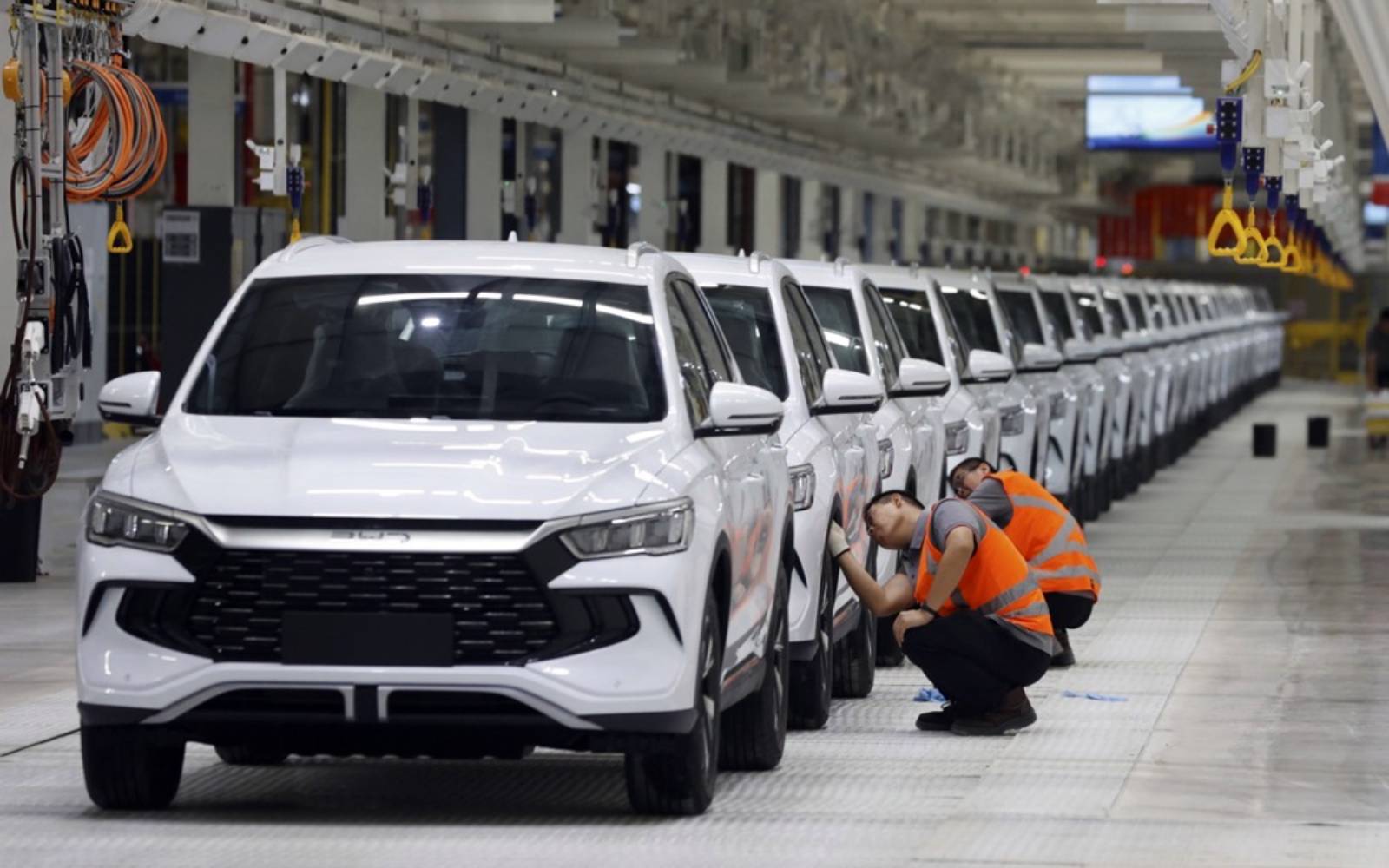
The Chinese EV giant confirmed that its proposed factory in Tanjong Malim will not proceed. But BYD is not walking away from Malaysia. Managing director Jacob Ma says the company remains committed to local assembly and is already in advanced discussions with an established Malaysian assembly partner.
That is an important distinction. BYD will apparently assemble cars here. It just doesn’t see the need to build another factory to do it.
Indeed, completely-knocked-down assembly, or CKD as we call it, has been part of Malaysian industrialisation since the 1960s. Toyota began assembling cars here in 1968. Volvo, Mercedes-Benz, Honda and many other international manufacturers followed, or were already part of that first wave.
Building an ecosystem
Over the following half-century, the legacy manufacturers and their Malaysian partners invested enormous sums in assembly plants, paint shops, tooling, component manufacturing, training and supplier development.
Then came Proton, and later Perodua. They created a Malaysian automotive ecosystem.
There are Malaysian engineers, technicians, toolmakers, component manufacturers, logistics companies and hundreds of vendors whose businesses grew around CKD manufacturing. That investment should not be casually discarded simply because the electric car has arrived.
In fact, BYD’s latest decision may actually validate the value of what Malaysia already has. Why build another factory if there is already a competent Malaysian factory capable of assembling your cars?
The speculation naturally points towards Sime Motors’ Inokom facility in Kulim, although BYD has not named its partner and we should therefore leave it at speculation for now. But Inokom illustrates the point beautifully.
The Kulim facility already assembles cars for several international manufacturers and has become one of Malaysia’s most experienced contract manufacturing operations. That is real industrial capability.
The Melaka experience
Yet another example is emerging quietly in Melaka. Few Malaysians would have heard much about EPMB until recently because it was better known as an automotive component manufacturer. Today it is rapidly reinventing itself as a contract assembler for Chinese marques entering Malaysia.
Its Pegoh assembly complex has already become the Malaysian production base for GWM, BAIC and MG, while XPeng has also chosen EPMB as its CKD partner for local production. Rather than build four separate factories, these Chinese manufacturers are increasingly able to share the expertise of one Malaysian assembler with established engineering, logistics and component capabilities.
That may be a glimpse of the future. Instead of every new automotive brand arriving with architectural drawings for another greenfield plant, Malaysia could become home to highly efficient multi-brand assembly specialists capable of producing vehicles for several manufacturers on the same industrial platform.
That is a much more sophisticated business than merely tightening screws on imported kits.
Beyond the single-factory model
So I am not suggesting Malaysia should abandon CKD. Quite the opposite. We should protect and develop the enormous investment already made — but stop assuming that every new foreign brand needs another shiny factory with a ribbon-cutting ceremony.
There is also another uncomfortable reality. BYD is not Toyota in 1970. BYD comes from an automotive industry operating on a scale Malaysia has never experienced.
The electric vehicle itself has overturned the Japanese system of car assembly where vendors supply about 70% of the combustion car.
China sold more than 30 million vehicles last year. BYD alone manufactures millions of electrified vehicles annually and is extraordinarily vertically integrated. It makes batteries, electric motors, power electronics, semiconductors and many of the technologies that go into its cars. It owns lithium mines and ro-ro vessels.
BYD already has a major manufacturing investment in Thailand. It therefore seems increasingly unrealistic to expect Malaysia’s relatively small domestic market to persuade BYD to reproduce that entire industrial ecosystem here.
New automotive policy
Instead of asking BYD to build another factory, we should ask a more ambitious question: What can Malaysia do for BYD, and every other global carmaker, that they cannot easily do elsewhere? That is where our industrial policy should move next.
Malaysia already has one of Asia’s strongest electrical and electronics industries. We manufacture semiconductors. We have precision engineering capabilities. We have a mature automotive vendor industry and decades of experience assembling vehicles to Japanese, German and other international quality standards.
The electric car brings those worlds together. So, the next Malaysian automotive strategy should be less obsessed with the nationality of the badge on the bonnet and more interested in the value created underneath it.
Can Malaysian companies manufacture power electronics? Can we make battery-management systems, electric-drive components, sensors and automotive semiconductors? Can we develop software, vehicle testing, engineering services and regional R&D?
Stepping up
And can our existing CKD factories become flexible Asean manufacturing centres assembling several brands rather than waiting for every manufacturer to construct its own plant?
That would not mean giving up on automotive manufacturing. It would mean growing up.
Almost 20 years ago, Australia eventually decided that protecting domestic car manufacturing no longer made economic sense. Over time, it transitioned from subsidies to an open market. Malaysia does not necessarily have to follow Australia down that road because we possess something Australia largely did not: a substantial lower-cost manufacturing ecosystem integrated into Asean and the Asian electronics supply chain.
We should use it. Keep CKD. Strengthen it. Demand meaningful localisation where it makes economic sense. And perhaps encourage the emergence of more companies like EPMB and Inokom — Malaysian manufacturers whose expertise lies not in owning a car brand, but in becoming world-class builders of many brands.
But don’t confuse assembling another car with building an automotive industry. The real prize is owning more of the technology, engineering, design of the car.
Yamin Vong is on Facebook at yamin.com.my, and can be contacted at [email protected].
The views expressed are those of the writer and do not necessarily reflect those of FMT.
Subscribe to our newsletter and get news delivered to your mailbox.
KioskNews shows a cleaned-up reading view extracted from the publisher’s page — the original always lives on their site, not ours.