6 Stephen King Books That Are Perfectly Written
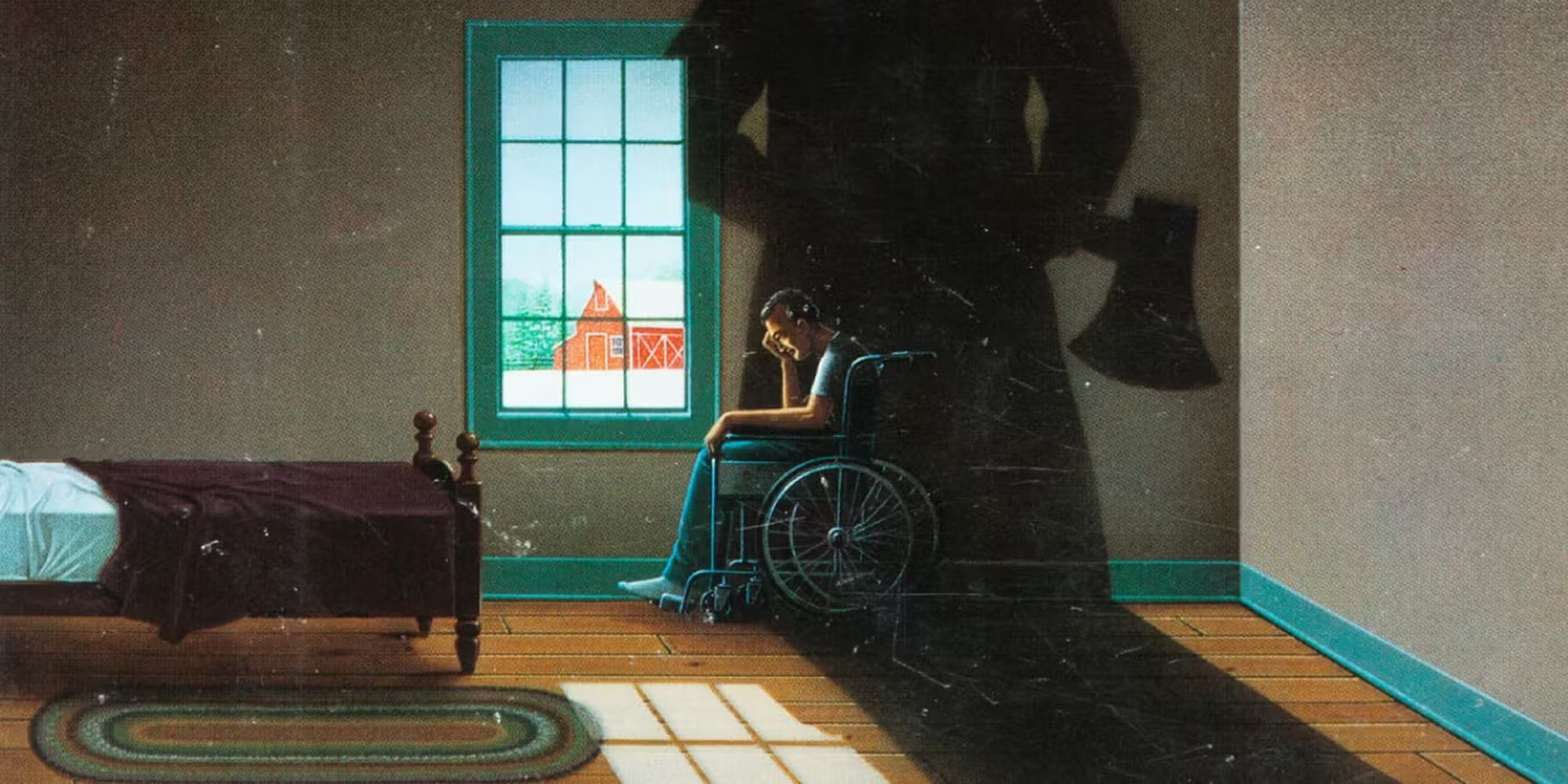
Stephen King has written so many books at this point that the casual reader tends to lump them all together under one word. Horror. Yet, that label does him a severe injustice. What King actually does across his best work is something far more specific and far more devastating than jump scares and haunted houses. He takes what ordinary people quietly fear and builds a world around it until there is nowhere left to run.
That’s why these six books have a precision most literary authors never touch. Every character earns their ending. Every sentence is doing actual work. Nothing is wasted .
6 'Carrie' (1974)
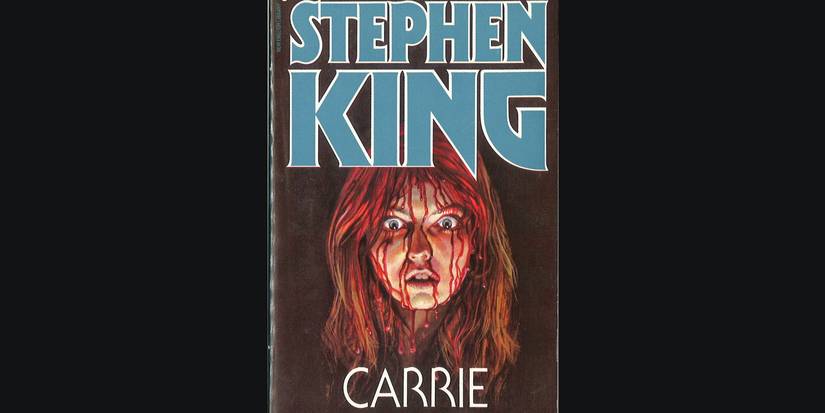
The prom scene is not the point. That needs to be said immediately because far too many people walk into Carrie thinking the telekinetic massacre is what the book is about. It is not. In fact, that bloodbath is just the aftermath of two hundred pages of something far worse than supernatural horror.
The story follows Carrie White, who gets her period for the first time in the school showers and the girls around her throw tampons and scream "plug it up." She is sixteen years old and does not know what a period is because her mother Margaret raised her inside a house where biology was classified as sin, where the closest thing to love was a locked closet and a crucifix. She never had a chance. Once Carrie actually makes it to that prom in her pink dress with the crown on her head and Tommy Ross smiling next to her, the desperation for her to just be happy for five minutes is suffocating. That is why the metallic tilt of the bucket overhead is so devastating. King earns every door that slams shut.
5 'The Dead Zone' (1979)
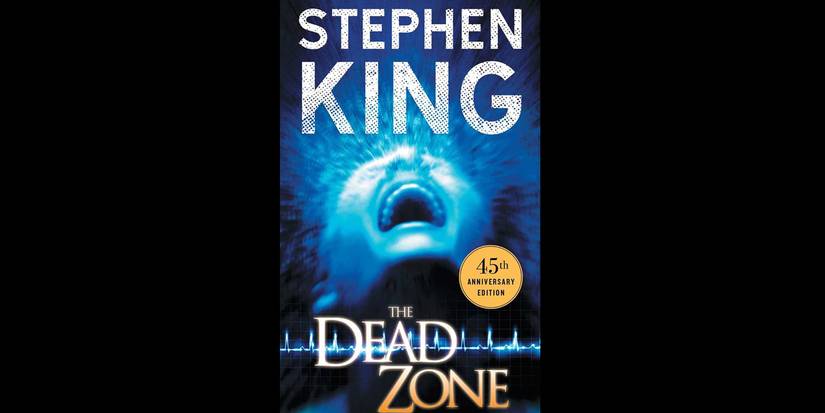
Johnny Smith does not want the ability. That distinction matters more than anything else in The Dead Zone. He wakes up from five years of coma and his fiancée has married another man and started a family and his teaching career is finished and half of his body operates at reduced capacity. And then on top of all of that, physical contact with another person sends a jolt through him like touching a live wire and he sees things. Not vague impressions. Specific futures. Deaths that are still coming.
He yanks his hand back every time. He stares at nothing while the vision plays out. King spends a long and deliberate stretch of this book showing Johnny as a man who would unquestionably trade this ability away for a single quiet year of nothing. But that desperation vanishes when Johnny shakes the hand of Greg Stillson and sees the man standing with his finger on a nuclear launch button and laughing. He cannot walk away. Because of this vision, a quiet story about a guy losing his life turns instantly into the most morally crushing question King ever put on a page. What do you do when you are the only one who knows?
4 'Pet Sematary' (1983)
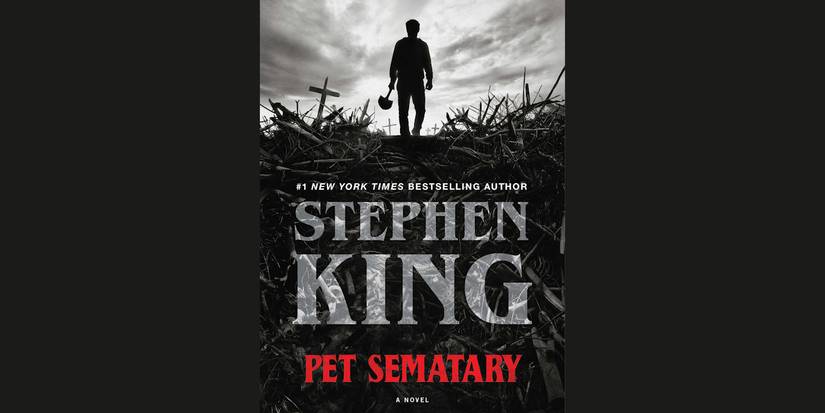
In Pet Sematary there is something about the way King describes the highway outside the Creed house. For instance, trucks barrel by without slowing, almost like the asphalt has an appetite. The story follows Louis Creed, a rational doctor who treats death as a clinical fact. But, that cold logic shatters when the family cat wanders onto the pavement and gets flattened. His neighbor Jud takes him deep into the woods to a cursed ancient burial ground. They bury the cat in the sour dirt. The next day, the animal comes back walking with a stiff gait and staring with flat eyes. Louis sees the truth. He knows exactly what this haunted earth does to a soul.
Because of this terrifying rehearsal, you know exactly what is coming when that hungry highway eventually claims his toddler son. Louis knows the horrifying cost. But, he goes anyway. The story ultimately becomes a terrifying look at a man who loves his child so desperately that he shatters every natural law to bring him home.
Collider Exclusive · 8 Questions · 2 Minutes What Is Your Biggest Horror Nightmare? Elm Street · Chucky · Scream · The Conjuring
Four horror franchises. Four completely different ways of scaring you. One waits until you fall asleep. One makes sure nobody believes you. One is already in your group of friends. And one is in the house with your family. Answer eight quick questions about how you actually watch horror, and find out which nightmare was built for you.
😴Elm Street(Freddy Krueger)
🧸Chucky(Child's Play)
📞Scream(Ghostface)
🕯️The Conjuring(The Warren Files)
01
Which horror scene makes you cover your eyes? Four classic images. One of them is worse than the others for you.
02
You are home alone and you hear a noise. First thought? Everybody has one. It arrives before you have decided anything.
03
Which horror movie rule would you break first? Everybody thinks they would survive. Almost nobody actually does.
04
Something genuinely frightening happens. What do you do? Not in a film. In your actual living room, tonight.
05
How do you actually watch a horror film? Be honest about this one. Nobody is checking.
06
Somebody offers you serious money. Which do you still refuse? The amount does not matter. There is one on this list you are not doing.
07
Which feeling stays with you a week after the film? Good horror does not stop when the credits do.
08
Something wakes you at 3am. What is the worst possibility? Eight questions in, this is the one that decides your nightmare.
The Lights Just Went Out Your Nightmare Is…
Four franchises, four completely different ways of getting underneath your skin. This is the one built out of your particular fear, why it works so well on you, and what it would leave behind.
Elm Street
Your nightmare does not wait outside the door. It waits for you to close your eyes, which you are going to have to do eventually, because nobody has ever won that particular argument.
- Freddy is horror's cruellest idea: a threat that lives in the one place you cannot guard, cannot lock, and cannot avoid forever.
- You are the one who is fine during the film and wide awake at two in the morning. Your own head is where this does its damage.
- These films understood exhaustion as a horror engine. The kids on Elm Street do not lose because they are weak. They lose because they are tired.
- You can lock every door in the house. You still have to sleep.
Chucky
Your nightmare is not really the doll. It is the face of the person you tell, and the way they decide, very kindly, that you have imagined all of it.
- Chucky works precisely because he is absurd. That is the trap: the more accurately you describe him, the less anybody is going to believe you.
- You are the one shouting at the screen because the characters are not listening. You know that feeling from real life too.
- The franchise is at its best when the adults in the room are the real obstacle, and you have met those adults.
- By the time somebody finally believes you, you will have handled most of it on your own.
Scream
Your nightmare has your number, knows your name, and has almost certainly been inside your house before. The worst part is that you already know them.
- Scream is the only one of these where the killer takes the mask off and turns out to be somebody who was at the party.
- You are the person who calls the twist out loud before it lands. You watch people the same way you watch films.
- The franchise made the rules of horror part of the plot, which means the survivors are the ones paying attention. You would be paying attention.
- Everybody is a suspect, including the person who just offered to walk you home.
The Conjuring
Your nightmare is not really about you. It is about the people asleep down the hall, and the feeling that whatever is here is not interested in leaving.
- The Conjuring films are domestic horror. The house, the family, the perfectly ordinary room that quietly stops feeling ordinary.
- Your instinct is to get everybody into one room. Your fear is protective rather than personal, which is rarer than it sounds.
- This is the one franchise where belief is the weapon. The people who come through it are the ones who are not alone and refuse to be.
- Whatever is here did not come for you. It came for the household, and you are the one standing in the hallway.
3 '11/22/63' (2011)
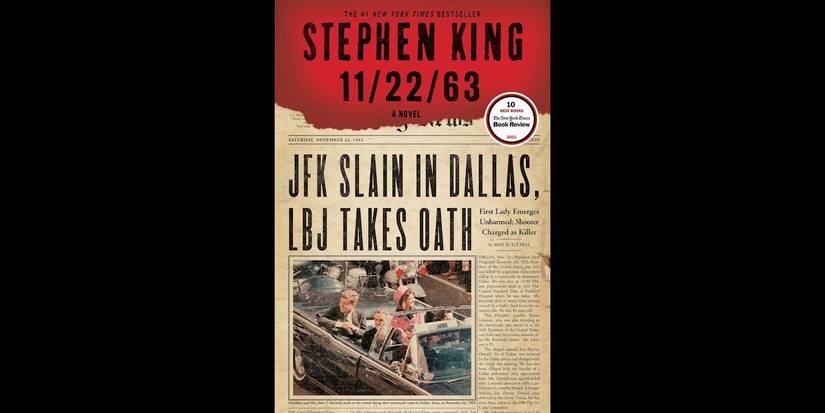
Jake Epping is an ordinary high school teacher who discovers a time portal in the back of a local diner. The portal drops him into the exact same afternoon in 1958 every single time. Since he is dying of cancer, the diner owner drops a completely insane mission in Jake's lap. He wants Jake to live in the past for five years and stop the assassination of John F. Kennedy. No pressure.
What King does with that long wait is incredible. Jake moves to Texas to track Lee Harvey Oswald. The crazy part is, while waiting around to stop a murder, Jake accidentally builds a real life and falls deeply in love with a woman named Sadie Dunhill. King explains this era with frightening detail. You feel the heavy steel of the cars and the specific texture of the cheerfulness. But the closer the calendar gets to November 1963, the harder the past pushes back. History actively defends itself. Jake faces sudden sickness, falling trees, and dead car engines the exact second he tries to change fate. This blend of true crime and tragic romance creates an unforgettable story. And surely, the ending will break your heart.
2 'Misery' (1987)
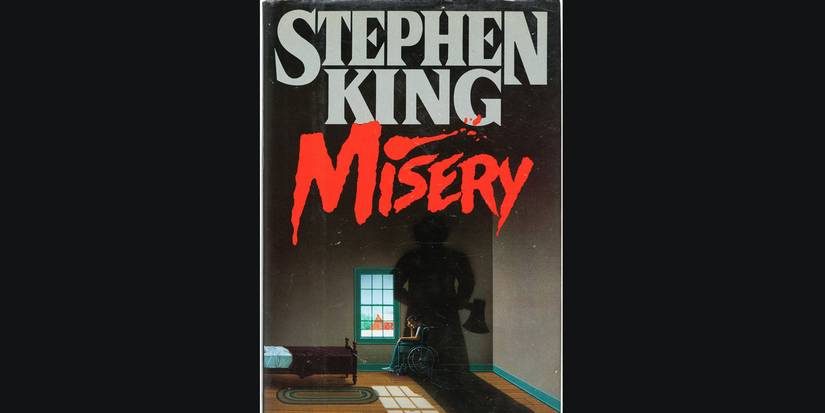
Misery is the captivity thriller stripped down to its sharpest possible shape. The novel centres on Paul Sheldon, who wakes up after a car crash with shattered legs, trapped in a remote farmhouse with Annie Wilkes, the kind of fan who speaks in sweetness until the sweetness suddenly curdles. The room is small. The bed is a prison. The door is everything. And those heavy winter boots approaching from the hallway can make a reader tense up before Annie even enters.
What makes it perfect is that Paul cannot only escape. He has to write. That is such a vicious King idea. Survival depends on pages, chapters, missing typewriter keys, painkillers, lies, timing, and the impossible task of keeping Annie pleased without giving her too much control. Every paragraph he produces is both art and hostage negotiation. The horror grabs instantly, but the deeper sting is the creator trapped by the person who claims to love his work most. It is brutal, funny, sweaty, and almost unbearably tight.
1 'The Shining' (1977)
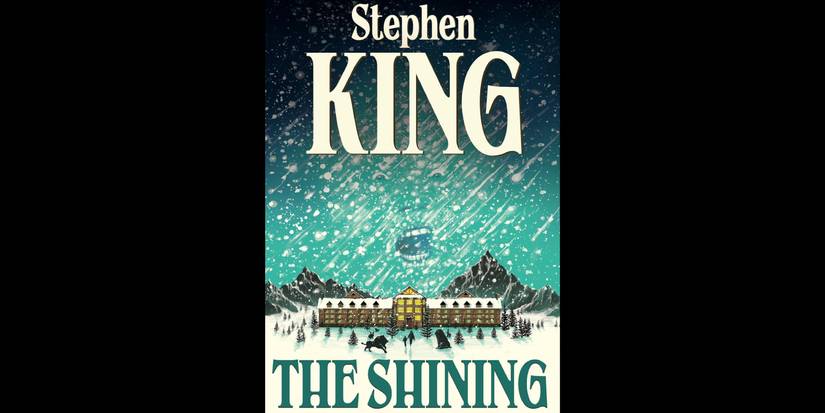
The Shining is King’s most perfect haunted house story because the Overlook Hotel does not need to create Jack Torrance from nothing. It only has to feed what is already there. Jack arrives with Wendy and Danny looking for one last chance. A job. A winter. A quiet place to write. A way to prove he can still be a husband and father instead of the angry, ashamed man he fears he already is.
That is what makes the haunting so frightening. The empty corridors, the boiler, the snow, the rooms with too much history, and the awful sense that the hotel is listening all press against a family that was already fragile. Jack’s dry lips, pacing, resentment, and wounded pride slowly turn physical, until the man meant to protect his family becomes the thing stalking them through the halls. The roque mallet thudding against the walls feels like the sound of a family finally breaking. The ghosts are terrifying, but Jack’s collapse is what makes the book completely devastating.
KioskNews shows a cleaned-up reading view extracted from the publisher’s page — the original always lives on their site, not ours.