Shivakumar seeks revision of Union government’s funding formula for Metro rail projects
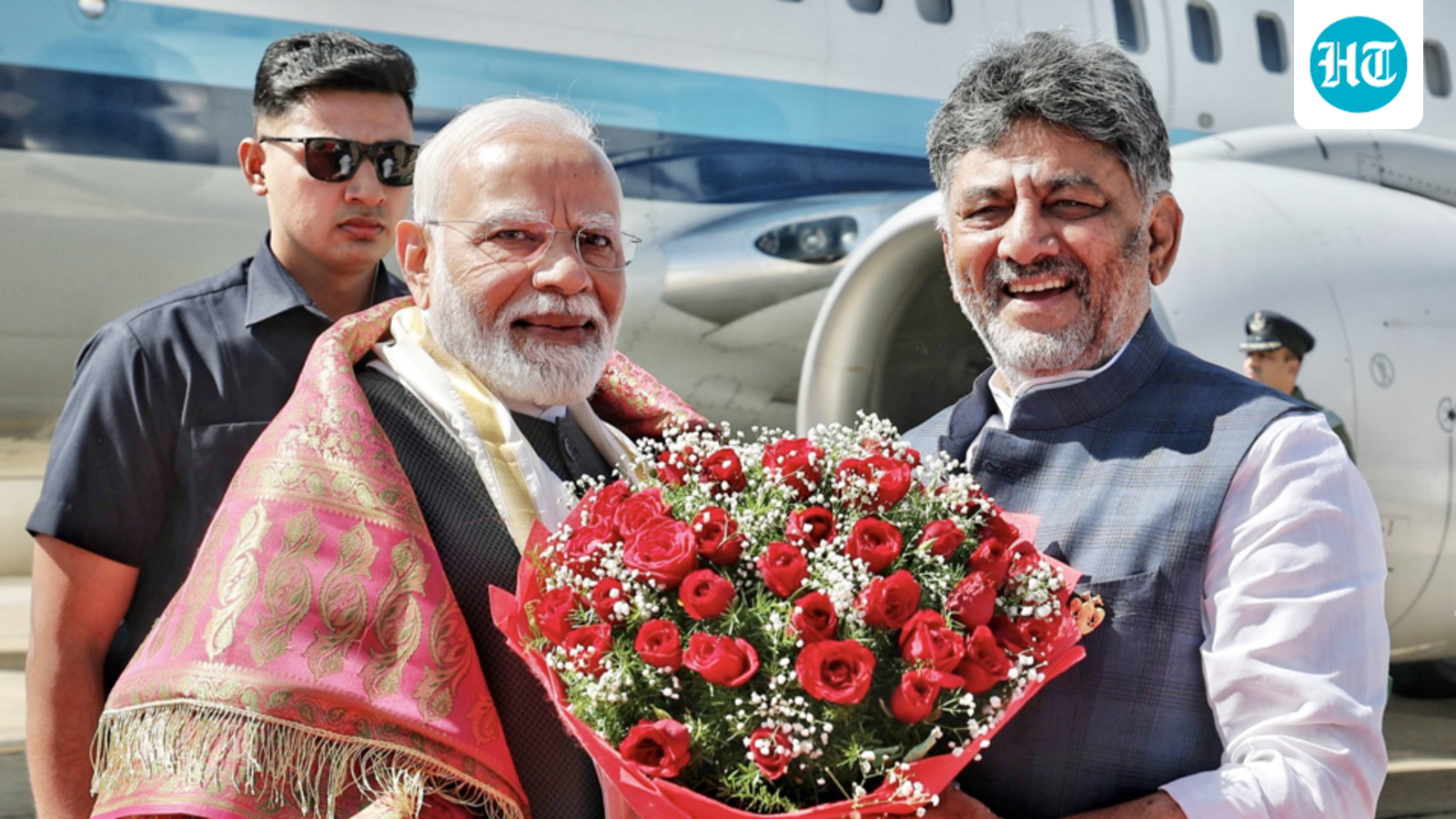
Chief minister DK Shivakumar has sought revision of the Union government’s funding formula for Metro rail projects, saying Karnataka bears over 80% of the cost despite the projects being structured as equal partnerships between the Union and state governments.
In a memorandum submitted to Prime Minister Narendra Modi in person on Friday, Shivakumar sought a share of foreign loan repayment risks and Metro operating losses, faster project clearances and city-specific cost estimates. He pressed for approval of Bengaluru’s proposed 42-km double-decker corridor and the Sarjapur-Hebbal Metro line.
“Since the state bears the entire cost of land acquisition, shifting of utilities, 50 per cent of Central taxes, 100 per cent of State taxes, and repayment of the entire foreign loan and most cost increases, our financial burden of building and running the metro is going beyond 80%,” said the memorandum. “The benefits of Metro are shared by everyone. So, the financial responsibility must also be shared fairly.”
Shivakumar sought a system to share foreign exchange risks on external loans, citing the Delhi Metro arrangement. He asked the Union government to contribute towards operating losses Metro companies incur. Shivakumar proposed affordable, long-term domestic loans through national financial institutions. He cited delays in Central approvals and outdated project estimates among other concerns.
Shivakumar said states were often bound by the costs in detailed project reports (DPRs) submitted years before approval, even when prices had risen in the intervening period. “When the Centre finally approves the project, the approval is given to a DPR costed at old and dated prices. The cost escalation beyond the date of our DPR submission is not allowed and updated estimates are not considered for freezing the Government of India’s share in the project,” he wrote.
He objected to national average benchmarks to assess Metro project costs, arguing they did not reflect the conditions in individual cities. “We would need state-specific realistic rates. The Government of India may arrive at independent costing, but specific to each city,” he said.
He added that this would make estimates more reflective of actual project costs. Shivakumar called for a national technical institution to oversee Metro inspections, safety certifications and technical approvals, which are handled by agencies across different ministries.
On Bengaluru’s road infrastructure, he said roads covered only 8-9% of the city’s area, against a requirement of at least 18-20%. The state proposed double-decker infrastructure, with Metro lines above road flyovers, to make better use of limited urban land.
Shivakumar said the proposal for the 42-km Phase 3 corridor had been significantly reduced. He asked the Union government to allow elevated roads wherever technically feasible, safe and economically viable, with Karnataka willing to bear the additional cost.
He sought early approval for the Red Line between Sarjapur and Hebbal. The proposal, submitted in January 2025, was revised with lower costs at the Union government’s request. “There is an urgent need to give approval to this line to avoid further cost escalation and to start the work on this crucial line.”
The memorandum sought Central assistance on drought relief, sugarcane prices and the proposed eco-sensitive area notification for the Western Ghats.
Shivakumar said 226 of Karnataka’s 240 taluks were declared drought-affected after the state recorded its second-lowest rainfall in 70 years. He added that crop damage across nearly 58 lakh hectares caused estimated losses of ₹62,482 crore.
The state has sought ₹22,400.58 crore under the National Disaster Response Fund and requested an early release of assistance. Shivakumar said farmers were demanding ₹5,500 per tonne, against the fair and remunerative price of ₹3,650 for 2026-27. He sought a revision of the sugar minimum support price, which he said remained at ₹31 per kg since 2019.
Shivakumar asked the Union government to account for the value of ethanol and power generated from sugarcane by-products when determining farmers’ remuneration.
He sought a reconsideration of the draft notification identifying 20,668 square kilometres in the Western Ghats across 1,449 villages in 10 Karnataka districts as ecologically sensitive areas. He called for a ground-level survey and said the state legislature had passed a unanimous resolution on the issue.
KioskNews shows a cleaned-up reading view extracted from the publisher’s page — the original always lives on their site, not ours.