US invests in Peru’s Callao as port battle with China’s Chancay megaport continues
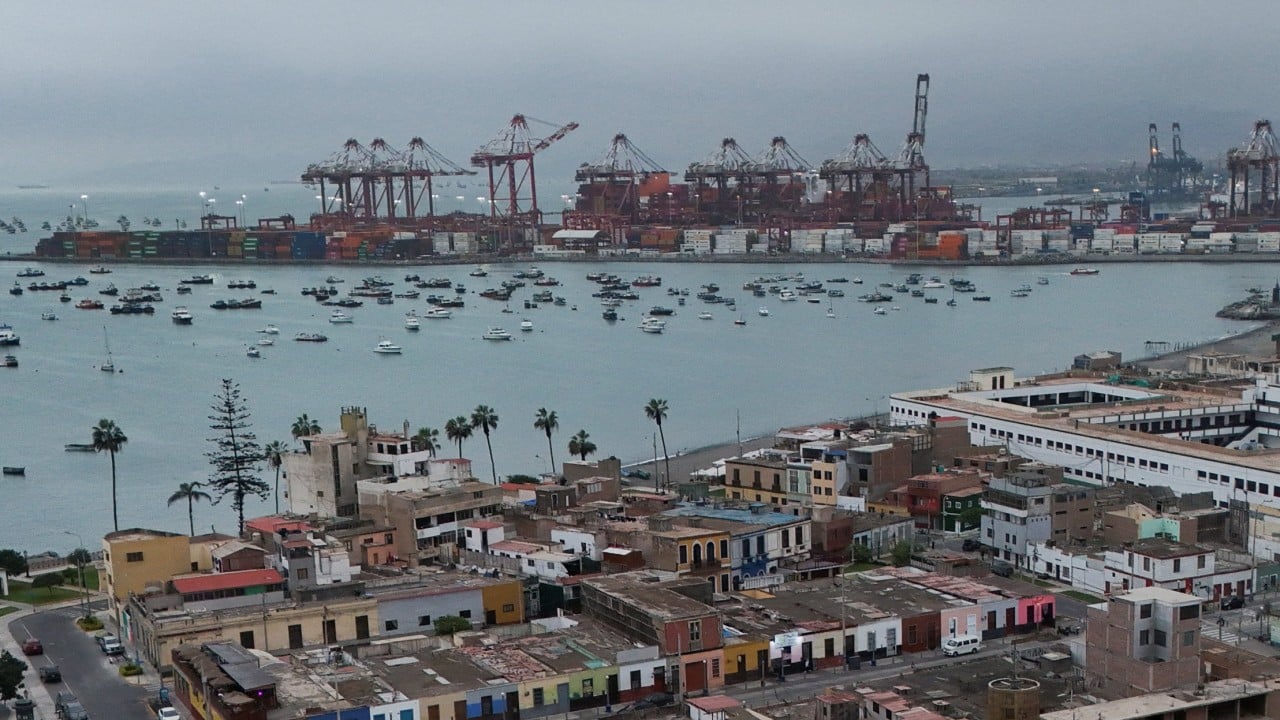
The United States has paid to design a port infrastructure programme at Callao, the US State Department said on Thursday, as Peru moves its main naval base to expand the country’s busiest port, which rivals a Chinese-controlled megaport less than 80km up the coast at Chancay.
The US$4.5 million payment was disclosed in a note on a trip to Peru and Colombia earlier this month by Thomas DiNanno, State Department undersecretary for arms control and international security, whose remit includes military aid.
The money came from the Foreign Military Financing programme set aside in previous years, a grant scheme that pays for partners’ purchases of American defence goods and services, and will cover the design phase of what the note called “the Port of Callao infrastructure programme”.
DiNanno toured the port “to see US support and progress for modernisation and port security projects”, the note said, without spelling out whether those projects were tied to the navy’s move.
He also announced US$20 million from the 2026 financial year to build Peru’s F-16 aerial refuelling capability, “extending the range and effectiveness of Peru’s fighter fleet”.
08:02
Uncertainty surrounds Peru’s new Chinese-built Chancay megaport
Washington’s role in the naval base itself was set out in January, when the State Department cleared Peru to spend up to US$1.5 billion of its own money on American design, construction and engineering services at the base.
The Defence Security Cooperation Agency said then that the work would make naval operations safer “by reducing civilian-military interactions at the existing facility”, which shares its waters with the commercial port.
Up to 20 US government or contractor staff could spend as long as a decade in Peru overseeing construction, it said.
The fight over who supervises the terminal began in January, when a Lima judge accepted Cosco’s argument that the transport regulator Ositran had no authority over a privately owned port. Peru’s other big terminals, including those at Callao, operate under state concessions.
The State Department responded that Peru risked losing sovereignty over Chancay. An appeal court restored Ositran’s powers in July, and Cosco has taken its challenge to the Constitutional Tribunal.
In September, Washington revoked the judge’s visa under a policy aimed at corruption, and US ambassador to Peru Bernie Navarro shared a photo of him on social media with the words: “Now you’re popular! I hope it was worth it.”
The Chinese embassy in Lima, Cosco Shipping Ports, Peru’s defence ministry and the State Department did not immediately respond to requests for comment.
Navy plan dates back to 2017
The Peruvian navy has been at Callao since 1936 and has for decades cited congestion at a site it shares with terminals run by APM Terminals and DP World. Its 2017 master plan moved its facilities a few kilometres north to free waterfront land for the commercial port.
Work on the first phase began in 2023, and in April the government authorised a 4.29 billion sol (US$1.2 billion) bond issue for the second phase, which local media reported would include berths for submarines and a new headquarters for the navy’s Pacific operations command.
A defence ministry resolution authorised two officers from the US Army Corps of Engineers to visit the base in September 2023, more than a year before Chancay opened, to support what it called the navy’s new port initiative.
After the US$1.5 billion sale drew criticism in Peru, 20 retired vice-admirals issued a statement in February calling the new base “a completely independent project” from Chancay, with different objectives and no operational link.
Chancay’s share of Peru’s container traffic nearly doubled this year, after Cosco Shipping Lines moved a regular Asia service there from Callao in December 2024.
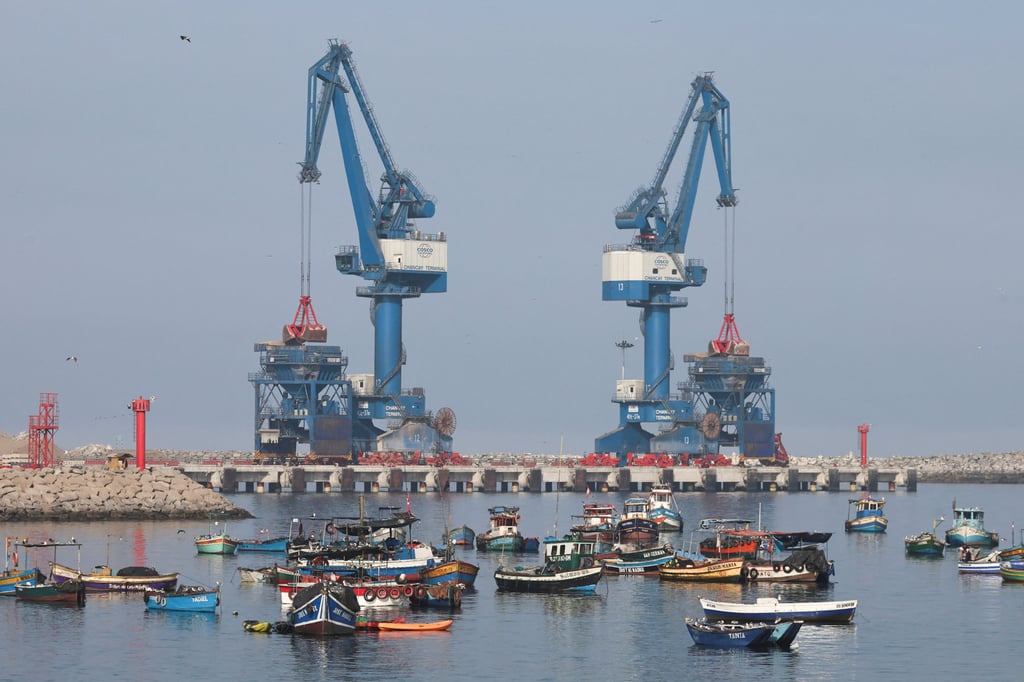
The Lima Chamber of Commerce put it at 10.1 per cent between January and July, up from 5.6 per cent last year, although Callao remained far larger, handling 3.3 million twenty-foot equivalent units over the whole of last year.
Mediterranean Shipping Company launched a direct weekly service from Ningbo to Callao in September of that year.
Lima’s balancing act was tested at Callao itself in February, when China’s navy was due to send its hospital ship Silk Road Ark to the port. The government withdrew its request for congressional approval after the health ministry advised postponing the visit during an H3N2 flu outbreak.
DiNanno’s trip also produced a civil nuclear cooperation memorandum with Peru and a US$1 million pledge for work on small modular reactors.
“By choosing the United States as its civil nuclear partner, Peru gains access to world-leading American technology,” he said before the signing, according to the note.
Peru’s Foreign Minister Carlos Espa has also said his country will not choose between the two powers and has called for a ban on military use of its ports.
KioskNews shows a cleaned-up reading view extracted from the publisher’s page — the original always lives on their site, not ours.