Bangladesh garment factories shut again as wage protests turn violent
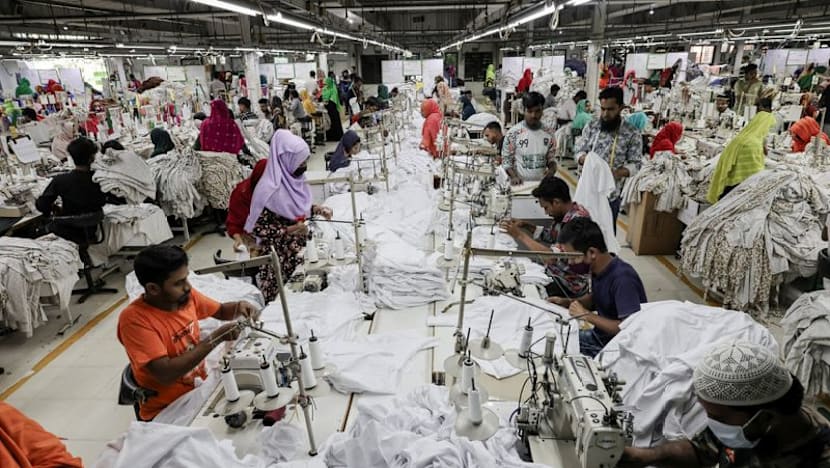
The government has formed a six-member wage board to address workers’ demands for a monthly minimum wage increase amid rising inflation and living costs.
03 Nov 2026 01:52AM
DHAKA: Bangladesh's garment factories briefly resumed operations on Monday (Nov 2) after a widespread shutdown a day earlier, but fresh clashes between workers and police forced hundreds of plants to suspend production again.
The unrest has raised concerns over shipment delays and buyer confidence in Bangladesh, a key supplier to brands including H&M, Zara, Walmart and Primark, at a critical point in the production cycle for spring and summer export orders.
Workers demanding a minimum monthly wage of 30,000 taka (US$243), up from 12,500 taka, blocked roads, vandalised factories and clashed with police across major manufacturing districts, prompting 679 factories to halt production.
Bangladesh is the world's second-largest garment exporter after China and the ready-made garment sector accounts for more than 80 per cent of the South Asian nation's export earnings. It employs about 4 million workers and accounts for roughly 10 per cent of economic output.
In a bid to defuse the crisis, the government on Sunday formed a six-member wage board to review workers' demands, which have gained momentum amid persistent inflation and rising living costs.
VIOLENCE CONTINUES
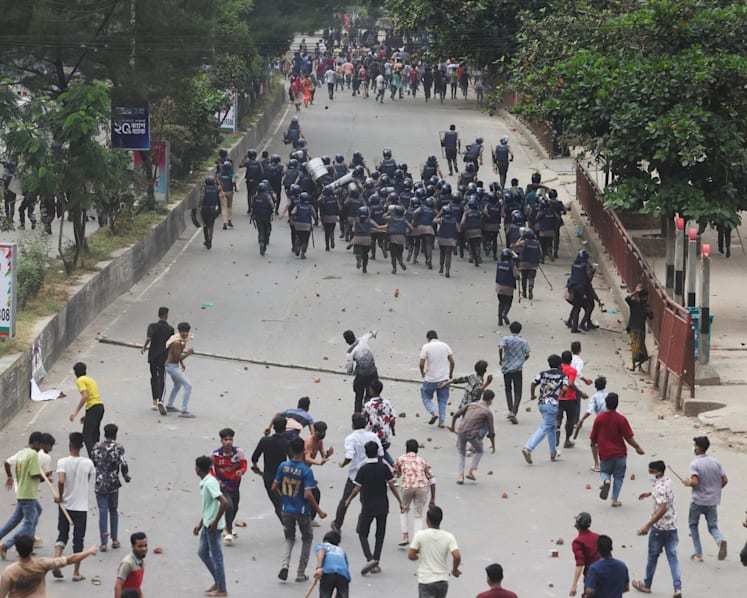
Police said they used tear gas to disperse garment workers attempting to block roads in Dhaka after protesters hurled bricks and stones at officers. Unrest was also reported in Ashulia and Gazipur, two manufacturing hubs on the outskirts of the capital.
Police and industry officials said protesters set fire to a police vehicle and vandalised a number of factories.
The clashes follow Sunday's protests and factory closures, with workers continuing to demand higher wages and the resolution of employment grievances.
"Bangladesh has among the lowest garment wages in the world," said Babul Akhter, general secretary of the Bangladesh Garment and Industrial Workers Federation and a workers' representative on the wage board.
"If factory owners cannot pay workers properly, they should negotiate better prices with international buyers. They cannot build a business on the backs of underpaid workers."
FACTORIES VANDALISED
Factory owners said the industry faces higher costs, energy market uncertainty linked to conflict in the Middle East and slowing demand in key export markets.
Mahmud Hasan Khan, president of the Bangladesh Garment Manufacturers and Exporters Association, said around 20 to 25 factories were vandalised during the unrest and the office of a leather goods factory was also attacked.
"If this continues and factories are repeatedly forced to shut, we will have no option but to invoke the 'no work, no pay' provision," he said.
Home Affairs Minister Salahuddin Ahmed warned of robust action: "Those acting against workers' interests under the guise of labour protests and attempting to destabilise the country will be dealt with firmly," he said.
Selim Raihan, an economics professor at the University of Dhaka, said that workers' demands were understandable given high inflation and said there could be further unrest.
However, a substantial wage increase could raise production costs, squeeze profit margins and weaken Bangladesh's price competitiveness, he said.
"A phased wage adjustment, improved productivity and fairer pricing from international buyers are essential to balancing workers’ welfare with industrial sustainability," he said.
KioskNews shows a cleaned-up reading view extracted from the publisher’s page — the original always lives on their site, not ours.