Why young people are having less sex, according to an ethicist, a matchmaker … and you

When it comes to sex, or the lack of it, everyone has a theory. Porn is to blame, say some. For others, it’s dating apps. Men fearing rejection, and women preferring pilates, may be factors too.
The reasons for it may not be clear, but the facts speak for themselves.
The developed world is in the midst of a decade-long sex slump: under-45s in the UK are having half as much sex as those of a similar age did in the 1990s.
In the 1950s, the older generation worried that young people were listening to Elvis Presley and getting up to no good, and in later decades the concern was that teenagers were going to Greek islands after their GCSEs and catching STIs.
Now, however, there is angst that, much like giant pandas in captivity, who have to be prodded with sticks to half-heartedly take any interest in each other, young people are going to need some convincing to start copulating.
A study that came out this week has caused a global search of the soul about the decline of intimacy. The fourth National Survey of Sexual Attitudes and Lifestyles, or Natsal, found that in Great Britain, people, particularly the young, are having much less sex than a decade ago.
Why are we having less sex?
But while it revealed the lack of sex people are having, it did not explain why.
There is an entire industry of people, including scientists, matchmakers, psychologists and sex toy manufacturers trying to figure out why people aren’t getting it on – and whether, and how, to reinvigorate everyone’s sex life.
“I have pretty much given up on dating,” a 30-year-old man from Bristol said. He has switched off his dating apps because of the “ghosting” and “admin” he encountered on them.
Fatigue, disillusionment and boredom with online hook-ups have all featured in the responses to a Guardian callout that aimed to find out why people, particularly the young, are having less sex.
Though the Natsal study was limited to England, Scotland and Wales, the decline of sex has become a cause for anxiety across the developed world. In countries including the US, Australia, Germany, Finland and Japan the frequency with which people are having sex is plummeting. Even the stereotypically amorous French have been experiencing a sex recession.
Some research suggests the more people use the internet, the less sex they have, which could point towards it being a problem for rich countries. The best data is collected from developed countries, as these datasets are time-consuming and expensive to collate.
Soazig Clifton, the academic director for Natsal at University College London, has been tracking these trends over the past decade in the UK. She was interested in looking at whether her data tracked with comparable countries, and said: “Declines in sexual behaviour have been documented in several high-income countries. Only a handful of countries worldwide have surveys that reliably track trends over time. We know much less about what is happening in middle and low income countries – we don’t have detailed or reliable evidence on trends over time for most countries in the world.”
Does it matter?
There is a question of whether it matters that people are having less sex. Luke Brunning, an associate professor in applied ethics at the University of Leeds, said the trend could be down to the public reckoning around issues around consent and safety.
He said it’s “probably a healthy sign” that having a lot of sexual experience under your belt is no longer seen as a status symbol among peers. “They’re not necessarily pressuring each other into having sex just to be part of the in-group.”
He questions the brouhaha around the decline in young people having sex, seeing it as a moral panic. “I think that we shouldn’t worry that people aren’t having as much sex. Why do we want people to be having so much sex? What’s the assumption underpinning a lot of all of this?”
But some say it speaks to a lack of intimacy and connection in the modern world.
Annabelle Knight, a sex specialist at sex toy company Lovehoney, has been examining data from the company’s customers. She explained: “For me, the most interesting question isn’t necessarily why we’re having less sex, but whether we’re becoming less comfortable with the conditions that facilitate intimacy: vulnerability, spontaneity, emotional investment and genuine human connection.”
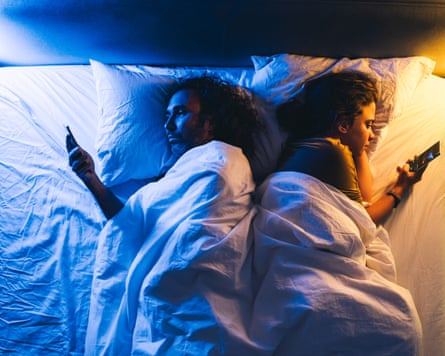
Online dating, scrolling on phones and spending less time being intimate in-person with others have all been blamed for the sex slump. But Prof Victoria Baines, a leading authority in the field of online trust, safety and cybersecurity at Gresham College, said this is a deceptively simple answer.
Not going out
She explained: “Simply blaming phones is too simplistic. A number of different factors may have contributed to a decline in offline sex, and it’s worth thinking back to how older generations encountered sexual partners to trace their influence. The first is the demise of the night-time economy, which historically provided young people with access to opportunistic sex, their inhibitions relaxed by alcohol. Research suggests that fewer young people are drinking alcohol, so that may introduce an additional barrier.”

A 25-year-old student who responded to the Guardian callout agreed. She said there has been a “culture shift compared with the 2000s, when going out, getting drunk and having one-night stands was the norm”. She said: “People are more likely to spend Friday and Saturday night going to the gym or seeing friends where you are less likely to meet someone you’re going to have sex with.”
The psychotherapist and matchmaker Sarah Louise Ryan said she had been asking her younger clients to tell her why they weren’t going on dates or having sex. She shared the details of a survey she conducted of her under-30 clients with the Guardian.
“My findings align with what I see in the therapy room,” she said. “On the whole, men said they fear rejection and so don’t pursue women emotionally and sexually unless they spot a signal that feels safe to lean into them. Women said they often feel that men don’t lead and assert themselves so they’d rather be at pilates than down the pub where they don’t feel desired and connected with men in their age range.”

Ryan has advised her clients to get off the dating apps and go into the “real world”, to join padel clubs, running and book groups to meet people in a less daunting environment.
Too stimulated to be … stimulated
There is a theory that people are not as bored as they used to be. With constant stimulation from streaming services and social media, they aren’t having sex just for the hell of it. This is somewhat backed up by an anomaly in one US-based study of the sex lives of its population.
While those on higher incomes were generally found to have more sex, people in rural areas had more intercourse than those in the cities, despite the fact there is an income disparity between those two groups.

Knight said: “I think we underestimate the role of boredom when it comes to sexual desire. Now every moment of downtime can be filled with scrolling, streaming, gaming or messaging, we can feel connected every second of the day without ever really being connected at all. Desire is usually the product of anticipation, imagination and attention, yet these are increasingly scarce commodities.”
Being too busy certainly featured in many answers to the Guardian’s callout. And this wasn’t confined to young people. One middle-aged man from Portsmouth said: “We’re tired. After a day of work, dinner and wrangling the kids to bed, all we have time and energy for is an episode or two of something on a streaming service before bed at 10pm and maybe seven hours’ sleep total if we’re lucky, before we do it all again tomorrow.”
Lockdown lag
Many are tired of talking about the Covid pandemic, but researchers say the long tail of the traumatic lockdowns has fragmented social lives and extinguished sex drives. Baines said: “During the lockdowns, people were prevented from socialising, and physical contact was potentially life threatening. Some began their university studies not with the customary risk-taking of freshers’ week, but confined to home or locked in their rooms. ‘Going out to get laid’ is arguably not the dominant trend it once was.”
The increasing prevalence of online pornography was mentioned by a large number of respondents. Many thought the extreme scenarios that have become so common in porn have put people off in-person sex. A 53-year-old respondent from Scotland said: “The widespread use of extreme porn has sex looking like an act of aggression rather than something to be enjoyed.”

It is important to know if people are having sex, Clifton said, as it raises so many questions about wellbeing, and how people live. She explained: “Sex is an important part of overall wellbeing for many people, and if we care about the wellbeing of our population then sex is part of that – even if interpreting those changes is complex and may raise questions we can’t yet fully answer.”
Perhaps a lack of libido is a symptom of a society where pressures are becoming unbearable. A 22-year-old from Newcastle said: “It’s hard to get a job at all – and when you do, the hours are often crazy. I’m a bartender and I only know my shifts a few days in advance, which makes planning difficult. The last person I tried dating ended things because she had three jobs and didn’t have the energy for a relationship as well. I’d really like to be able to pay my rent and buy groceries and have a partner. That’s kind of the dream.”
KioskNews shows a cleaned-up reading view extracted from the publisher’s page — the original always lives on their site, not ours.