Chinese J-10C fighter spotted carrying modified Russian-origin heavy-strike missile
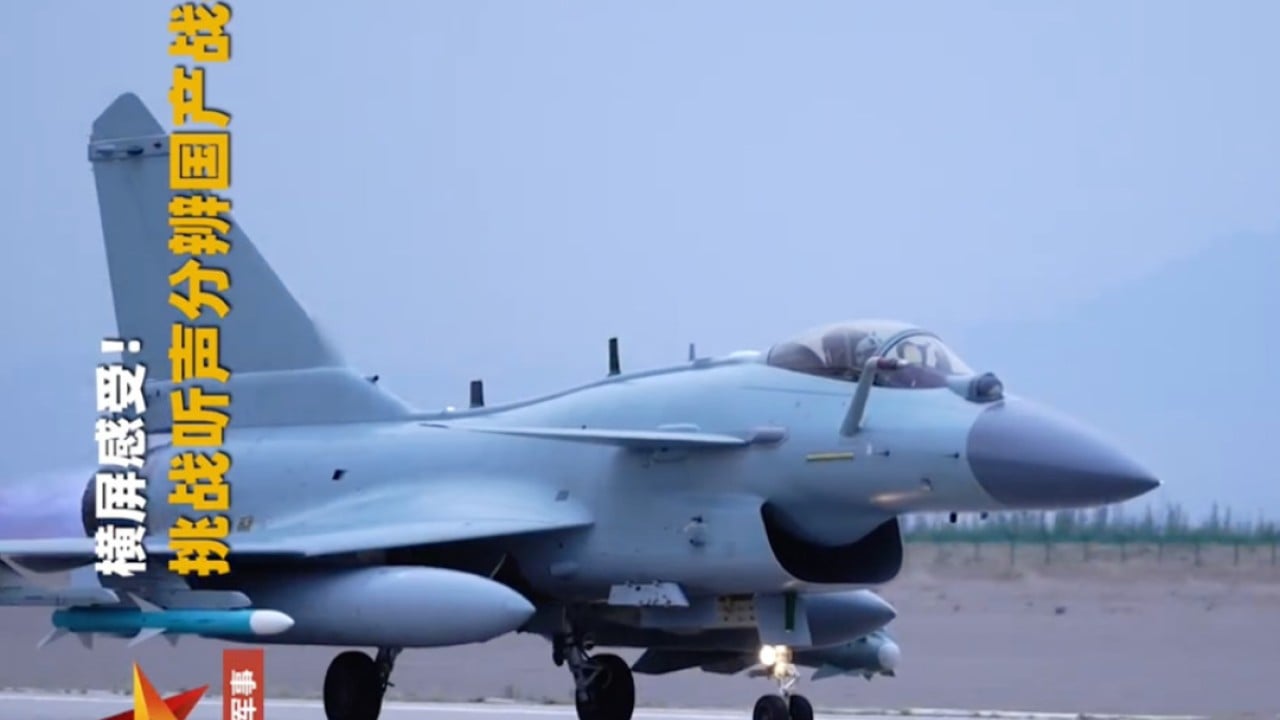
New state media footage has surfaced showing for the first time what appears to be a Chinese-modified variant of the Russian-origin Kh-29T air-to-surface missile mounted on a J-10C fighter jet.
State broadcaster CCTV’s social media account posted a video on Wednesday featuring Chinese fighters, showing the missile mounted under the 4.5-generation fighter as it took off, according to posts by Chinese military bloggers over the weekend.
China originally imported about 2,000 Kh-29T missiles alongside Su-30MKK multi-role strike fighters from Russia in the early 2000s, according to media reports at the time. The modified missile was previously spotted on a Chinese JH-7A fighter-bomber several years ago and on a J-16 fighter in May.
Weighing roughly 685kg (1,510lbs) and carrying a massive 320kg armour-piercing high-explosive warhead, the Kh-29T was originally designed for tactical precision strikes against hardened targets – such as bunkers, bridges, runways and surface ships – within a range of 10 to 30km (around 6 to 19 miles).
The Kh-29 entered service with the Soviet Air Forces in 1980 and has been widely exported since, but has been in limited operational use during the war in Ukraine, where it has been fired from Su-34 aircraft.
According to Chinese social media posts, the domestically modified missile mounted under the J-10C appears to feature an upgraded imaging infrared seeker rather than Russia’s original version. The South China Morning Post could not independently verify the missile’s modification details.
China’s J-10C fighter jet showcased at Singapore Airshow
Developed by the Chengdu Aircraft Corporation, the J-10 is a medium-weight, single-engine multi-role combat aircraft and is the People’s Liberation Army’s most numerous fighter family, with roughly 600 airframes in service.
The advanced J-10C variant carries out routine exercises, including patrols around Taiwan, and is widely viewed as a high-sortie workhorse in a potential Taiwan Strait conflict – capable of handling sustained air superiority, flying in mixed formations alongside J-20 and J-16 fighters, as well as carrying out follow-up strike missions once initial enemy air defences have been suppressed.
Beijing sees Taiwan as part of China to be reunited by force if necessary. Most countries, including the United States, do not recognise Taiwan as an independent state, but Washington is opposed to any attempt to take the self-governed island by force and is committed to supplying it with weapons.
Before the appearance of the modified Kh-29, the J-10C’s main powered land-attack munition was the KD-88 (Kongdi-88), a stand-off cruise missile with a reported operational range exceeding 200km. The fighter can also carry various air-to-air and anti-ship missiles.
While the KD-88’s longer range allows pilots to strike targets without penetrating heavily defended airspace – reducing exposure to enemy fighters and surface-to-air missiles – it is much more expensive per shot than the rocket-powered Kh-29.
Meanwhile, China’s J-10 platform has also drawn heightened international attention following reports that export-variant J-10CE fighters operated by Pakistan downed India’s French-made Rafale jets during the May 2025 border conflict.
KioskNews shows a cleaned-up reading view extracted from the publisher’s page — the original always lives on their site, not ours.