DOTr: Gov't to retain MRT-3 ownership, fare-setting authority under privatization plan
The Department of Transportation (DOTr) said Saturday that the government will retain ownership of the Metro Rail Transit Line 3 (MRT-3) and the authority to set fares under its proposed privatization plan.
In an interview with Super Radyo dzBB, DOTr Undersecretary Timothy John Batan said the proposed public-private partnership (PPP) would transfer only the railway’s operations and maintenance, along with investments for capacity expansion, to the winning private concessionaire.
“Pag sinasabi po natin na privatization ng MRT-3 ay hindi po natin ibinebenta ito pong asset. Hindi po natin ibinebenta o inililipat ang pagmamay-ari ng MRT-3 sa pribadong sektor, kung sino man po ang mananalo. Mananatili po ang pagmamay-ari ng MRT-3, mananatili po ang pagtatakda ng pasahe, ng service quality requirements, ng performance standards. Ito po ay mananatili sa kamay ng gobyerno,” Batan said.
(When we speak of privatizing MRT-3, we are not selling the asset or transferring its ownership to the private sector, whoever the winning bidder may be. Ownership of MRT-3, along with the authority to set fares, service quality requirements, and performance standards, will remain with the government.)
Batan said the government would also set performance standards for the private concessionaire and impose sanctions or penalties for noncompliance.
He stressed that the primary goal of the proposed privatization was to improve MRT-3 facilities and services, rather than generate revenue for the government.
“Ang pangunahing benepisyo po natin na… nilalayong makita dito sa proyekto na ito ay hindi po pinansyal. Hindi po tayo pumapasok sa proyekto na ito para po kumita ang gobyerno,” Batan said.
(The main benefit we aim to achieve through this project is not financial. We are not undertaking this project to generate profits for the government.)
“Pangunahin po nating layunin na maibigay ‘yung mataas na kalidad po ng serbisyo doon po sa ating mananakay. ‘Yan pong mataas na kalidad na serbisyo na ’yan ay una sa lahat, manggagaling sa capacity expansion,” he added.
(Our primary goal is to provide high-quality service to commuters. This will primarily be achieved through capacity expansion.)
The DOTr said the revenue-sharing arrangements for MRT-3 were still under review and undergoing approval by the Investment Coordination Committee and the Economic Development Council.
Batan, however, said the proposed arrangement would have fare revenues go directly to the government.
The agency assured commuters that the government would retain control over fares to keep them affordable, saying service improvements would be of little use if passengers could not afford to ride the trains.
Capacity expansion
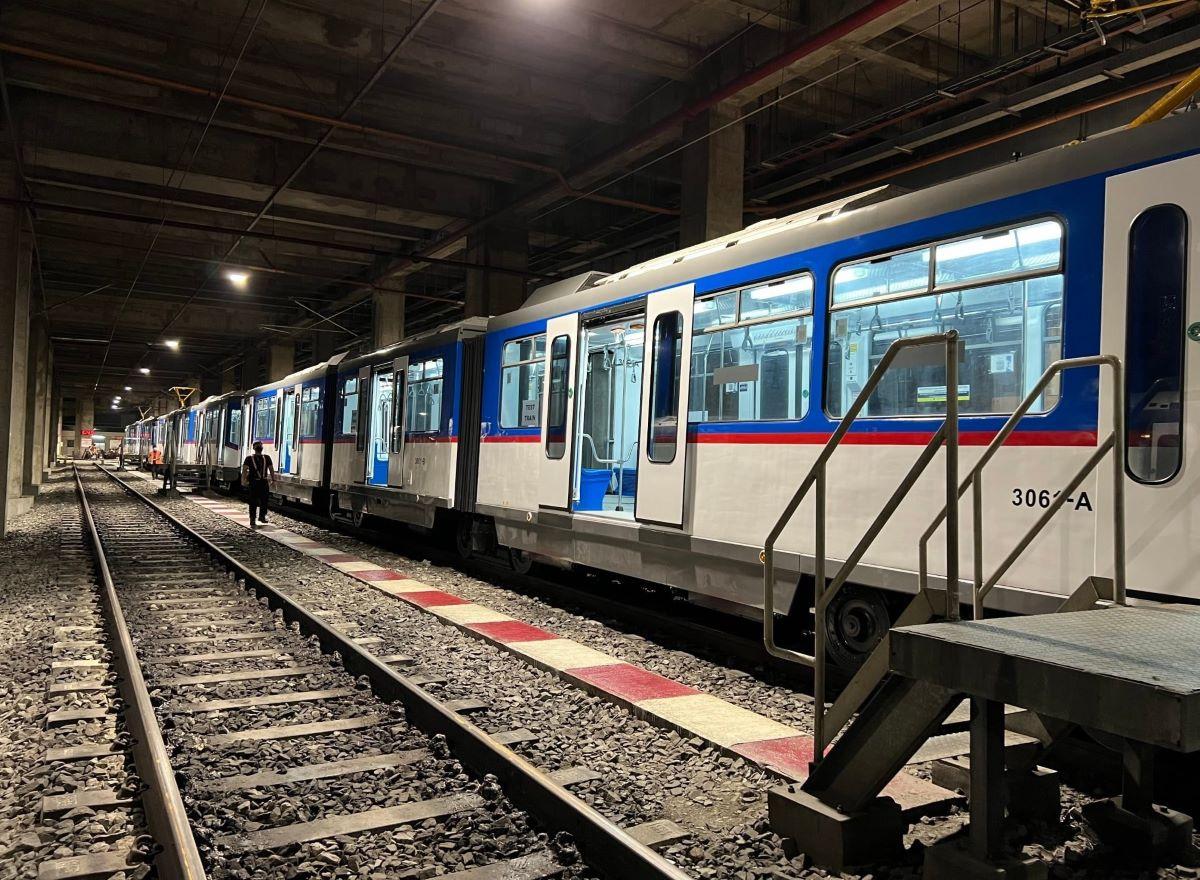
MRT-3 currently has a daily passenger capacity of 500,000, with trains operating in three-car configurations and a signaling system that allows intervals of about three and a half minutes between trains.
Under the proposed PPP, the DOTr aims to increase the line’s daily capacity to as many as one million passengers and reduce train intervals to two minutes.
Batan said technical studies were ongoing with the Asian Development Bank (ADB), the agency’s adviser, to determine whether MRT-3’s capacity could be increased to 800,000, 900,000, or even one million passengers daily.
“Ongoing po ‘yung teknikal na pag-aaral, kasama po ng ating adviser galing sa Asian Development Bank (ADB), kung ito pong kapasidad na nasa 500,000 a day ay maiaakyat po natin to 800,000 to 900,000 or even one million passengers a day,” he said.
(A technical study is underway with our adviser from the Asian Development Bank to determine whether the current capacity of 500,000 passengers a day can be increased to 800,000, 900,000, or even one million.)
Batan said the expansion would involve acquiring additional train cars to convert all trains to four-car configurations and upgrading the signaling system to reduce train intervals from three and a half minutes to two minutes.
The DOTr acknowledged that overcrowding at stations during peak hours underscored the need to replace aging train cars, upgrade signaling equipment, and reduce passenger waiting times.
Batan said tapping the private sector would allow the government to benefit from experienced railway operators and secure additional capital for the necessary investments.
The DOTr said it was finalizing the concession structure, in coordination with the ADB, including arrangements for recovering private investments.
Timeline
Batan said the current maintenance partnership between the government and Sumitomo Corporation for MRT-3 would end in December 2027.
Under the proposed PPP, operations and maintenance would be consolidated under a single private operator to establish a single point of responsibility.
The DOTr aims to finalize the PPP terms and secure the necessary approvals by December 2026, before proceeding with an open, solicited bidding process for prospective concessionaires.
The agency targets awarding the MRT-3 PPP concession contract by the third quarter of 2027. — VBL, GMA News
KioskNews shows a cleaned-up reading view extracted from the publisher’s page — the original always lives on their site, not ours.