From rifles to radar: China upgrades its African arms trade as Russia and the West retreat
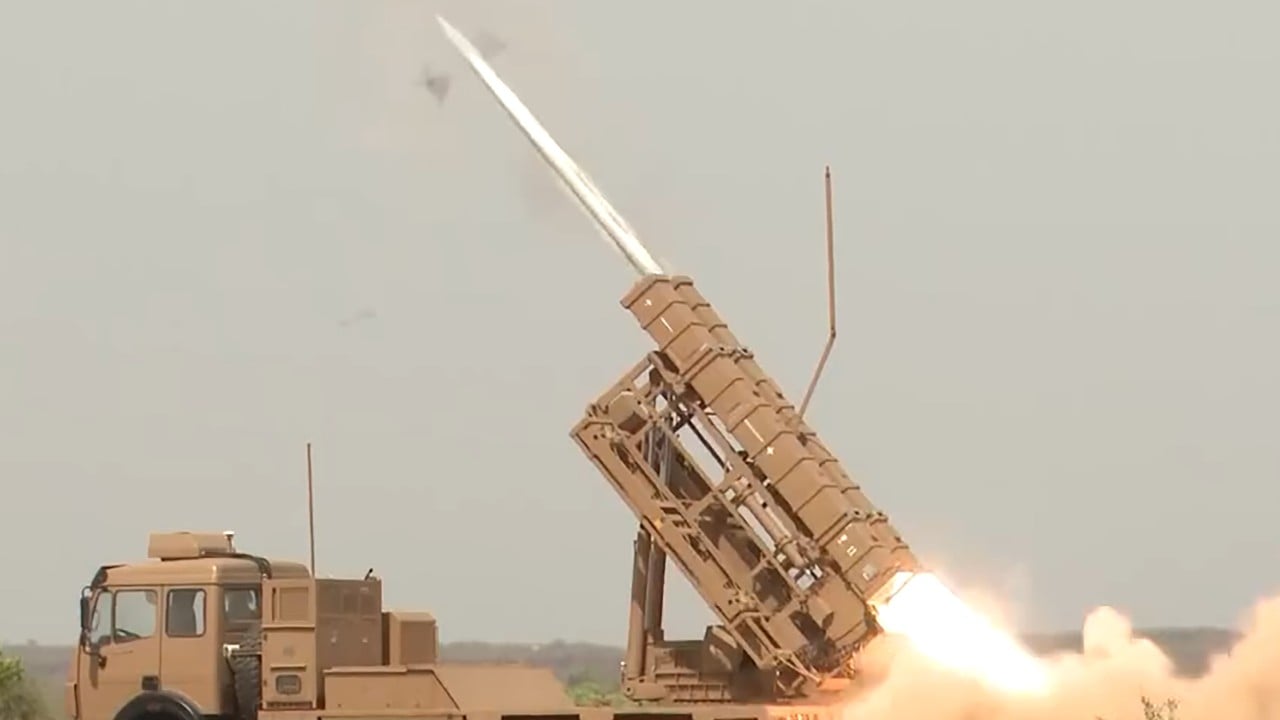
For decades, China has supplied African militaries with small arms and land-based equipment such as armoured vehicles, trucks and artillery.
Now, it is selling them more specialised weapons, including armed drones and electronic warfare systems.
Analysts noted that China’s African arms sales were shifting qualitatively to air-defence systems, armed drones and electronic warfare gear once dominated by Russia and the West.
In April, four vehicles identified by defence analysis group Janes as Chinese Yitian-L air-defence systems appeared in a Malian military convoy.
Five months later, Burkina Faso’s presidency released footage of a live-fire test and equipment inspection showing a mobile surveillance radar and surface-to-air missile launcher identified as a Chinese Sky Dragon variant made by China North Industries Group Corporation, or Norinco.
In 2024 and 2025, Burkina Faso received Chinese armoured vehicles and artillery, including VN22B fire-support vehicles, WZ-551 personnel carriers, WMA301 fire-support vehicles, SR5 rocket launchers and PLL-05 self-propelled gun-mortars.
The shift is particularly visible in the Sahel, where Mali and Burkina Faso ended defence cooperation with France and faced restrictions on US security assistance. The two African countries have since sought Russian military support and bought Chinese equipment as they fight insurgencies in the Sahel.
Elsewhere in Africa, Chinese-made drones, air-defence missiles and electronic warfare equipment have appeared in military inventories and displays. Ivory Coast displayed Wing Loong II armed drones in August after receiving them under a contract it signed with Chinese state-owned aerospace exporter Catic in June 2024.
According to Liselotte Odgaard, a senior fellow at the Hudson Institute, a Washington-based think tank, the capabilities that China is supplying have changed.
“The recent appearances of Chinese air-defence systems, armed drones and electronic warfare equipment across Africa suggest more than just an expanded catalogue,” Odgaard said.
“They indicate that China is increasingly supplying higher-end capabilities that were previously dominated by Russia, Western suppliers or obtained only by a handful of African states.”
Odgaard said Mali and Burkina Faso’s changing security partnerships influenced their arms purchases as they created opportunities for suppliers such as China, which had expanded its defence engagement in the Sahel while avoiding public criticism of local political developments.
David Shinn, a China-Africa specialist and former US ambassador to Burkina Faso and Ethiopia, said the quality of Chinese equipment had improved and that Beijing was willing to sell where many Western countries would not.
“Unlike many Western countries, China will sell military hardware to any country so long as it is not subject to UN sanctions,” Shinn added.
Odgaard said the sales put Chinese firms into integrated air defence, intelligence and surveillance, strike systems and electronic warfare. She surmised that armoured vehicles, trucks and artillery possibly accounted for most Chinese deliveries by volume.
However, the growing number of drone, missile, radar and electronic warfare sales suggested a qualitative shift towards more sophisticated systems, she added.
16:09
How China is reshaping its economic ties with Africa
“Rather than replacing traditional exports, advanced systems are increasingly complementing them and raising the technological level of China’s defence relationship with African states.”
Norinco, one of China’s largest state-owned defence contractors, supplies many of the land-based systems. It has opened a regional office in Dakar, Senegal, and established a joint service centre in Nigeria’s Bauchi state for repairs, spare parts and technical support.
Odgaard said the appeal of Chinese equipment extended beyond pricing.
“China has also become a major supplier of armed drones because many African states cannot easily obtain equivalent systems from the US or Europe,” she said. “Chinese manufacturers offer a broad package, including training, maintenance, financing and increasingly sophisticated technologies.”
Katarina Djokic, a researcher with the arms transfers programme at the Stockholm International Peace Research Institute (SIPRI), called China an important supplier of major arms to African states, but said the Swedish think tank’s estimates of those transfers were too small to significantly affect China’s overall major-arms exports.
“An important factor that makes African states buy Chinese arms is the price, including maintenance costs,” Djokic added. “There are states with good relations with Western states which still acquire major arms from China.”
Historically, Russia has led deliveries of major arms to Africa, according to SIPRI, which tracks international weapons transfers.
Shinn said China had replaced Russia as the largest supplier to sub-Saharan Africa, while the Kremlin’s need for equipment in Ukraine had limited what it could supply to African customers.
Beijing and Moscow competed in Africa’s arms market but cooperated on security elsewhere, he added.
“This makes Beijing a natural replacement for supplying equipment in places like Mali and Burkina Faso where the Africa Corps operates, but Moscow is constrained because of equipment requirements in Ukraine.”
KioskNews shows a cleaned-up reading view extracted from the publisher’s page — the original always lives on their site, not ours.