Parched fields, early exodus: Maharashtra drought’s first signs reveal desperate move for survival
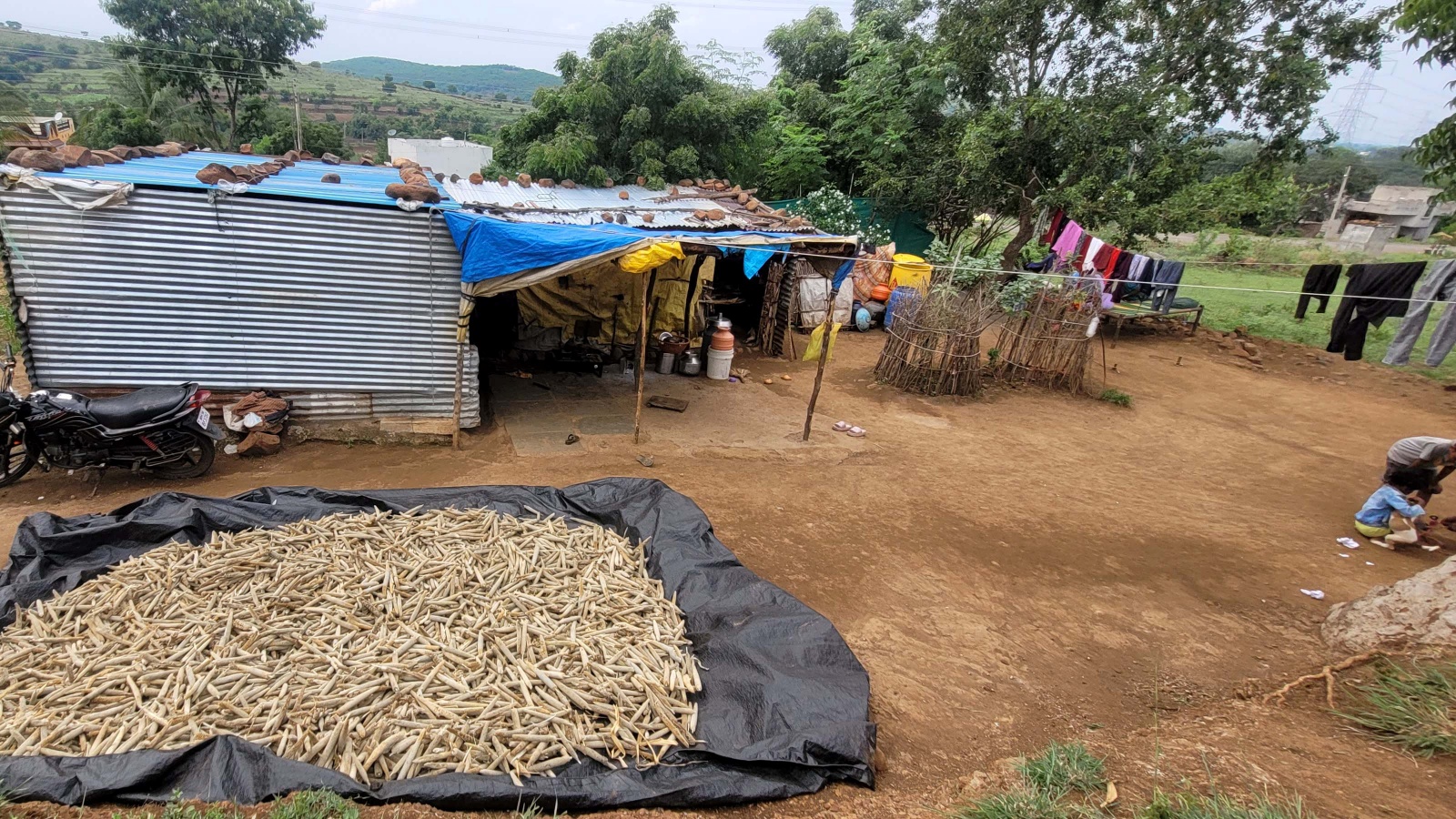
The impact of Maharashtra’s drought is showing up not just in parched fields but in an early exodus of sugarcane workers, with families from drought-hit Beed, Dhule and Nandurbar leaving their villages weeks before the usual cane-cutting season, after their kharif crops failed.
The workers are mostly small farmers and landless labourers who migrate every year to sugar factories in western Maharashtra and Karnataka to cut and load cane. While the migration usually begins after Dussehra, once farmers have harvested their own crops, this year many have left as early as August and September after being left with little or no farm work or income.
The state government has declared drought in 265 of Maharashtra’s 358 talukas across 32 districts. In parts of Marathwada and northern Maharashtra, the failure of the kharif crop has meant families dependent on small farms and agricultural labour have begun looking elsewhere for income even before the farm season is over. Some have travelled farther than usual, including to Tamil Nadu.
In Beed, where rainfall remained absent for much of August and September, families with small landholdings began leaving after realising there would be little work available on other farms.
For Jyoti Thorat, a resident of Kathoda in Beed, six members of her family left for Tamil Nadu by the end of August, their first such migration to the state after a mukadam, or labour contractor, told them work was available at sugar factories there.
“There was no yield from our bajra crop. With no source of income to survive here, my sister-in-law went to Tamil Nadu with her husband, their two sons and daughter-in-law, and her one-year-old baby. The child could not be left behind without the mother so she had to be taken too. We have spoken on the phone a few times and they told us that the weather is harsh and they are facing many difficulties,” said Thorat, who has herself travelled for sugarcane-cutting work in the past.
The drought has also pushed the family into debt even before the migration began. Their two-acre bajra crop failed, forcing them to take an advance from the mukadam to buy bajra from the market, as well as groceries, medicines and clothes. The family is expected to remain at the sugar factory until March.
Story continues below this ad
In Dhule and Nandurbar, too, workers began leaving in the first week of September for sugar factories in western Maharashtra.
“We left earlier this month with about 60-70 persons for Baramati. There was no work because the crop was destroyed. Some have taken advance loans and will work at karkhanas (factories) until Holi before they return home. Depending on the loan taken, most are paid around Rs 70,000 as a total amount or according to the tonnes they cut and load,” said a mukadam who accompanied farmers from Pangan village in Dhule.
The cane-cutting system is built around seasonal migration. Workers are typically hired through mukadams, who provide advances before the season and arrange their travel and work at sugar factories. At the factories, workers spend seven to eight hours cutting sugarcane and several more hours loading it onto trucks. Under the “koyta” system, a couple is treated as one unit and is paid around Rs 366 per tonne of sugarcane cut.
For families whose own crops have failed, the advance from the mukadam can provide immediate cash for food and other essentials, but also ties them to work at the sugar factory for the season.
Story continues below this ad
The early migration comes against the backdrop of longstanding concerns over the conditions of sugarcane workers. In 2023, the Bombay High Court took suo motu cognisance of a report on their condition and noted that 10 to 12 lakh workers migrate from drought-prone areas, including Marathwada, for sugarcane work.
The court had recorded concerns over the lack of drinking water, sanitation and other basic facilities for workers, as well as the risk of bonded labour.
When the matter was last heard in March 2025, the state had agreed to suggestions made by amicus curiae Mihir Desai, based on a report by advocates Devyani Kulkarni and Rishika Agarwal. These included better housing, regular health check-ups, creches for infants and continuing the education of children accompanying their parents.
Jivan Rathod, who had filed an intervention plea in the case, said most of the recommendations had not been implemented by sugar factories and that their compliance was not being adequately verified by state authorities.
Story continues below this ad
“The most basic aspects of housing, clean water, and sanitation facilities are also not being adhered to. Now, most of those who are migrating for work are facing acute financial distress because of the drought. There should be stricter compliance by the government regarding their condition but it is not being done,” Rathod said.
One of the recommendations in the case was registration of workers migrating for employment. However, district authorities in Marathwada said they had so far received no reports of migration. Officials also said employment would be made available to those facing distress through the Viksit Bharat–Guarantee for Rozgar and Ajeevika Mission (Gramin) (VB–G RAM G).
Farmers and labourers, however, said work under the scheme had not been forthcoming even as the rains failed.
“The work at a sugar factory is backbreaking. Women have to carry 30-40 kgs of the cut sugarcane on their heads to load and unload them on trucks each time. Why would someone prefer to stay away from their homes in such conditions if work guaranteeing minimum wages were available here? The early distressed migration makes bargaining for their rights even more difficult in such conditions. Failing to account for and provide them employment is a political and administrative failure,” said Manisha Tokle of the Mahila Ustod Sanghtana and a women’s rights activist.
KioskNews shows a cleaned-up reading view extracted from the publisher’s page — the original always lives on their site, not ours.