Bessent urges US, China to ‘de-risk, not decouple’ as Xie points to ‘red lines’
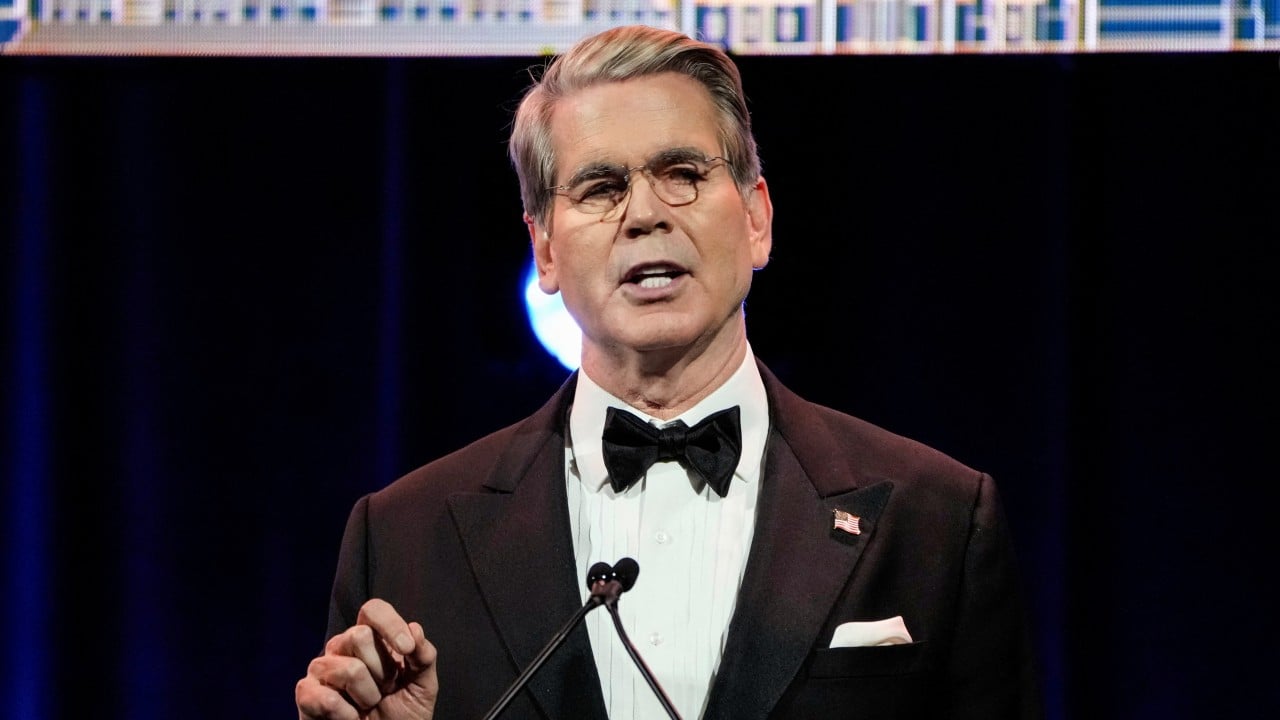
US Treasury Secretary Scott Bessent called for a more balanced trade relationship with China, with the objective to “de-risk, not decouple”, as Chinese ambassador Xie Feng spoke of adhering to “red lines” at an event in New York on Tuesday.
“Trade must advance the interests of both parties without diminishing the sovereignty of either,” said Bessent, while emphasising that US-China ties were defined by the relationship between their leaders, who are due to meet next week for a summit.
“That friendship has brought unprecedented direct engagement between the leaders of our two nations, which I try to extend to the working level,” he added.
During their speeches at the National Committee on US-China Relations 60th anniversary gala dinner in Manhattan, Bessent and Xie addressed economic ties and the future of bilateral relations, with both sides emphasising the need for reciprocity.
“While we should not underestimate the challenges facing this relationship, nor should we give up the courage to forge ahead,” Xie said.
“We need to adhere to the red lines with respect, engage in a race to the top under the principle of fairness, and promote mutual benefit in the spirit of reciprocity.”
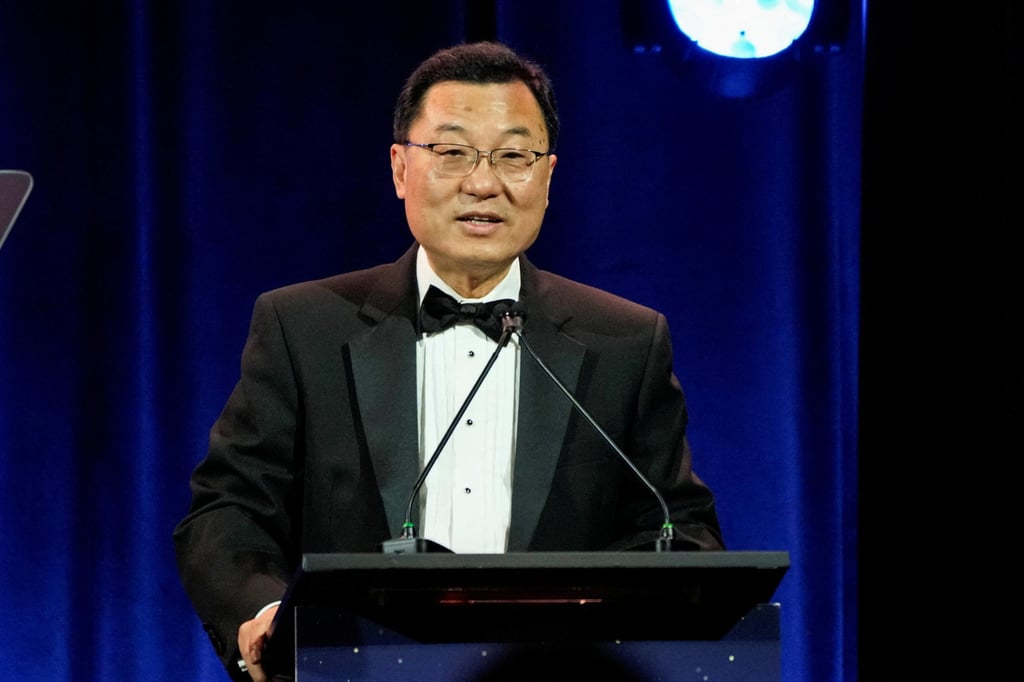
Their remarks come a week before Chinese President Xi Jinping and his US counterpart Donald Trump are due to meet for the third time this year during the Asia-Pacific Economic Cooperation (Apec) forum in Shenzhen, following reciprocal state visits in May and September.
Groundwork for the summit was laid last week during a video call between Bessent, US Trade Representative Jamieson Greer and Chinese Vice-Premier He Lifeng.
“Secretary Bessent emphasised the importance of China fully and immediately implementing its commitments made in Busan and raised concerns about recent Chinese actions,” the US Treasury Department said in a post-meeting readout.
“He underscored that continued progress depends on concrete results and that the United States will closely assess China’s implementation of the arrangement.”
As Xi landed in the US in September, Bessent announced Washington and Beijing had agreed to extend the trade agreement reached in South Korea by two months from November 10, 2026, to January 10, 2027.
The announcement followed two unscheduled meetings between Bessent and He at the World Bank headquarters in Washington and JPMorgan’s offices in New York.
China’s Xi arrives at White House for summit with US President Trump
“The United States must produce more of what we consume, while China must consume more of what it produces,” Bessent said on Tuesday.
SCMP Plus is a new premium news platform that gives you an
all-inclusive edge to stay ahead on China news.
To access our exclusive content you’ll need to subscribe.
Already a subscriber?
LOG IN
Trump and Xi are scheduled to meet again next month on the sidelines of the Group of 20 (G20) summit in Miami for an unprecedented fourth bilateral meeting in a single year.
“These meetings are historic in their frequency,” Bessent said. “Never before have our leaders engaged face-to-face so often in a single year. But more significant is the understanding they are helping to establish.”
Elsewhere in the speech, he addressed the two countries’ artificial intelligence (AI) competition as both the US and China race to lead the world in the technology.
“Finally, we are establishing a direct channel to ensure that either nation can promptly alert the other to serious incidents involving its SI models,” said Bessent. Trump has pushed to rebrand AI as superintelligence (SI).
“As I stated earlier, our interests will not always coincide. And our approach to every challenge, likewise, will not always converge.”
KioskNews shows a cleaned-up reading view extracted from the publisher’s page — the original always lives on their site, not ours.