How Iran made the Houthis into such a problem
Yemen's Houthi rebels have morphed over the last decade from being a little-known group in northwest Yemen, to Iran's most potent ally in the region and a central opponent of the United States and its allies across the Middle East.
While Iran's other proxy forces have been depleted in recent years, the Houthis have taken center stage in the Middle East, offering yet another example of how a smaller, guerrilla-style force that's dug in on the ground can cause asymmetric damage through hard-to-repel aerial attacks.
In support of their Iranian benefactors, the Houthis launched initial attacks on Israel not long after the U.S. joined the Jewish state in strikes across Iran on Feb. 28, sparking the ongoing conflict in the Middle East.
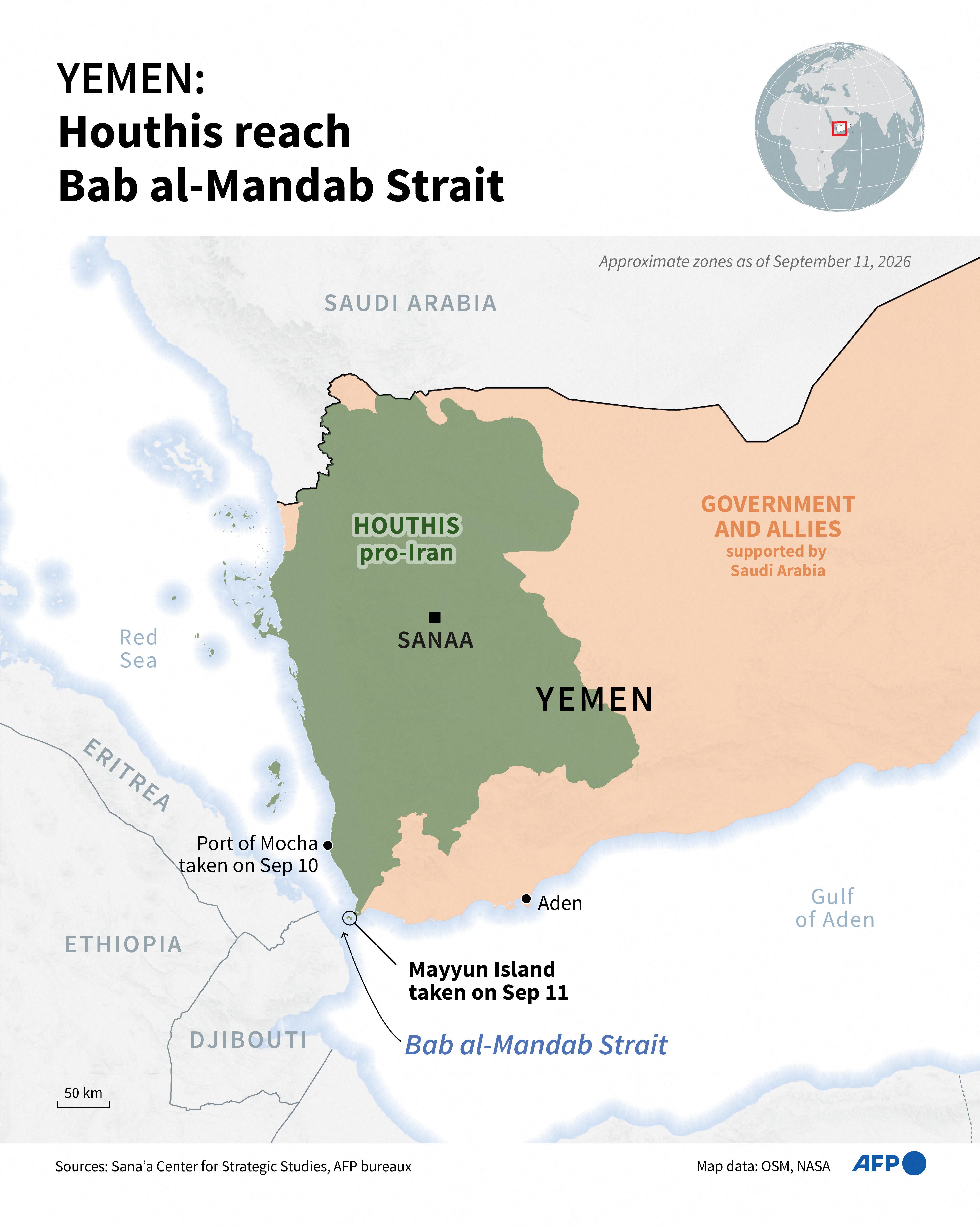
Saudi Arabia, one of the world's richest nations and a key American ally, is now bearing the brunt of the Houthis' attacks, which have killed at least 20 people at Saudi airports over the last week. Along with other allied groups, the militants have also attacked Saudi oil infrastructure, helping drive up global energy prices by threatening the Bab el-Mandeb Strait, which, like the Strait of Hormuz, is a key maritime chokepoint for oil and gas shipments.
The Saudis have asked the U.S. to join its military operations against the Houthis, and President Trump, who initially rejected the request, said over the weekend that he's considering it.
Iran's "most powerful proxy"
The Houthis are backed financially and militarily by Iran, officials from the U.S. and Israel, as well as many regional analysts, have said for years.
They were once a relatively marginal group within what Iran calls its Axis of Resistance — a loose alliance of anti-Israel, anti-U.S. militant groups that includes Hamas in Gaza and Hezbollah in Lebanon. Both of those U.S.-designated terrorist organizations have been severely weakened by Israeli operations launched in the wake of the Hamas-led attack on Oct. 7, 2023.
The Houthis joined Hamas and Hezbollah's attacks on Israel and became the target of an Israeli counteroffensive, as well as military operations by the Biden and Trump administrations. But unlike Hamas and Hezbollah, the group has rebounded and emerged better armed, battle-hardened and confident.
"The Houthis are the most powerful proxy within the Iranian network, hands down," said Mohammed Al-Basha, founder of the Basha Report, a U.S.-based risk advisory group. "Any U.S. military strategy planning a campaign on Iran will have to take into consideration what the Houthis will do next."
After the 2023 attack on Israel, with help from Iran, the group really started gaining capacity and momentum.
"Before Oct. 7, we didn't see them getting the newest equipment from Iran. After Oct. 7, they got the best," al-Basha told CBS News, adding that Tehran not only armed the Houthis, but also helped the group hone its skills in penetrating air defenses.
The Houthis started adopting new tactics, including targeting Israel with layered attacks using drones, cruise missiles and then ballistic missiles to overwhelm the country's significant defenses.
Now the Houthis are using the same tactics against Saudi Arabia.
In the age of asymmetric warfare, the group has also used Yemen's ranking as one of the poorest countries in the world as something of a strategic advantage: They rely on a strongly ideological support base willing to suffer economic pain and isolation if the tradeoff is inflicting great damage to the Saudis and the global economy, said Yoel Guzansky, a senior research fellow focused on Persian Gulf politics and security at the Institute for National Security Studies.
"All you need is a not very sophisticated surface-to-surface missile to strike Riyadh airport. They can assemble those in small factories in the mountains," Guzansky said.
What do the Houthis want?
Houthi military spokesman Brig. Gen. Yahya Saree said recently that the group's attacks on Saudi Arabia are in response to a "brutal Saudi aggression against our country and our people."
But al-Basha said the Houthis' real objectives are not retaliation, but power and recognition.
They want to seize control of all of Yemen, and to get the Saudis to both recognize their legitimacy, and help bankroll their expansion, he said, which is why he believes they have coupled their campaign inside Yemen with the attacks on Saudi Arabia.
The Houthis' Iran-powered evolution
The Houthi movement grew out of the Zaydi Shiite Muslim sect, which has roots that date back centuries in northern Yemen. They are a minority in the country, which is predominantly Sunni Muslim, but the number of Zaydis is significant, representing as much as a third of Yemen's overall population.
The Houthi movement originally emerged as an effort to protect Zaydi culture within Yemen, but it evolved into a group that has as its slogan: "Allah is the Greatest; Death to America; Death to Israel; A Curse upon the Jews; Victory to Islam."
Analysts estimate that the armed Houthi force consists of hundreds of thousands of combat-ready fighters. The group itself claims to have trained more than a million militants.
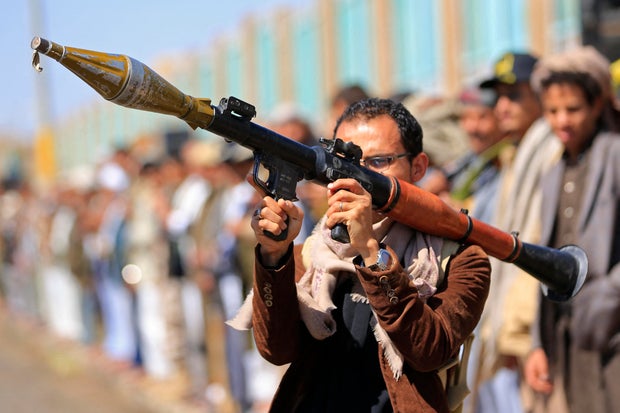
Their march to real power began in 2012, when the then-much-smaller group, consisting of thousands of fighters, capitalized on unrest in Yemen following the Arab Spring ouster of longtime authoritarian President Ali Abdullah Saleh to build a loyal following in the north of the country.
In 2014, they seized the capital Sanaa, sparking a civil war with the Western- and Saudi-backed government. The government was forced to relocate to the southern port city of Aden, where it is still based, and it has also retained control of the less-populated eastern portion of the country.
The Houthis quickly took control of key state military and civilian powers, including missile brigades and special forces, and the ability to levy taxes, explained al-Basha.
The group survived a first round of fighting with the Saudi-led military coalition from 2015 until 2022. During that time, military advisers from Hezbollah and Iran helped train Houthi commanders and combatants — and built up the group's ability to manufacture its own weapons, including drones and missiles, according to analysts.
The Houthis may also be using AI software to fine-tune their weapons. U.S. tech firm Anthropic released a report in September saying it had identified "threat actors" based in northern Yemen using their Claude Code software "in place of human software engineers to develop the guidance, navigation, and control (GNC) software that steers and stabilizes a flying vehicle."
The weapons the unnamed actors were attempting to develop included guided rockets and multi-stage ballistic missiles, according to Anthropic, which said it did not have evidence of the actors successfully fielding an operational device.
While they can produce some of their own weapons, however, Fabian Hinz, a weapons analyst with the International Institute for Strategic Studies, wrote last year that the Houthis "remain dependent on Iran for key technologies and advanced capabilities. While Tehran's support has, in some areas, evolved from the direct provision of complete systems to enabling localized manufacturing, it remains a critical enabler of Houthi military activity."
But it is not a one-sided relationship.
"With Hamas and Hezbollah severely weakened, the Houthis have become an increasingly indispensable pillar of Iran's regional strategy, providing Tehran with a relatively resilient and cost-effective means of threatening Saudi Arabia, Israel, and international shipping while projecting power far beyond Yemen," Guzansky told CBS News. "Their strategic value to Iran has arguably never been greater, even if the Houthis retain considerable autonomy in their decision-making."
Yemen's devastating war
Situated at the southern end of the Arabian Peninsula, the Houthis are geographically isolated from any outside ground force, with the exception of the Saudis, who don't have the manpower to take on such a well-entrenched enemy, analysts say.
Domestically, in Yemen's vicious civil war, the well-coordinated group faces opposing forces that, while largely aligned with the Saudi-backed government, are themselves divided and operating under separate command structures.
Since Yemen descended into war in 2015, the United Nations estimates that some 377,000 people have died, more than half due to indirect causes such as starvation and disease amid the fighting.
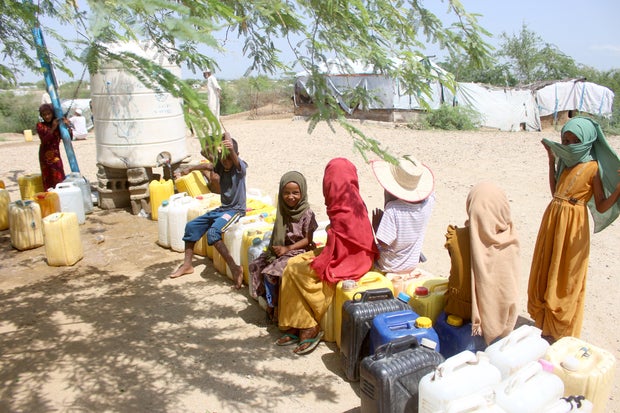
More than 201,210 people have fled from their homes, according to data from the United Nations' International Organization for Migration, including more than 3,700 who have fled by sea to Djibouti.
According to figures published by the World Health Organization last week, Yemen's Ministry of Health and Population had reported 959 deaths and 4,207 injuries attributed directly to the fighting across 10 provinces between the beginning of September and Oct. 2.
The Houthi-run Ministry of Health said Tuesday the death toll from the recent escalation of fighting, during the same period, stood at 107, with 278 more wounded.
In:
KioskNews shows a cleaned-up reading view extracted from the publisher’s page — the original always lives on their site, not ours.