Every Hunger Games Book, Ranked

It's been nearly two decades since Suzanne Collins introduced readers to the dark world of Panem, but The Hunger Games remains one of the most influential young adult book series of its generation. What began as a gripping dystopian thriller about a teenager fighting to survive a televised death match has since grown into a much bigger story about political oppression, propaganda, class inequality, and the cost of standing up to an authoritarian regime. Sure, it might seem like a ridiculously heavy read, but with over 100 million copies sold worldwide and every book receiving a film adaptation—it's clearly made a significant impact on the world.
What makes things even more interesting is that The Hunger Games is a unique book series that has not one bad one in the bunch, just varying degrees of success as each brings something different to the table. So whether you're binging them for the first time or embarking on a re-read in preparation for the highly anticipated release of Sunrise on the Reaping, here are our rankings of the books themselves—all of which should be read ten times over.
5 'Mockingjay' (2010)
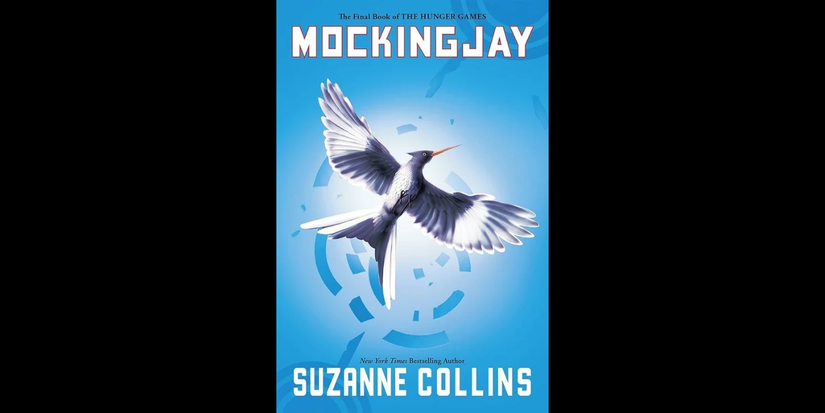
Mockingjay picks up after Catching Fire's explosive (and cliffhanger) conclusion with Katniss extracted from the arena and District 12 obliterated. Indirectly addressing Katniss's PTSD from both rounds of the Games, in addition to depression, flashbacks, and nightmares, Mockingjay is the darkest and most "adult" book in the series by far. The tone is incredibly grim (especially given some of the book's big deaths), which makes it a heavy read, but Collins succeeds in making it ring true to the series' characters as Katniss, Peeta, and Gale incite a rebellion against the Capitol.
Despite being the only book in the series not to feature the annual Hunger Games, Mockingjay still manages to amp up the action. In fact, it's one of the book's high points. The rebellion's plans, tactics, and combat as they fight their way through the battle zone-like streets of the Capitol is incredibly thrilling and reads like an adrenaline-fueled war movie. It's also a testament to the story that Collins manages to keep the series' mythology fresh by introducing the "destroyed" District 13 and the mysteries surrounding it. – Ricky Ruszin
4 'The Ballad of Songbirds and Snakes' (2020)
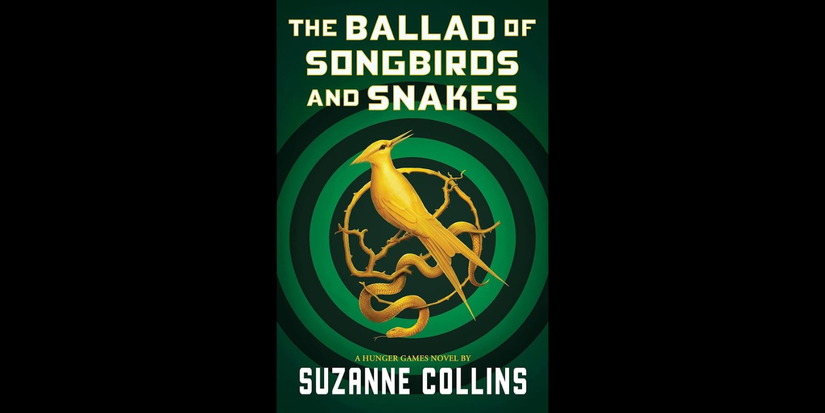
Surprising readers 10 years after the release of Mockingjay, The Ballad of Songbirds and Snakes takes a rather different approach to the Hunger Games universe by putting a young Coriolanus Snow at the center of the story. Decades before he becomes Panem's tyrannical president, Coriolanus is an ambitious student of the Capitol, desperate to restore his family's forming standing. His final assignment is to mentor Lucy Gray Baird, a tribute from District 12, an opportunity that allows him to prove himself and his skills—while also forcing him to confront the ugly machinery that keeps his privileged world running.
There's something deliciously unsettling about watching Snow's rise from the inside. For one, it's a risky move, trying to make readers care about the villain we've grown to despise. But Collins doesn't offer an easy explanation for his cruelty, nor does she ever let him off the hook. Instead, she gives us a protagonist whose charm and ambition make his growing appetite for power all the more disturbing. Lucy Gray is a standout, too, bringing a theatrical flair and rebellious spirit that make her a fascinating parallel to Katniss. Better still, this prequel adds an interesting layer to the franchise by finally revealing how the Games gradually turned into the glossy, carefully orchestrated spectacle we know from the original trilogy. So, while it may lag and lack the same emotional punch as its successor stories, Ballad of Songbird and Snakes shines as a compelling study of power and the making of a monster. – Jessica Nobleza
3 'Sunrise on the Reaping' (2025)
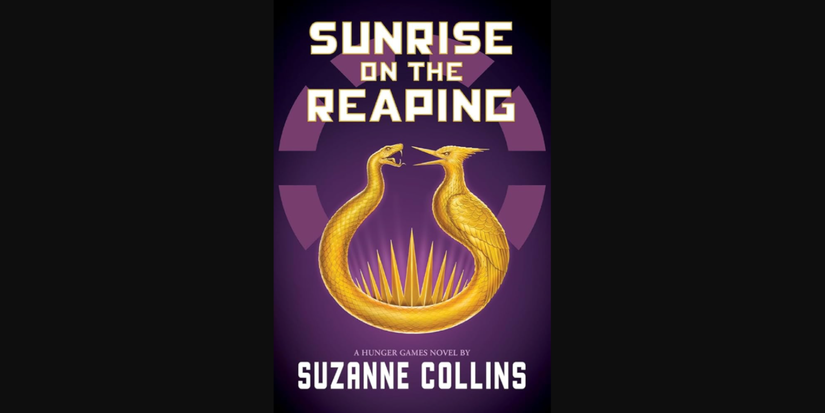
Set 24 years before Katniss Everdeen's story, Sunrise on the Reaping takes readers back to the morning of the 50th Hunger Games. And as the Second Quarter Quell, this year sees the Capitol doubling the number of tributes being sent into the arena. Among them is 16-year-old Haymitch Abernathy, whose plans for a future are completely shattered. But upon arriving at the Capitol, Haymitch isn't simply interested in surviving. After witnessing and experiencing the cruelty firsthand, he immediately begins looking for ways to fight back, even if that means joining a plot to undermine the Games from within.
While fans have long begged for a Haymitch-centered story, this book has become even more important as it clearly shows how the flame of rebellion was lit long before the Girl on Fire appeared. Sure, he's no polished revolutionary, but Haymitch was compelling right from the start. Far removed from the cynical, alcohol-dependent mentor we have come to know, he's a sharp and resourceful young man who firmly believes in his ability to make a difference. And his close relationship with his family and long-love, Lenore Dove, even gives him something personal to fight for. Sadly, the tragedies he (and other familiar faces) eventually experience becomes a brutal reminder of the dangers of defiance. More than a nostalgic return to Panem, Sunrise on the Reaping is ultimately a story that honors the sacrifices and acts of resistance that quietly pave the way for a revolution. – Jessica Nobleza
COLLIDERInteractive
Long-range scan active
Movies/Science Fiction/Survival Assessment
Collider Survival Assessment
Which Sci-Fi World
Would You Survive?
8 questions · 5 worlds · one honest verdict
Five of the great screen futures, and not one of them is built for comfort. Answer eight questions about instinct, loyalty and the line you would cross, and the scan will tell you which one you would still be standing in. Worlds in range
▦︎The Matrix
◈︎Mad Max
◑︎Blade Runner
▲︎Dune
✦︎Star Wars
Signal lock01 / 08
Question 01 of 08INSTINCT
The world as you know it ends overnight. What is your first move? No wrong answer. There is a wrong hesitation.
Keys 1 to 5 or A to E · Enter to advance
Signal lock02 / 08
Question 02 of 08RESOURCE
You can stockpile exactly one thing. What is it? Choose carefully. You are not getting a second run.
Keys 1 to 5 or A to E · Enter to advance
Signal lock03 / 08
Question 03 of 08THREAT
Which kind of enemy scares you the most? Be honest about what keeps you up.
Keys 1 to 5 or A to E · Enter to advance
Signal lock04 / 08
Question 04 of 08AUTHORITY
How do you handle the people in charge? Every world has them. Even the ones that pretend otherwise.
Keys 1 to 5 or A to E · Enter to advance
Signal lock05 / 08
Question 05 of 08ENVIRONMENT
Pick the place you would rather wake up in: You will be there a while.
Keys 1 to 5 or A to E · Enter to advance
Signal lock06 / 08
Question 06 of 08ALLIANCE
Who do you want standing next to you? Pick one. You only get one.
Keys 1 to 5 or A to E · Enter to advance
Signal lock07 / 08
Question 07 of 08MORALITY
Which line would you cross to survive? Everybody crosses one.
Keys 1 to 5 or A to E · Enter to advance
Signal lock08 / 08
Question 08 of 08PURPOSE
What are you really fighting for? Last question. Make it count.
Keys 1 to 5 or A to E · Enter to advance
Scan completeYou would survive
▦︎ The Matrix The Resistance, Zion You take the red pill, you stay in Wonderland, and I show you how deep the rabbit hole goes.
You would survive The Matrix because you were never fully sold on the version of reality you were handed. You notice the seams. You ask the second question. In a world built to keep people comfortable and incurious, that instinct is the whole fight, and it is why Morpheus would have found you long before you found him. From the Collider file
- The Wachowskis' 1999 film won four Academy Awards, including Visual Effects and Film Editing.
- Bullet time was shot with a rig of roughly 120 still cameras firing in sequence around the actors.
- Keanu Reeves trained in martial arts for about four months before a frame was shot, recovering from neck surgery the whole time.
- It opened the same year as Fight Club and eXistenZ, in a run of films about not trusting the world in front of you.
Red pill energy Pattern spotter Built to question
◈︎ Mad Max The Wasteland Oh, what a day. What a lovely day.
You would survive the Wasteland because you do not waste energy mourning the world that ended. You move, you improvise, and you are very good with whatever is bolted to the thing in front of you. Furiosa would let you drive. That is not a compliment anybody earns easily. From the Collider file
- Mad Max: Fury Road won six Academy Awards in 2016, more than any other film that year.
- George Miller storyboarded the entire film as roughly 3,500 panels before there was a script.
- The chase was shot almost entirely practical in the Namib Desert, with real vehicles and real stunt performers.
- Anya Taylor-Joy and Chris Hemsworth carried the prequel, Furiosa: A Mad Max Saga, in 2024.
Keeps moving Improviser Good with engines
◑︎ Blade Runner Los Angeles, 2049 All those moments will be lost in time, like tears in rain.
You would survive 2049 because you know how to be small in a very loud city. You keep your head down, you do the job, and you hold onto one private thing that belongs only to you. That quiet stubbornness is exactly what both Deckard and K run on, and it is what keeps either of them going when the case stops making sense. From the Collider file
- Blade Runner 2049 won Roger Deakins his first Oscar for cinematography, on his fourteenth nomination.
- The film also took Best Visual Effects, 35 years after Ridley Scott's 1982 original.
- Villeneuve shot it on large-format film and kept the fog and rain practical on set wherever he could.
- Three short films by Luke Scott and Shinichiro Watanabe bridge the 30-year gap between the two movies.
Keeps her head down Private Noir soul
▲︎ Dune Arrakis Fear is the mind-killer. Fear is the little-death that brings total obliteration.
You would survive Arrakis because you think in decades while everyone around you thinks in weeks. You read the room, you learn the customs, you wait. The desert does not reward speed. It rewards people who understand that patience is a weapon, which is the one lesson the Fremen never had to be taught. From the Collider file
- Denis Villeneuve's Dune won six Academy Awards in 2022, including Cinematography and Original Score.
- Hans Zimmer turned down Christopher Nolan's Tenet so he could score Dune instead.
- Dune: Part Two arrived in 2024 and brought in Austin Butler, Florence Pugh and Christopher Walken.
- David Lynch's 1984 version and Alejandro Jodorowsky's unmade one are both their own legends by now.
Plays the long game Reads the room Patient
✦︎ Star Wars A Galaxy Far, Far Away Rebellions are built on hope.
You would survive the galaxy because you never try to survive it alone. You collect people. You end up in the middle of other folks' problems and you stay anyway. Every version of this story, from the Falcon's crew to the Ghost's, runs on somebody exactly like that holding the group together. From the Collider file
- The 1977 original won six Academy Awards plus a special achievement award for sound effects.
- John Williams' score was recorded by the London Symphony Orchestra and became the best-selling symphonic film soundtrack ever.
- Andor took the galaxy somewhere colder and earned Emmy nominations for drama series in both seasons.
- The saga now runs across eleven feature films and a growing shelf of series on Disney+.
Collects people Shows up Hope merchant
Compatibility readout · top three
1
2
3
Copied to your clipboard
Scan filed byCOLLIDERCollider.com · The Sci-Fi Desk
2 'The Hunger Games' (2008)
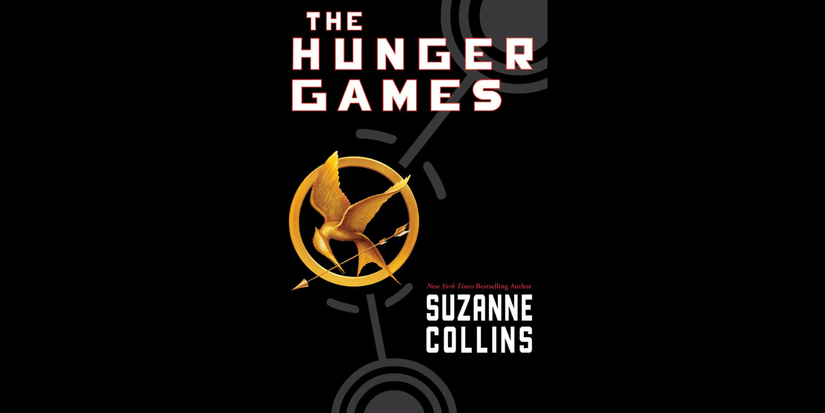
It's hard to overstate the impact of Collins' original novel. Set in the dystopian nation of Panem, where children are forced to fight to the death for the entertainment of the Capitol, The Hunger Games introduces Katniss Everdeen, a teenager from District 12 who volunteers for the Games in order to save her young sister. What follows is a gripping fight for survival, and yet, Collins does considerably more than putting a group of teenagers in an arena and seeing who makes it out alive. Through elaborate world-building and intricate character shaping, this book is able to explore incredibly sharp ideas about class, power, war, and exploitation—so much that even the youngest of YA readers couldn't help but sink their teeth in.
Of course, Katniss is the secret weapon here. She's resourceful and fiercely protective, but she's also prickly, impulsive, and often completely out of her depth—a far more interesting heroine than someone who effortlessly rises to the occasion. Her complicated relationship with her fellow district tribute, Peeta Mellark, adds an emotional tension that runs alongside the action, while the Capitol's grotesque obsession with the pageantry of forced violence gives the novel a clear satirical edge. If anything, Collins understands that the most disturbing part of the Games isn't just the killing, but in the way an entire society has been conditioned to watch and enjoy it. The result is an addictive dystopian thriller that still feels uncomfortably relevant, and a phenomenal starting point for an epic and long-standing franchise. – Jessica Nobleza
1 'Catching Fire' (2009)

Catching Fire takes what The Hunger Games excelled at doing and amps it up half a dozen notches. The characters that we know and love are back and further developed as they're plunged into deeper interpersonal and political conflicts than before. This is especially true for Katniss and Peeta who find themselves forced back into the arena for the 75th Hunger Games, a Games where the tributes are comprised of past victors. A sequel that repeats a playout of the Games could easily have been a lazy retread of the first book, but instead, it raises the stakes since it's no longer about Katniss and Peeta merely surviving the arena. Now, the lives of their friends, family, and all the residents of District 12 depend on the pair's willingness to "play nice" and put on a good show for Snow and the Capitol.
The new Games arena is visually and conceptually unique, complete with interesting and relatable new characters in Finnick, Johanna, and Mags, and fresh action that assists in making Catching Fire the series' fastest-paced installment. It's also advantageous that a large portion of the book takes place before we even get to the Games, which gives readers time to catch up with Katniss and Peeta as they grapple with the events of the previous book and ponder their uncertain futures. The restraint that Collins shows by not rushing into the Games' action is admirable and allows the story to breathe and the characters to deepen. This, combined with the excitement surrounding the Districts' Katniss-inspired rebellion and the book's massive cliffhanger ending — with Katniss extracted from the Games arena and District 12 completely destroyed — tantalizingly sets the stage for the series' final Katniss-centric installment. – Ricky Ruszin

The Hunger Games: Catching Fire
- Release Date
- November 22, 2013
- Runtime
- 146 minutes
- Director
- Francis Lawrence
- Writers
- Simon Beaufoy, Michael Arndt, Suzanne Collins
-

Katniss Everdeen
-

Josh Hutcherson
Peeta Mellark
Katniss Everdeen and Peeta Mellark become targets of the Capitol after their victory in the 74th Hunger Games sparks a rebellion in the Districts of Panem.
KioskNews shows a cleaned-up reading view extracted from the publisher’s page — the original always lives on their site, not ours.