Woman convicted of disfiguring biting attack given reduced sentence because she’s Haitian
A Haitian woman who disfigured a stranger in a Montreal-area biting attack has been given a reduced sentence by a Quebec judge on the grounds that a harsher prison term would endanger her “precarious immigration status.”
Sign In or Create an Account
Just two days after Christmas in 2022, Macdala Monfiston spent eight minutes viciously attacking a woman outside a bar in Laval, Que., leaving the victim with bite marks all over her arms and face.
Court records described one of the facial wounds as being “several centimetres long, necessitating repeated treatments and leaving a prominent scar.”

Columnist Jesse Kline keeps you up to date with what’s happening in Israel and the effects of antisemitism on life here in Canada. Friday mornings.
By signing up you consent to receive the above newsletter from Postmedia Network Inc.
A welcome email is on its way. If you don't see it, please check your junk folder.
The next issue of Channel Israel will soon be in your inbox.
We encountered an issue signing you up. Please try again
Video of the assault obtained by The Journal de Montreal shows Monfiston pulling the victim’s hair, kicking her motionless form on the ground and straddling her body while biting at her face.
“When I tell people I was bit, they ask me what kind of animal, if it was by a pit bull. They can’t believe it’s a person who did this to me,” the victim told the paper in a French-language interview.
Although good Samaritans attempted to intervene, they were held back by Monfiston’s boyfriend.
After Monfiston pleaded guilty to aggravated assault in early 2025, a Court of Quebec judge sentenced her to four years in prison – the sentence already a fraction of the maximum 14-year sentence set for the crime under the Criminal Code.
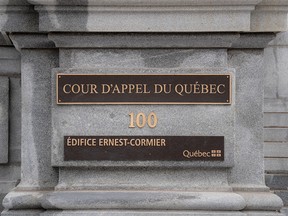
But in a decision released this week, the Quebec Court of Appeal ruled that four years was too harsh, in part because it could possibly get her deported.
Under the Immigration and Refugee Protection Act, anyone jailed for longer than two years is deemed guilty of “serious criminality,” and loses their appeal rights in the case of a removal order.
“The prison sentence has a much greater impact on the defendant than on other offenders who might have committed similar acts,” reads the French-language decision, rendered on Sept. 14 by appeals court judges Suzanne Gagné, Christine Baudouin and Geneviève Marcotte.
The three judges instead handed down a sentence of two years minus one day, thus shielding Monfiston from any loss of her immigration appeal rights.
It’s an established Canadian legal precedent that judges are required to consider the “collateral immigration consequences” of a criminal sentence.
If a criminal conviction risks getting a foreign national removed from the country, judges must weigh this as a form of punishment, and then reduce the offender’s actual punishment accordingly.
It all stems from the 2013 Supreme Court decision R. v. Pham. The case involved a non-citizen, Hoang Pham, who was convicted of drug offences and initially sentenced to two years in prison.
The Supreme Court of Canada ruled that lower courts had failed to consider how the sentence would render Pham unable to appeal a removal order.
And so, the top court instead handed down a sentence of two years less a day. As with Monfiston, the sentence allowed Pham to dodge the loss of his appeal rights under the Immigration and Refugee Protection Act.
In the decision written by Richard Wagner – the court’s current chief justice – the Supreme Court admonished lower courts for not showing similar leniency, and for hiding behind the justification that “the accused had a prior criminal record (and) had abused the hospitality that had been afforded to him by Canada.”
The frequent result of the R. v. Pham precedent is non-citizens explicitly being given lighter sentences than would have been handed down to a Canadian citizen convicted of the same crime.
In one widely publicized example from 2024, an Indian national in Canada on a visitor’s visa was convicted of sexual assault after groping a woman in a Calgary bar. But Justice A. J. Brown refused to convict the man citing the “devastating collateral immigration consequences” of a criminal record.
Instead, the offender, Rajbir Singh, was given a period of probation specifically tailored to avoid triggering removal proceedings by the Canada Border Services Agency.
Monfiston, who was 37 at the time of the attack, is a Haitian national who arrived in Canada at age two via the United States, and has never obtained Canadian citizenship.
Court records say she dropped out of high school around age 14, and ever since has been living a life of “precarious employment” accompanied by both “regular drug use” and multiple criminal convictions.
She was convicted of theft in 2012 and obstructing a peace officer in 2014. In addition, a drug possession conviction came in August 2024, when she was already awaiting a court date for the bar attack. Although the Court of Appeal of Quebec would note that none of these were violent offences.
Monfiston is also a single mother of five children, four of whom are in her care, which also factored into the appeal court’s decision to hand her a lighter sentence.
“In the particular circumstances of this case, there is no doubt that the consequences carry considerable gravity for the circumstances of the defendant, who is a permanent resident who has custody of four children,” said the court.
Join the Conversation
This website uses cookies to personalize your content (including ads), and allows us to analyze our traffic. Read more about cookies here. By continuing to use our site, you agree to our Terms of Use and Privacy Policy.
KioskNews shows a cleaned-up reading view extracted from the publisher’s page — the original always lives on their site, not ours.