US-China conflict doesn’t have to become a self-fulfilling prophecy
We are reminded seemingly daily of the great power transitions that ended in conflict. However, it is the exceptions – the ones that did not result in war – that could have real lessons to offer.
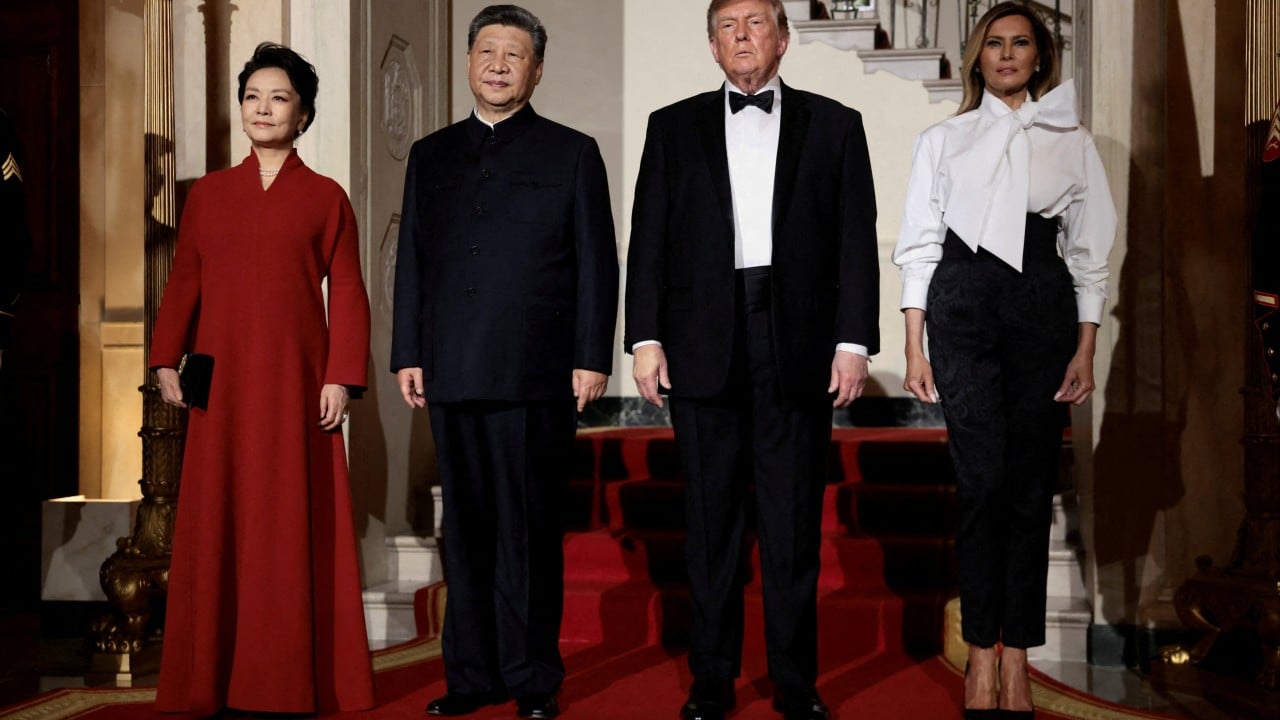
Today, the question is more than academic. Standing beside US President Donald Trump at the White House last week, President Xi Jinping proposed that competition between China and the United States should be “a race of catching up with one another”, not “a wrestle where one either wins or loses”.
Whether these metaphors survive the real disputes between the two countries on trade, technology or political red lines is another matter. Could the great rejuvenation of the Chinese nation really go hand in hand with making America great again?
The term “Thucydides Trap” has become a familiar phrase among those following international relations. Even so, we should not become prisoners of a catchy metaphor as it can easily turn into a self-fulfilling prophecy.
Looking through the history of great power shifts, one finds reassuring instances. Sometimes rivals do not destroy each other, instead managing their relations responsibly to the advantage of their people and the world.
The undisputed leading power of the past century rose to prominence in just such a peaceful transition. At the end of the 19th century, Britain and the US were anything but natural partners. The 1895 Venezuela crisis brought them into a serious diplomatic confrontation just as American power was rapidly expanding.
04:52
‘New joint arrangement’ on trade as Xi meets Trump at White House
Yet Britain ultimately chose accommodation over an increasingly costly struggle for primacy in the western hemisphere. It did not try to prevent America’s rise; it protected its most important interests by adjusting spheres of influence, deciding which parts of the changing balance were worth contesting and which were not.
France and Germany found another route after World War II: institutionalisation. After three major wars in 70 years, they progressively placed the sources of their competition inside common institutions. They began with coal and steel, followed by a series of mutually beneficial and inclusive communities, eventually resulting in the European Union. Rather than balancing against German strength, France helped construct a system in which that strength could grow without becoming a threat.
Argentina and Brazil demonstrated yet another mechanism. By the 1970s, they were strategic competitors with serious disputes over regional influence and shared rivers. Instead of allowing uncertainty to develop into a stand-off, they gradually chose transparency and cooperation.
From agreements on water resources to nuclear cooperation, they built a system of bilateral safeguards. Neither side abandoned its ambitions; they just reduced uncertainty and the danger of interpreting every advance by the other as a threat requiring a response.
Throughout history, former rivals have accommodated changing spheres of influence, embedded competition in institutions, accepted negotiated settlements, built transparency or simply decided that the cost of confrontation is higher than its potential gains.
None of these examples can provide a ready-made formula for Washington and Beijing, and none mirrors their exact rivalry today. History does not provide blueprints but rather offers us lessons.
The question Washington asks reflects the logic of rivalry itself: how to prevent China from overturning the status quo? In response, Beijing asks how it can prevent the US from containing its rise and development.
SCMP Plus is a new premium news platform that gives you an
all-inclusive edge to stay ahead on China news.
To access our exclusive content you’ll need to subscribe.
Already a subscriber?
LOG IN
But what if we turn the questions around? What changes in influence can be acceptable for Washington without sacrificing its vital interests and well-being? What forms of restraint or reassurance could China offer and guarantee to make US acceptance politically and strategically possible?
Today’s world is vastly more interconnected than during previous power transitions as the two rivals are tied into the same global economy with all its institutions. The international community is not a passive spectator; it is a large number of capable actors interested in upholding stability and peace. They will encourage both Washington and Beijing to ask the right questions. The vast number of bilateral and multilateral relationships raises the price of allowing US-China rivalry to spiral out of control.
None of this makes conflict impossible, and neither does history guarantee that sensible solutions will prevail. However, it does challenge the fatalism built into the idea of the Thucydides Trap. Power shifts are dangerous, but their outcomes are not predetermined. States have long found ways to accommodate changing realities, institutionalise competition or build trust and confidence. Washington and Beijing will have to find their own formula and doing so will require political will on both sides.
Xi’s words in Washington deserve to be taken seriously. Artificial intelligence, tariffs, Taiwan, Iran or the South China Sea are all on the table as tangible challenges to be solved or managed, but none of these need become a casus belli. The Thucydides Trap is useful as a warning but dangerous as a prophecy. It becomes a trap only when those with power portray it as inevitable and walk straight into it.
KioskNews shows a cleaned-up reading view extracted from the publisher’s page — the original always lives on their site, not ours.