EU-China hybrid car deal won’t really help European carmakers
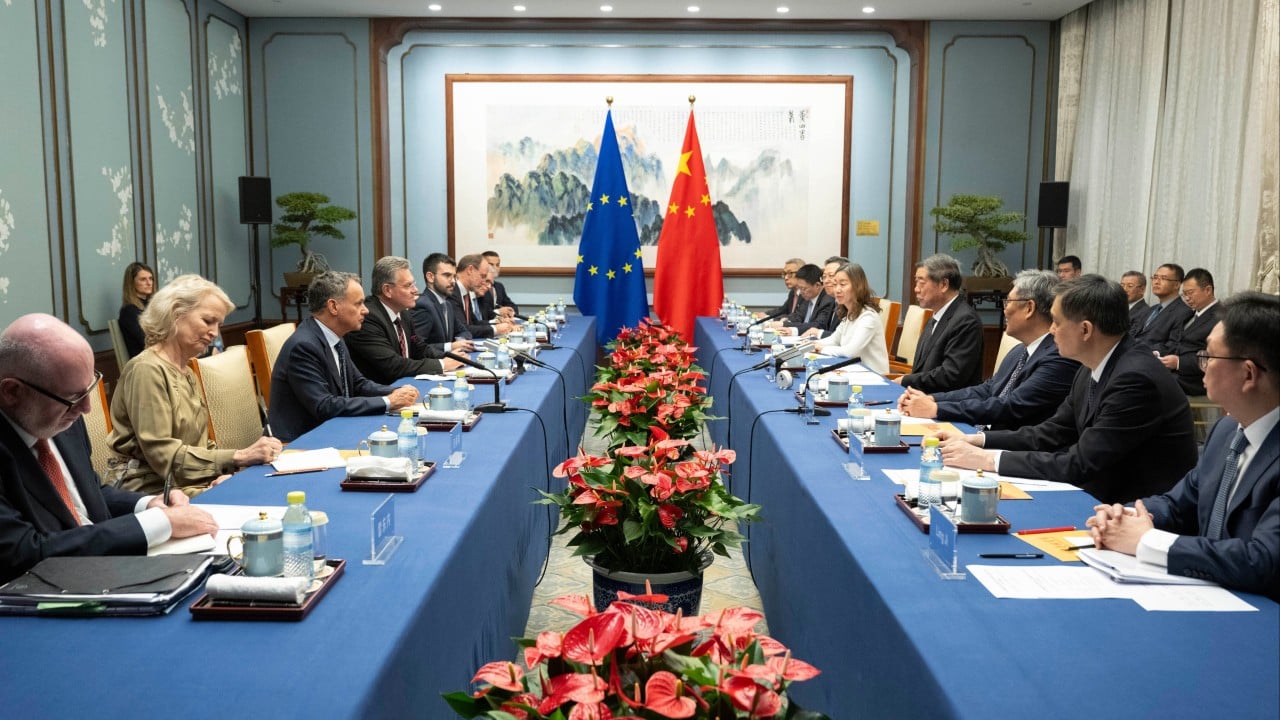
Earlier this month, simmering trade tensions between the EU and China ease as the two sides reached an agreement in Beijing limiting hybrid car exports from China to an annual quota of 350,000 units. After the European Union imposed tariffs on fully electric cars from China in 2024, hybrid imports surged. The quota would result in more than a halving of the 800,000 hybrid cars expected to be sold this year, a figure which may soon exceed a million if unchecked.
The quota would likely shift China’s product mix towards the premium segment to maximise the value of the 350,000 hybrid cars allowed per year, a cap which can rise by only 6 per cent a year during the four-year agreement.
Europe’s challenge goes beyond hybrids to all electric vehicles. Unlike the earlier mass-market Japanese and Korean imports which largely complemented the premium German brands, Europe can expect high-end EVs from China offered at a fraction of the price of their European counterparts, while potentially delivering superior features and performance.
BMW and Mercedes-Benz have long been dominant in the premium segment of the car industry globally. In the EV era, they would not want to be reduced to selling cars mainly in Europe under the protection of tariffs and quotas. A German driver would find it jarring when his expensive Mercedes EV is not as good as a cheaper Chinese EV driven by a Swiss visitor.
Limiting Chinese EV imports does not help EU consumers or carmakers in the long term. Instead, European companies must leverage China’s supply chain to be world-class EV makers that can compete with Chinese EV companies, in China, in Europe and anywhere else in the world.
Tariffs and quotas do not by themselves restrict the expansion of Chinese-branded EVs in Europe. Chinese carmakers will increasingly make cars within the EU, just as German car companies manufacture in China most of the cars they sell there. Tariffs and quotas, the classic tools for protecting infant industries, can buy European carmakers breathing space to become more competitive.
01:52
European carmakers take on Chinese EVs at the Paris Auto Show
Since even the US now borrows from China’s industrial policy, the EU need not dress up tariffs and quotas as a way to level the playing field under neoliberal globalism. Europe has economic models of its own. Some European economies have long operated as coordinated market economies characterised by patient capital, distinct from the US’ liberal market economy dominated by the capital market. Long-term bank and stakeholder financing lets firms invest through downturns for long-term performance.
While the US has thrived on radical innovations such as the internet and artificial intelligence, its telecoms equipment industry is partly hollowed out, leaving the field to Chinese and European companies. Nokia and Ericsson still compete with Huawei Technologies worldwide. The strength of the German auto industry has been built on its coordinated market economy, which is less subject to the vicissitudes of quarterly earnings. European companies now need to draw on that patience to absorb China’s supply-chain advantages and gain sustainable competitiveness.
European car companies should make EVs in China for global export. China has the world’s most developed EV ecosystem, and foreign brands are losing ground there as petrol-car sales collapse and EVs take over, so making EVs in China is a top priority. European firms can set up research in China and hire top Chinese EV engineers. The EU could support its car industry with a parallel quota system – a separate, additional quota on cars that European firms make in China – as a transition measure. Globalised European carmakers should be able to sell EVs to the world from anywhere, starting with exports from China to the EU.
02:05
Emboldened EU readies China company ‘kill switch’ as Beijing warns Brussels not to ‘fantasise’
Trade deficits with China, say in the chemical sector, do not automatically make China guilty. In fact, high energy prices arising from the Ukraine war, compounded by the Iran war, make the chemical industry in Europe uncompetitive. By expanding in China, German chemical companies can stay competitive. Europe has only itself to blame for long relying on cheap Russian energy, rather than moving faster towards nuclear and green energy. Restricting imports cannot keep European industries competitive; a coherent energy policy will.
The EU has frowned on promoting national champions through industrial policy, and is instead weighing a proposed “kill switch” that would allow the European Commission to swiftly deny market access to foreign companies deemed threatening. Such a lockout may make trade deficits less glaring but it would not address the roots of why European companies are not competitive. Nor should the EU punish European companies just because they are compelled by unviable input costs to shift production from the EU to China.
Instead of keeping China out, the EU should actively apply a globalised industrial policy – pairing European patient capital with China’s supply chain – to make European companies world-class EV makers.
KioskNews shows a cleaned-up reading view extracted from the publisher’s page — the original always lives on their site, not ours.