Israeli citizens abroad push to gain voting rights for upcoming elections
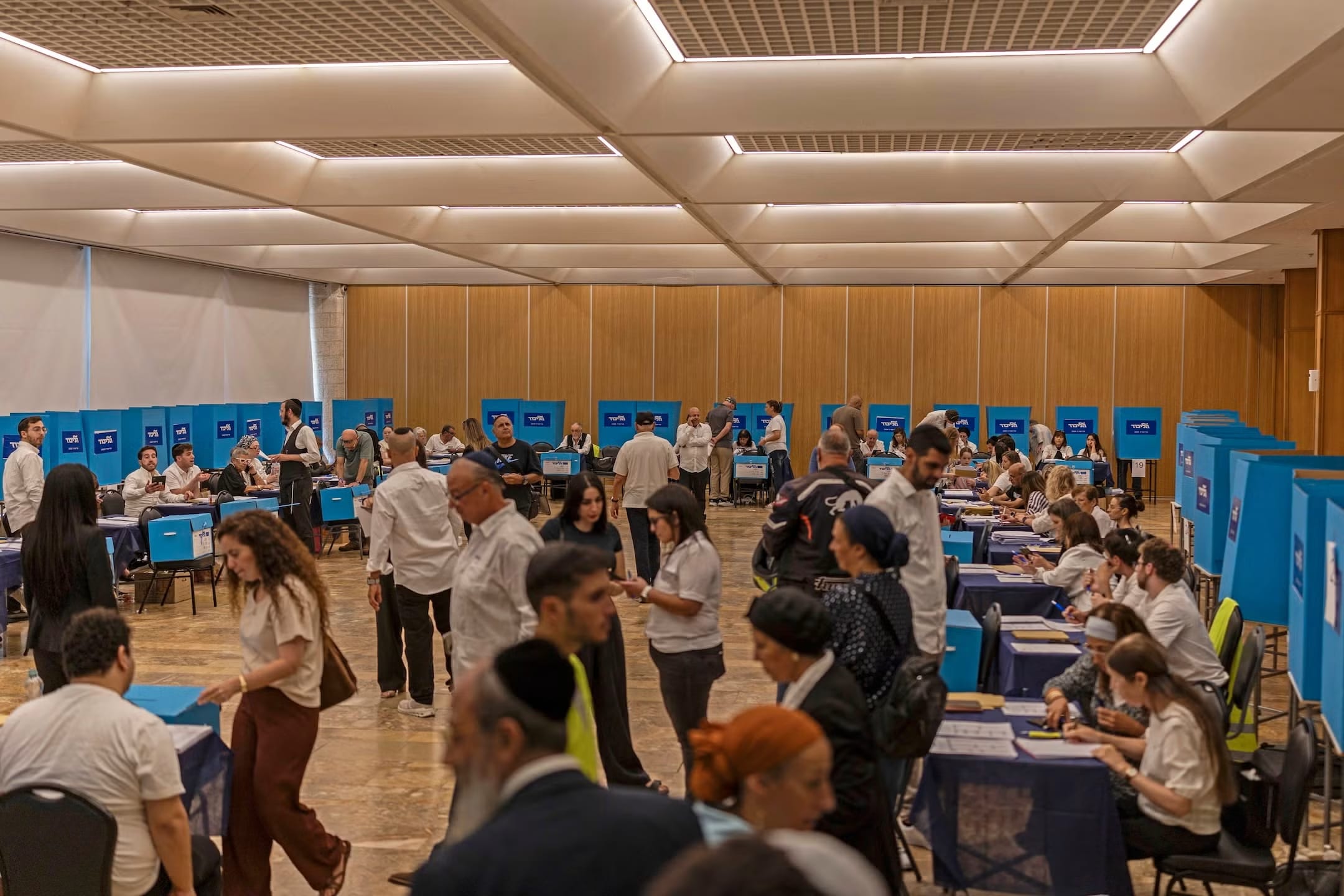
When Ilana Mittman, a retired social scientist with American and Israeli citizenship, began arranging a trip to Israel from her home in Baltimore, she planned to observe her late father’s Yahrzeit and cast her ballot in the national elections on Oct. 27. Checking her voter registration status online, she made a startling discovery: She had been excluded from the voter registry and was ineligible to vote.
The discovery came as a shock. Mittman’s mother was born in the British Mandate. Her parents drained swamps to create arable land and served in the Haganah, a pre-state military organization.
Mittman has lived in the United States since 1980, having moved for her husband’s medical studies and career. But she has never viewed her life abroad as severing her ties to Israel. She watches television in Hebrew, follows the country’s news, stays in frequent contact with family, donates to the country’s emergency services and engages in pro-Israel advocacy efforts.
“I didn’t really choose to leave the country; I fell in love with a man who came from overseas, and I followed him,” she said. “I’ve grieved for the loss of my country and my friends… It’s been a constant, chronic sorrow.”
Puzzled by the discovery of her voter status, Mittman reviewed her records through the Interior Ministry online portal and noticed that on March 7, 1986, her residency status had been altered under administrative “Code 51.”

That date matched a visit to the Israeli Consulate in San Francisco shortly after the birth of her son, where she went to register him as an Israeli citizen in accordance with consular requirements. She said that during that routine appointment, consular staff took away her state-issued ID card without explanation, leaving her with only her passport for foreign travel.
“I remember how bad of a feeling it was to give that document away,” Mittman recalled. “I felt I gave a part of myself away when that happened. But I didn’t know that my biggest right as a citizen - the right to vote - was just robbed from me.”
When she spoke with friends in the expat community, she learned others had found themselves in a similar situation. Some only discovered the after making expensive travel arrangements to return to Israel for the election, since voting must be done in person.
Trading notes in WhatsApp
Under Israel’s Basic Law: The Knesset, every Israeli citizen aged 18 or older has the right to vote, unless a court has deprived them of that right. In practice, however, voting is limited to those included in the voter registry.
Israelis whom the government classifies as nonresidents are assigned a designation known as "Code 51" and removed from the voter registry, even though they retain their citizenship.
As expats across North America, Europe, Australia and South Africa began to realize in the lead-up to the October vote that they were no longer in the voting registry, they began comparing their experiences in a WhatsApp group that grew to some 120 members.
Some, like Mittman, had not voted in Israel for decades. Others, like kibbutz-born Ayala Graham, had returned to vote in the previous elections, held just four years ago. Yet others retained their eligibility, such as Graham’s husband, who hadn’t cast a ballot in Israel in four decades.
“My blood is boiling from this situation,” said Graham, who left Israel in 1986. “I am a citizen through and through, and I was very offended by this arbitrary rejection. I feel that in these elections, the situation is even more acute than in 2022.”
With the grounds for rescinding voting eligibility opaque and no easy path to appeal the exclusion, the disenfranchised Israelis decided to pursue legal action. They are calling the grassroots initiative to restore their voting eligibility “Our Right to Vote - Code 51.”
To challenge the Code 51 exclusions, the group raised money for legal representation through crowdfunding. They then launched a multi-stage legal strategy to exhaust administrative remedies before escalating to the Supreme Court.
Represented by attorney Gilead Sher, they submitted a Freedom of Information request to compel the Interior Ministry to disclose the criteria behind the administrative “Code 51” designations. Then they sent letters to the Interior Ministry, the attorney-general, and the Central Elections Commission requesting the immediate restoration of their status.
The Interior Ministry has not yet responded to the group’s letter about Code 51, the criteria used to remove expats from the voter registry, or the total number of citizens affected by the regulation.
Interior Ministry spokesperson Yaffa Shai did not address questions about the meaning of Code 51 posed by the Jewish Telegraphic Agency. Instead, she pointed to Israeli election law, which requires voters to be listed in the Population Registry as residents, with an address in Israel, and stressed that the ministry had conducted “an extensive multilingual campaign” urging citizens to check their voter status.
Because the law requires the voting registry to be finalized on Sept. 3, the legal team set a one-week deadline for administrative responses. If the matter remains unresolved, they intend to file an emergency petition directly with the Central Elections Commission and the High Court of Justice.
No official count exists of how many Israeli expats have been excluded from the voter registry. “We received a rough, totally unofficial estimate of several dozen thousands, out of whom we represent about 120,” said Sher, the lawyer.
He stressed that the criteria for removing citizens living abroad from the voter registry are also unclear. “Our argument is that whatever this arbitrary Code 51 stands for or signifies, it cannot override the constitutional right to vote,” he said.
Sher acknowledged the possibility that some expats who travel to Israel to vote may only discover their status on election day. Given the tight timeframe before the election, Sher is seeking both temporary relief and an interim injunction in the petition to ensure eligible citizens are not disenfranchised while the court reviews the bureaucratic procedures.
‘Essentially voter suppression’
On the West Coast, another Israeli expat, Silicon Valley attorney Rony Sagy, was struck by the arbitrariness of the system, particularly given her past travels to Israel during election cycles.
For the IDF elite unit veteran, maintaining a close connection to Israel has been consistent over decades of living in the US. Her career as a San Francisco-based lawyer has included serving as a legal bridge between Israeli startups and American tech companies, and she travels to Israel several times a year, renews her passport, and keeps a permanent address in the country.

She suspects that her name was removed from the voter roll following a routine consulate visit for passport renewal sometime in the 1980s, during which she was required to surrender her domestic Israeli ID card. She noted that the experience was difficult enough for someone with deep connections to the country, but the lack of transparency surrounding the act added insult to injury.
“Voting was always very, very important to me,” Sagy emphasized. “My understanding was that my voting rights would not be hampered by the confiscation of my ID card. The uneven, unidentified way or form of removing certain people from the voter rolls is essentially voter suppression.”
The debate over Israeli citizens’ inability to cast ballots from abroad with limited exceptions (for example, official government representatives stationed abroad) has been ongoing for decades. Proponents of overseas voting note that most Western democracies allow it. Opponents argue that the large number of Israelis living abroad could potentially sway an election, even though those living in Israel bear the consequences of its outcome more directly.
Public opinion in Israel on overseas voting is split, though polls typically focus on whether expats should be allowed to cast ballots from abroad rather than on whether they should retain their eligibility to vote if their center of life is elsewhere.
A survey last year by the Israel Democracy Institute found that 51% of Israelis opposed allowing citizens living abroad to vote from overseas, while 39% supported it. Opposition was particularly high among Arab respondents - 55% opposed, 36% supported - relative to Jewish respondents. Among Jewish respondents, opinion was evenly divided, with 45% supporting and 45% opposing overseas voting.
Attitudes were also strongly associated with respondents’ own willingness to leave the country. Among Israelis considering moving abroad, 52.5% supported overseas voting and 40% opposed it, compared to 34% support and 55% opposition among those not considering leaving Israel.
Members of the group challenging the denial of their eligibility to vote point to the global economy, which facilitates remote work, as well as the rising number of Israelis who have left the country since Oct. 7, 2023, due to Israel’s enmeshment in several regional wars. Some have deliberately chosen to disconnect. Mittman, however, believes that the number of years spent living abroad should not define the strength of one’s connection.
“What do you mean by center of life?” she asks. “If I spend hours a day immersing myself in Israeli culture, if I am supporting friends and relatives in Israel and charitable causes in every way I can… I feel that my heart is there, that I’ve never ceased to be an Israeli. So, what does it mean to be a citizen if you cannot vote?”
She insisted that this initiative to restore expats’ voting rights is not partisan: “If somebody told me today that I can vote, I don’t know who I’m going to vote for. I have not decided.”
Regardless of whether the legal challenges are resolved ahead of the election, she plans to make the trip and spend Election Day volunteering to help elderly and mobility-impaired voters reach their polling stations.
KioskNews shows a cleaned-up reading view extracted from the publisher’s page — the original always lives on their site, not ours.