‘Systemic racism at work’: Sydney council plan for compulsory English shop signage condemned as ‘kind of crazy’
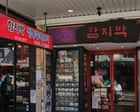
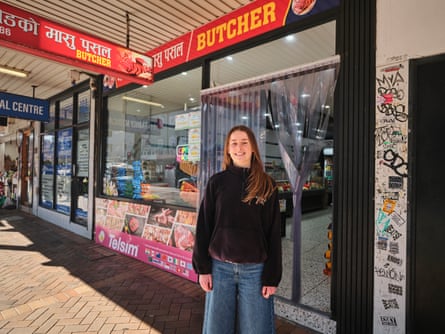
Along a bustling street in Sydney’s west, Asian grocers sit alongside Nepalese restaurants displaying images of the tantalising curries inside. Here, on one of Strathfield’s busiest commercial streets, a Nepalese grocer is nestled between a 7-Eleven and a medical clinic. Two doors down, a butcher run by the same owners welcomes customers with a sign that reads “Strathfield Veggie Shed” in Nepali.
Bilingual signs are common in Sydney’s west. It is a similar scene in other major cities, such as Melbourne’s Box Hill where almost 30% of residents were born in China and many shops signs include Chinese characters alongside English text.
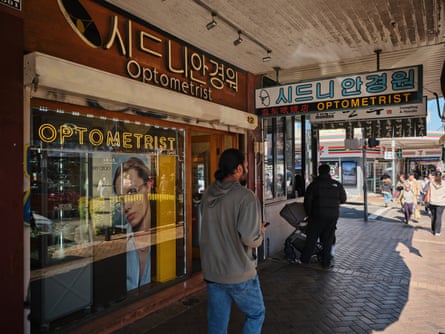
But last month, Strathfield council passed a motion advocating that local shopfront signs “clearly and prominently” display English.
Vivek Shrestha, who has proudly displayed his Nepali sign at the front of the Strathfield Veggie Shed for the past four years and also owns the butcher shop, says he has already ordered a new sign to avoid future penalties by a council action he says is “unfair”.
“My customers – like 90% – [are] Nepalese,” he says. “I don’t think changing [the sign] to English is going to add on the customers.
“My product line is very basic and the target is … only the Nepalese customer.”
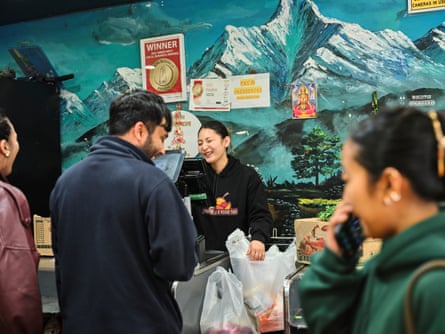
It’s unclear how the policy, which does not prevent other languages from being used but says English should be displayed “clearly and prominently”, will be enforced. A council spokesperson says no changes to signage requirements will be made until a planned report on any existing policies is considered.
But Australia’s race discrimination commissioner, Giridharan Sivaraman, describes the move as an example of “systemic racism in operation”, and says he’s worried it could lead to similar moves by other councils.
“The way racism operates, particularly through laws and policies and procedures, is that it forces people – or in this case, businesses and the people that run them – to shed themselves of their identity, to diminish themselves,” he says.
“Language is a critical part of people’s identity,” he says.
Sivaraman points to a lack of consultation with the communities and businesses affected by Strathfield council’s move.
“Communities of colour, communities that are different, are simply told that they must do a particular thing as part of a process of assimilation, rather than being consulted,” he says.
The council’s spokesperson says community consultation will occur during the review of it’s policies.
But Strathfield Labor councillor Rory Nosworthy, who voted against the motion, says he isn’t aware of anyone complaining about signs.
“It’s not an issue I’ve observed or heard about,’ he said.
“The majority of stores already have partial English signage. It’s a bit of a non-issue,” he says.
A spokesperson for the Municipal Association of Victoria – the peak body for local government in that state – says it can’t recall any similar discussions from councils about the issue.
The federal opposition’s leader in the Senate, Michaelia Cash, went further. She told Channel 9 this week that small businesses did not need “another layer of council regulation” and stressed they “know their customers.”
Cultural diversity
In Strathfield – in which about 73% of households speak a non-English language at home – a similar idea was proposed eight years ago.
At the time, the council sought to make sure community languages were no bigger than 30% of the English signage. But the proposal attracted significant backlash.
In the early 2000s, a number of Sydney councils began to stipulate or encourage the use of English on shop signs.
In neighbouring Burwood, where a bustling multicultural food scene thrives, the council’s guidance for its street appeal shopfront improvement program stipulates information on language use.
“Signage to be mainly in English, can also be in an additional language,” it says. For awnings, it says English is to be the “prominent language.”
A spokesperson for Sydney’s Cumberland city council, where almost 74% of households speak a non-English language, says multilingual shop signs and storefronts contributed to “the unique character and identity” of the area.
The council’s development control plan states that advertising and signage “shall be displayed in English but may include a translation in another language”.
The Strathfield council decision comes amid a debate about multiculturalism and social cohesion on the political right in recent months.
Liberal councillor, Esther Kim, who put forward the motion, said she was motivated by an advertisement in a community language that she had seen plastered on the exterior of a toilet block in Carlingford. The suburb is in the neighbouring council of Parramatta.
“If one multicultural language is being used, only … that community understands it. All others [are] excluded,” Kim says.
“We have to be united with multiculturalism.”
Kim, who migrated to Australia almost 40 years ago from South Korea, says requiring English to be on shopfront signs would attract more diners to the area’s so-called Koreatown.
“We will bring more people here because they can understand what is going on here,” she says.
“If they want to use their language, you have to include English too.”
The council has not publicly released any information on how many shops within the LGA do not include English on their signs.
Some locals, like university student Olivia Toms, says the move is “kind of crazy”.
“English speakers are very much able to do research and easily translate the signs if they want to. There are options for that … I feel like I’m exposed to so many different cultures, languages and foods that I wouldn’t normally be exposed to.”
The 21-year-old says it’s unfair “for immigrants and small-business owners”.
“If it’s something the government is enforcing, they should be the ones paying for the signage, in my opinion,” she says.
KioskNews shows a cleaned-up reading view extracted from the publisher’s page — the original always lives on their site, not ours.