HKMA licenses Bakai Bank, city’s first from Central Asia
Hong Kong Monetary Authority (HKMA) has granted a banking licence to Bakai Bank, marking the first Central Asian bank to set up in Hong Kong amid closer ties in the economy and trade flows between China and the region, according to a statement on Monday.
Bakai Bank, one of the largest lenders in Kyrgyzstan, will operate as a restricted licence bank in Hong Kong. It will be the 17th restricted licence bank in Hong Kong.
Under the licence, it can take deposits of at least HK$500,000 (US$63,776) and conduct corporate banking and merchant banking business, but not retail businesses.
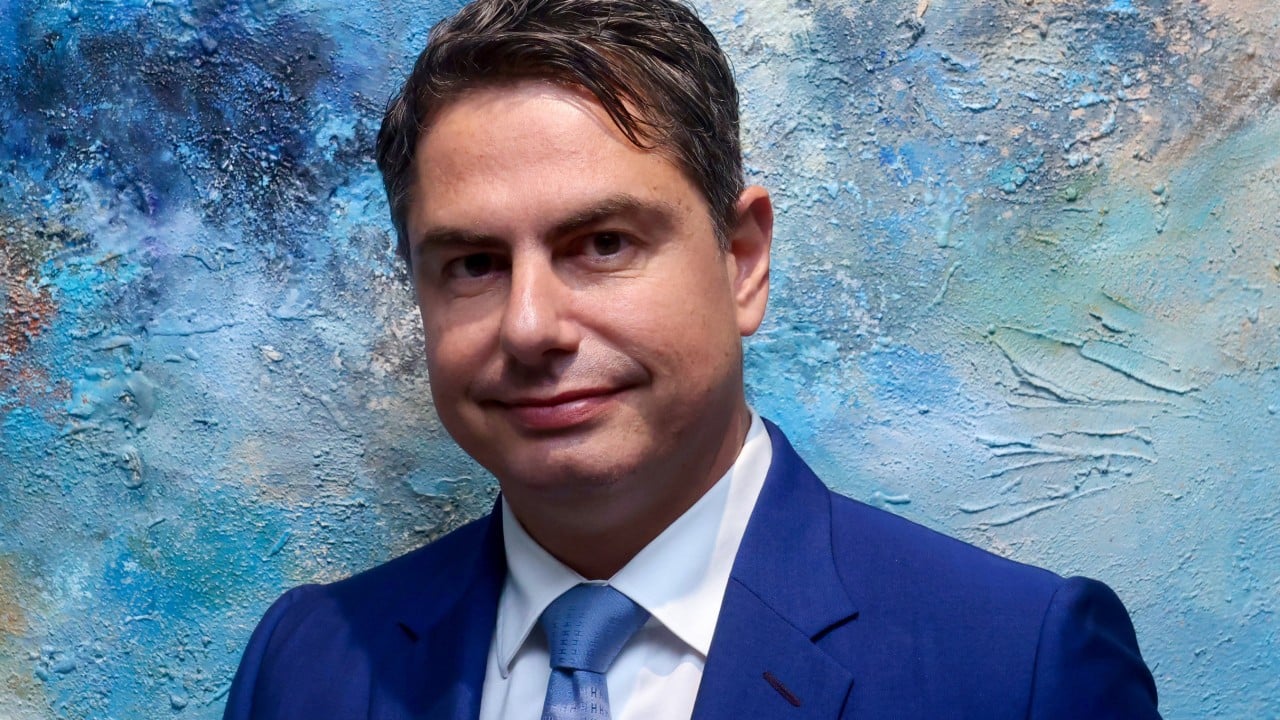
Andreas Meletiou, CEO of Bakai Bank Hong Kong, said the lender wanted to use Hong Kong as a platform to expand in the region.
“We have chosen Hong Kong as our first stop of international expansion because it offers a very strong platform for us to play the role as the bridge between Central Asia and Asia-Pacific,” Meletiou said in an exclusive interview with the South China Morning Post.
“Bakai Bank will be the first bank to ever establish presence outside Kyrgyzstan, and the first bank from Central Asia to ever establish a presence in Hong Kong. It is an important milestone for Central Asia as a whole, especially considering the evolving relationship between Central Asia and East Asia.”
04:37
What’s behind HSBC’s privatisation of Hang Seng Bank?
Hong Kong has made efforts to expand commercial ties with Central Asia, with Chief Executive John Lee Ka-chiu leading the city’s first delegation to Kazakhstan and Uzbekistan in June.
Central Asia, a five-country region comprising Kazakhstan, Uzbekistan, Kyrgyzstan, Turkmenistan and Tajikistan, is located at the heart of China’s Belt and Road Initiative, launched in 2013 to promote trade flows.
Mainland China became the largest partner of Central Asian countries for the first time last year, with total value of trade in goods reaching US$106.3 billion, up 12 per cent compared to a year earlier, according to data from the Ministry of Commerce.
“Central Asia is a key part of the Belt and Road Initiative for China. When trade routes are being challenged, and especially [as] the sea-bound trade routes are becoming riskier in the current geopolitical landscape, Central Asia is getting more prominent,” Meletiou said.
China’s exports to Central Asia were US$71.2 billion last year, led by machinery, electrical and hi-tech products, while China’s imports from Central Asia were US$35.1 billion, including agricultural and industrial goods.
Meletiou said the bank now had 35 staff and would expand to about 50 in the future. It would target serving companies with their needs for payment, foreign exchange and financing in trade and other investment in Central Asia and mainland China.
“We strongly feel that we are at the right place at the right time,” he said. “The market opportunity and the Hong Kong government initiatives are aligned with our strategy for us to play the bridging role between these two parts of the world.”
KioskNews shows a cleaned-up reading view extracted from the publisher’s page — the original always lives on their site, not ours.