What PM Modi Said At SCO Summit: 10 Key Takeaways
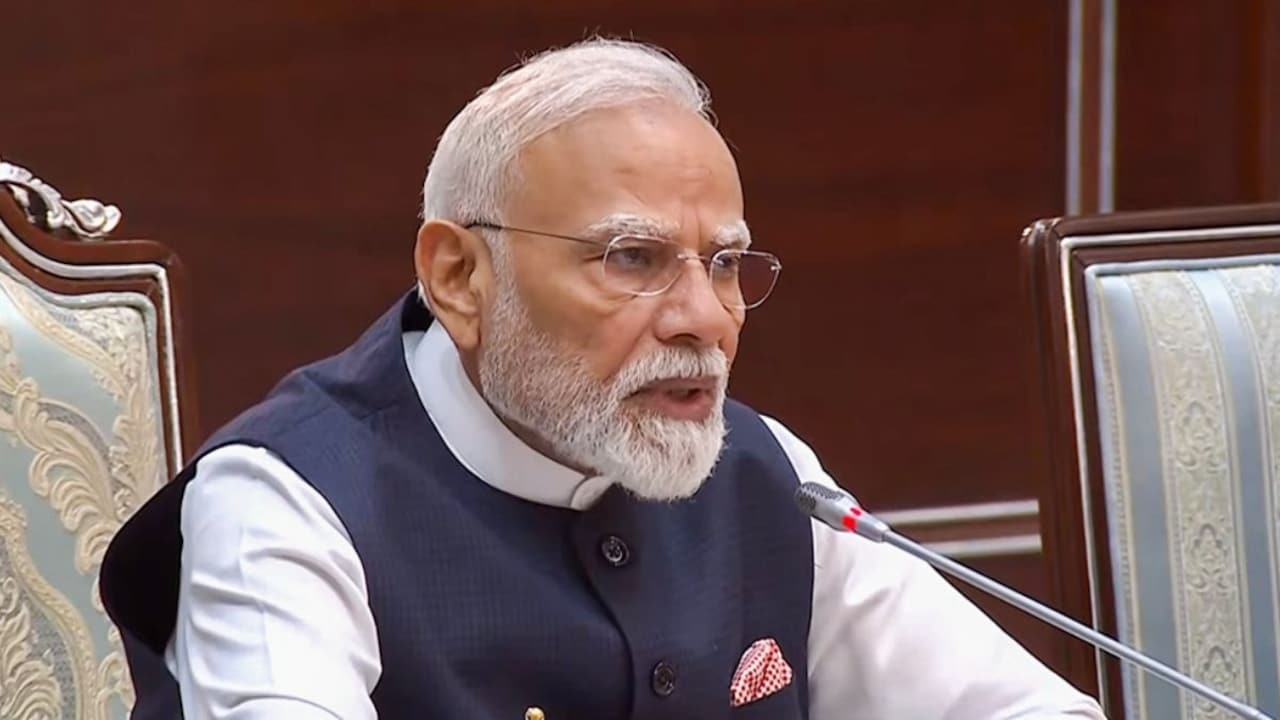
Prime Minister Narendra Modi addressed the 26th Shanghai Cooperation Organisation (SCO) summit in Kyrgyzstan, outlining key actions for strengthening regional cooperation. His remarks came in the middle of the ongoing conflict in the Middle East, which has affected global energy supplies and economies.
The 10-member SCO was established in 2001 by China, Russia, Kazakhstan, Kyrgyzstan, Tajikistan and Uzbekistan. India and Pakistan became full members in 2017, followed by Iran in 2023 and Belarus in 2024.
This year's summit was held in an expanded ‘SCO-Plus' format, bringing together leaders from more than a dozen associated countries, including Türkiye, Azerbaijan, Armenia, Mongolia, Laos and Togo. Here's a look at what PM Modi said at the SCO summit.
Strengthen the three pillars of SCO cooperation
PM Modi called for stronger cooperation around the three key pillars of the SCO — security, connectivity and opportunity. He stressed the need to move beyond vision and work towards outcomes that can be measured.
Take on the entire terrorism ecosystem
The Prime Minister called for dismantling the wider ecosystem that supports terrorism, including terrorist financing, recruitment, radicalisation and safe havens. He also stressed that there should be no double standards in the fight against terrorism. “We must speak with one voice that there can be no place for double standards on terrorism,” he said.
Reject state-supported terrorism
The Prime Minister called for a clear message against state-supported terrorism, saying terrorism should never be allowed to become a strategic asset. He emphasised the need for a united regional response to the terrorism.
“Countries that use terrorism as an instrument of state policy, or provide shelter and support to terrorists, must be sent a strong message: terrorism cannot be a strategic asset for anyone,” Om Modi was quoted as saying by ANI.
Support peace and stability in Afghanistan
When it comes to Afghanistan, he stressed the importance of continued efforts to promote peace and stability. He also called for development assistance and humanitarian support for the Afghan people.
“Our shared aspiration for a peaceful and secure Eurasia is also linked to peace and stability in Afghanistan. India has been contributing to the development and humanitarian needs of the Afghan people and will continue to do so,” he said.
Resolve conflicts through dialogue
PM Modi said regional conflicts should be addressed through dialogue and diplomacy rather than being allowed to escalate. He noted that conflicts can disrupt energy security, maritime trade and global supply chains.
“India has consistently maintained that the resolution of all tensions and conflicts lies not on the battlefield, but in dialogue and diplomacy,” he said.
Strengthen the fight against drugs and organised crime
The Prime Minister called for stronger regional action against drug trafficking, organised crime and other security threats. He stressed the importance of coordination between SCO mechanisms and timely action.
Build reliable and inclusive connectivity
He further called for the development of reliable and inclusive connectivity while respecting the sovereignty and territorial integrity of all countries, in accordance with the SCO Charter.
Make trade and logistics more efficient
He also highlighted the need to modernise trade and logistical connectivity. This would include simplifying customs procedures, expanding digital documentation and improving logistics networks.
Put people at the centre of SCO cooperation
PM Modi said SCO cooperation should create tangible opportunities for people, with greater attention to youth, entrepreneurs, farmers and citizens.
Expand youth, science and cultural exchanges
The Prime Minister called for greater youth, scientific, entrepreneurial and civilisational exchanges among SCO members.
He highlighted initiatives such as the SCO Start-up Forum, Young Authors' Conclave and Young Scientists' Forum, along with the proposed SCO Civilizational Dialogue Forum, whose first session is set to be held in India.
KioskNews shows a cleaned-up reading view extracted from the publisher’s page — the original always lives on their site, not ours.