Brazil heads to polls in runoff between leftist Lula and Bolsonaro Jr.
Already have Rappler+?
to listen to groundbreaking journalism.
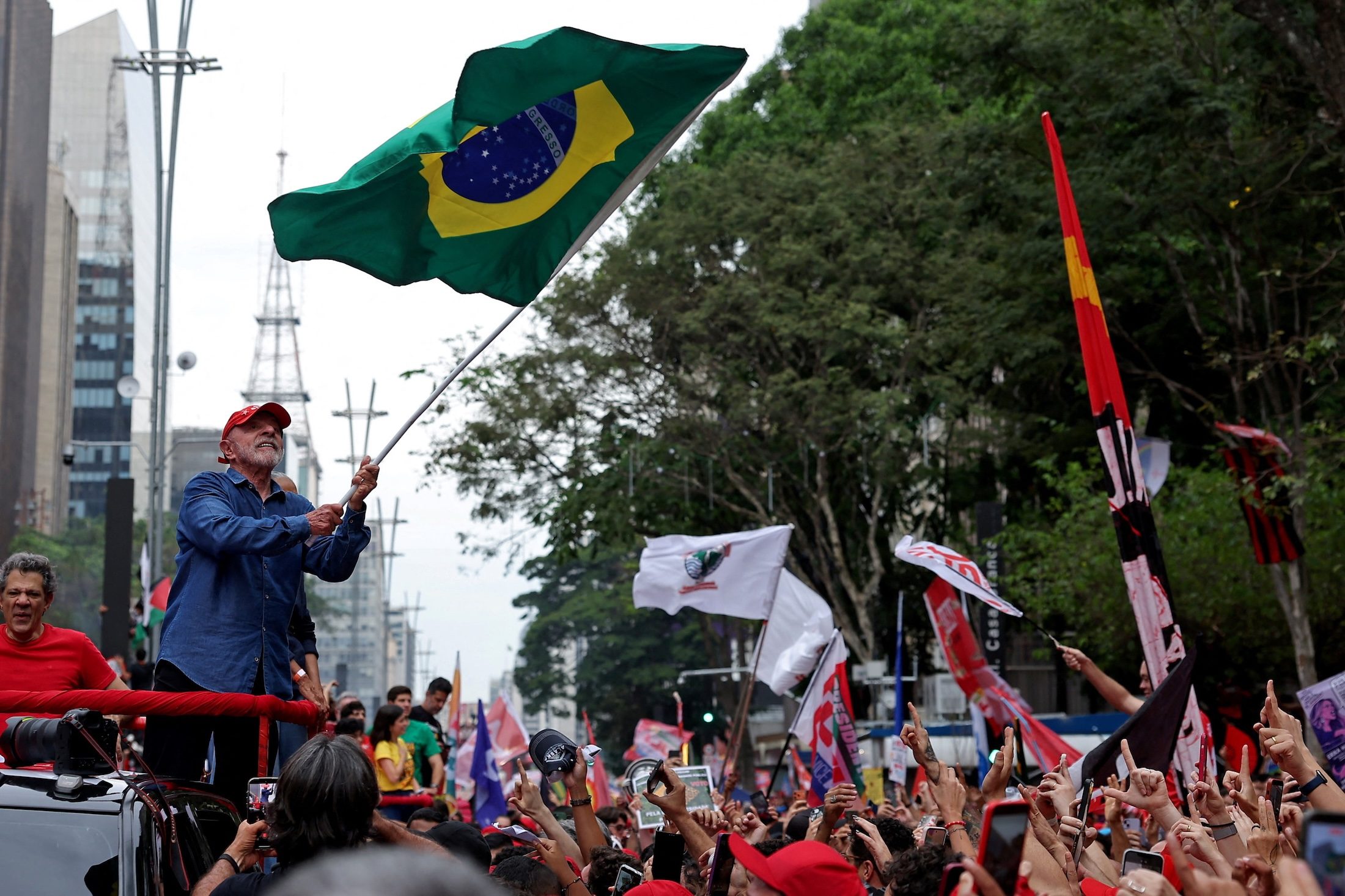
ELECTION CAMPAIGN. Brazilian President Luiz Inacio Lula da Silva, the Workers' Party (PT) candidate seeking re-election, waves a flag during a closing campaign rally ahead of the presidential runoff, in Sao Paulo, Brazil, October 24, 2026.
Amanda Perobelli/REUTERS
Polls show the candidates are practically tied going into the runoff, as Lula has closed the gap in the final days
AT A GLANCE
- Brazilians are voting in a runoff election on October 25, 2026, between leftist President Lula and right-wing Senator Flavio Bolsonaro.
- Bolsonaro's first-round victory surprised many.
- Polls indicate a tight race, with Bolsonaro leading slightly, but historical trends suggest that candidates who come second in the first round rarely win the presidency.
This is AI-generated. Read the article for full context. Report any errors.
SAO PAULO, Brazil – Brazilians head to the polls on Sunday, October 25, in a tight runoff vote that could shift Latin America’s largest nation sharply rightward, bringing it closer to the United States as part of a broader conservative shift across the region.
The runoff pits leftist President Luiz Inacio Lula da Silva against right-wing Senator Flavio Bolsonaro, the son of convicted former President Jair Bolsonaro. Flavio scored a major upset at the start of the month by defying pollsters to lead voting in the first round.
A victory for Bolsonaro, 45, would extend a wave of right-wing victories for Latin American candidates friendly to US President Donald Trump, while a fourth mandate for Lula would be a disappointment in Washington, which has clashed with his government over trade and security.
The election race has been dominated by corruption scandals, economic anxiety, and accusations of US meddling, which Washington denies. It has also been colored by fallout from Jair Bolsonaro’s 2025 conviction for plotting a 2022 coup, with Flavio pledging to free his father if he is elected.
Trump has called the case a “witch hunt” and imposed a 50% tariff on Brazil in 2025, in a decision explicitly linked to Jair Bolsonaro’s trial. While many of those were later watered down, Trump unleashed new levies against Brazil this year, citing unfair trade practices.
Lula has cast the Trump administration’s proximity to the Bolsonaro clan as part of an attempt to sway the election, while labeling tariffs and other punitive measures as bullying.
On economic issues, despite falling inequality, and unemployment, Lula has struggled to win over an electorate grappling with high living costs and heavy household debt. Endemic gang violence also weighs on voters’ minds.
Bolsonaro has sought to capitalize on cost-of-living concerns and has also promised a heavy-handed approach to fighting crime, pledging maximum-security jails and chemical castration for serious sexual offenses.
Candidates are neck and neck
Polls show the candidates are practically tied going into the runoff, as Lula has closed the gap in the final days.
Historical precedent favors Bolsonaro, however, as no candidate has ever won the presidency after coming second in the first-round vote.
Bolsonaro picked up 47% of ballots cast in the first round, while Lula trailed with 45%.
The senator’s first-round win sent Brazil’s markets and currency soaring on expectations of pro-business reforms.
His first-round success was mirrored in congressional elections for his Liberal Party and other right-wing politicians, which could pave a legislative path for him, or complicate governance for Lula. – Rappler.com
KioskNews shows a cleaned-up reading view extracted from the publisher’s page — the original always lives on their site, not ours.