Thailand’s businesses fret over Trump’s zero tariff on US goods, farmers comment
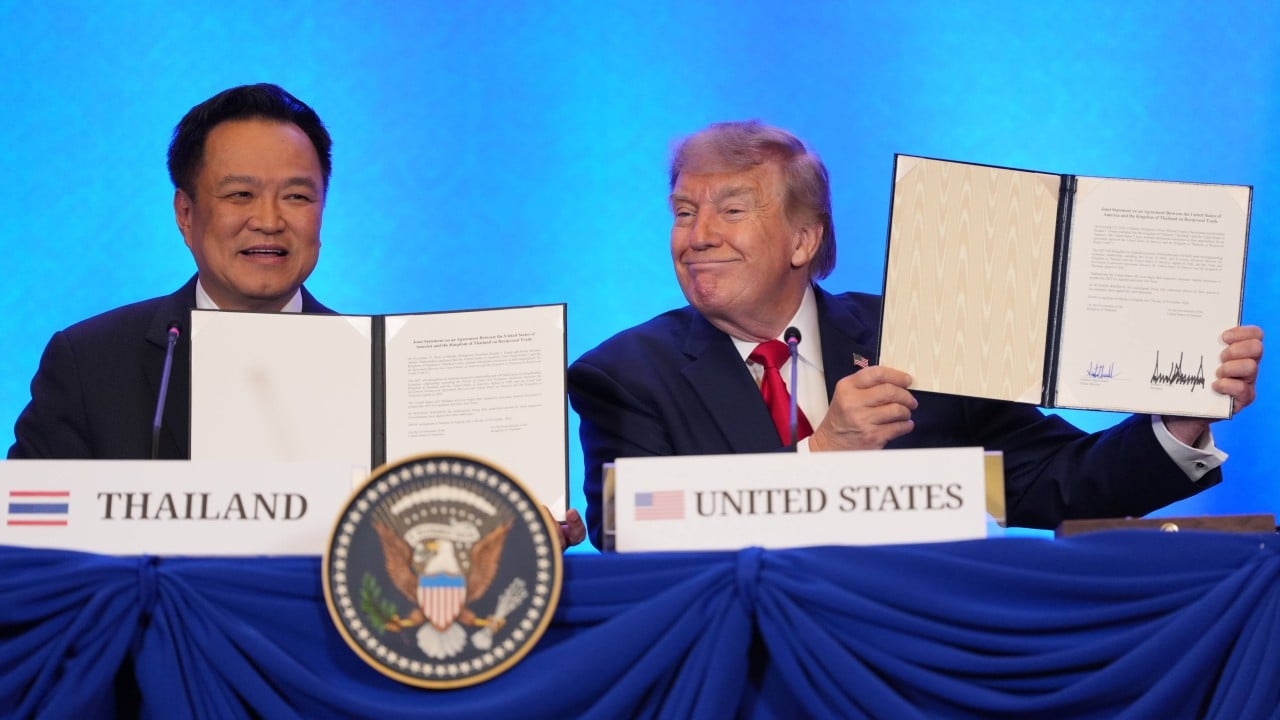
Thai farmers and industries have been left pondering what the preliminary trade framework signed on late Tuesday by US President Donald Trump and Thai Prime Minister Anutin Charnvirakul means for them, particularly over market access and standards of American agricultural products.
On the sidelines of the Asean summit in Manila, Trump and Anutin signed a “joint statement on reciprocal trade”, which fell short of a binding trade deal.
But that did not stop Trump from announcing it as a win for businesses in the US, which has a huge farming industry.
Thailand “will eliminate all tariffs on US exports and remove substantial non-tariff barriers on American vehicles, medical devices, ethanol and poultry”, said Trump, who also attended the last day of the Association of Southeast Asian Nations summit.
The kingdom would buy “an estimated US$2.6 billion of additional US agricultural products that makes our farmers very happy”, he added, noting that there were a few weeks of negotiations left before a full deal could be signed.
Anutin said at his meeting with Trump that “we have reached a substantial conclusion in our negotiations”, adding that “there is still a little more to do, but I’m confident the agreement will be ready for us to sign real soon”.
On Wednesday, his government clarified that tariff schedules remained outstanding pending a final legal text, with Commerce Minister Suphajee Suthumpun saying legal drafting alone would take about two months before cabinet review, public consultations and parliamentary approval.
In a social media post by the Thai Government House, Anutin said there had been no elimination of import tariffs on US goods, adding that the joint statement “prioritises Thai people, farmers and entrepreneurs”.
Analysts say Bangkok’s statement appears to be a moderation of Trump’s comments as Thailand – like Washington’s other trading partners around the world – continues to face tariffs as well as his hardball negotiating approach over trade deals.
Thailand was threatened with a 36 per cent import tariff by Trump last year, which was later reduced to 19 per cent before a US Supreme Court ruling in February invalidated his emergency duties. Non-exempt Thai goods currently face an additional 12.5 per cent US tariff imposed in July, which Bangkok is seeking to cut to 10 per cent to match regional competitors.
The US remains Thailand’s largest export market, buying almost a quarter of its exports in the first nine months of this year.
According to US trade data, the US trade deficit with Thailand widened to US$71.7 billion last year, due in part to what some analysts claim was transhipment of Chinese goods through the Southeast Asian nation.
“Thailand’s choice is essentially between reaching an agreement and having no agreement at all,” said Nonarit Bisonyabut, a research fellow at the Thailand Development Research Institute.
“Without a deal, Thailand would have no way to bring that [tariff] rate down,’’ he said. Regional rivals including Malaysia, Indonesia and Cambodia had already signed trade deals with the US, and Nonarit said this would leave Thailand at a competitive disadvantage. F
“However, an agreement does not come for free. Thailand would have to open its market, accept US standards for certain products, potentially allow some higher-risk imports and purchase more US goods. It is still unclear which sectors would be opened under the agreement and how many sensitive products would be affected.”
Thai farming groups have been complaining about what they say are lower US food standards, including certain additives that are allowed to be fed to pigs under American laws and are banned in Thailand.
“In the previous round, after the trade negotiations took place, the outcome was that we imported their corn instead of their pork. But the corn quality was not OK,” said Worawut Siripun, deputy secretary general of the Thai Swine Raisers Association.
“This time, the [Thai] government and the Chamber of Commerce have not talked with our association at all about what issues will be negotiated with the US,” he said.
He stated his lobby’s “non-negotiable’’ stance that “we do not accept any form of pork products from the US because we are still concerned about their use of ractopamine”.
Ractopamine is an additive to bulk up pigs and cows, widely used in the US livestock industry, and is banned in many countries over its potential risks to human health.
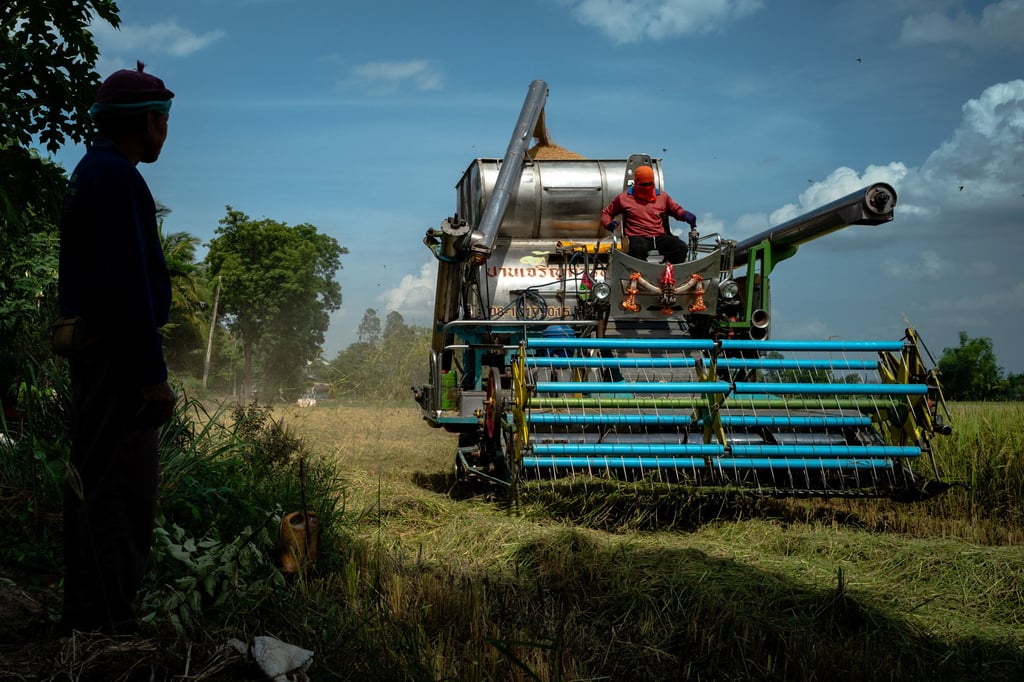
Thai farmers are facing hard times as costs surge in part due to the US war against Iran, which has led to a spike in energy and commodity prices and affected costs ranging from transport to fertilisers.
With crops and livestock threatened by floods and looming drought linked to a strengthening El Nino weather phenomenon, Thailand’s influential agriculture sector fears rising competition not just from the US but also from China.
28:14
Live: US president Donald Trump attends Asean-US summit
Any trade deal with the US could carry political risks for Anutin, who is facing a small but significant protest movement against his government.
Nonarit said he expected “considerable opposition within Thailand” against opening its market across industries to US goods.
“One concern is public health. Even when US products meet American regulatory standards, differences in consumption habits mean their risks may need to be assessed differently for Thai consumers.”
He cited how consumers in Thailand typically ate more offal than their counterparts in the US, but these animal parts available in the two countries might contain different residue levels because of additives fed to livestock.
If Thailand were to open its market to more US products, it would affect businesses that had long been protected from competition, he added.
“Some will argue that certain sectors should be reserved for Thai operators, while some academics may favour greater liberalisation on efficiency grounds.’’
KioskNews shows a cleaned-up reading view extracted from the publisher’s page — the original always lives on their site, not ours.